2nd Grade · Math · 2.MD.C.8
Financial Literacy Lesson Plan for 2nd Grade
A ready-to-teach financial literacy lesson for 2nd Grade, built around spending and saving, deposits and withdrawals, borrowing and lending, producers and consumers and the cost to make an item. Print the plan, print the practice pages, and you are set.
Approximately 45 minutes
Learning objective
- Tell spending from saving
- Track savings that grow each week
- Add and subtract dollars in spending and saving stories
Materials
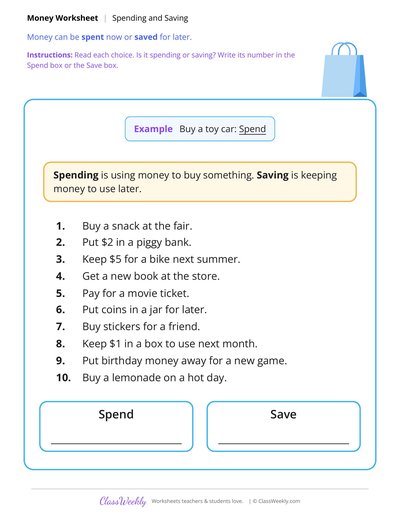
- Spend It or Save It Sort
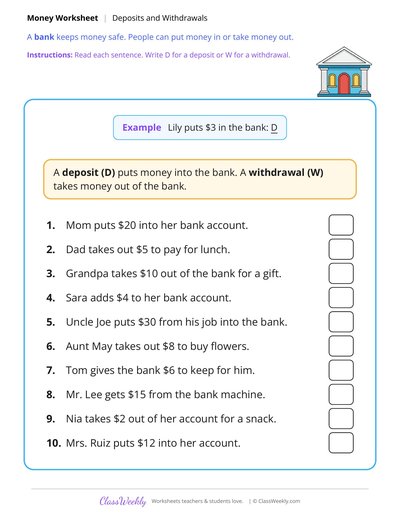
- Deposit or Withdrawal Sort
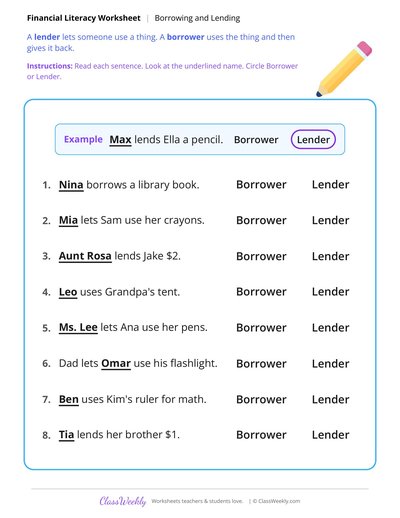
- Borrower or Lender
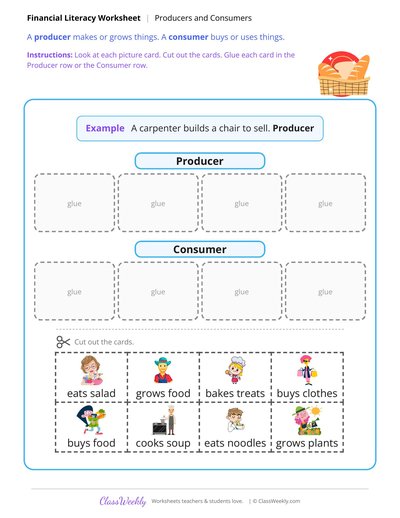
- Producer or Consumer Picture Sort
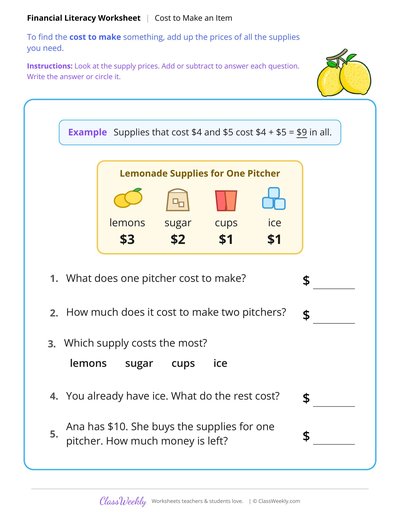
- Cost to Make Lemonade
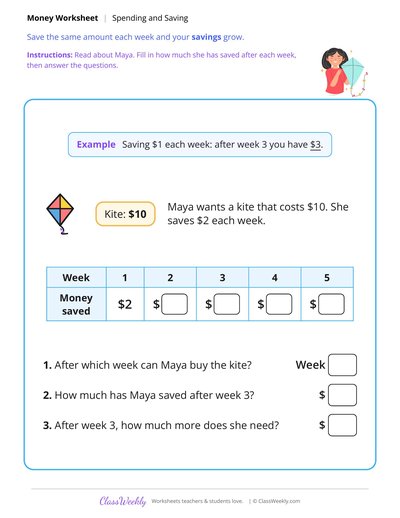
- Saving Up for a Kite
- Pencils, and whiteboard space for the modeled examples
Lesson steps
1. Warm up together (5 min)
Open with a quick count-around or number talk that touches financial literacy. Ask students where they have seen financial literacy outside of math class. You are listening for who already has the vocabulary and who does not, so keep it light and let several students answer.
2. Model it (I do) (10 min)
Work two examples of financial literacy on the board, thinking out loud the whole way. Say the quiet parts: what you notice first, which step you do next, and why. Deliberately make one small error on the second example and let the class catch it.
3. Practice together (we do) (10 min)
Work three more problems as a class. Ask a different student to supply each step rather than the whole answer. If a step stalls, drop back to concrete objects or a drawing before moving on.
4. Independent practice (you do) (15 min)
Hand out "Spend It or Save It Sort". Students work independently while you circulate. Note who is fluent, who is counting on fingers, and who has not started, because that grouping drives tomorrow's small group.
5. Close the loop (5 min)
Pull the class back. Ask one student to explain a problem they got right and one to name something that is still confusing. End on the confusion, not the success, so students learn that naming a gap is normal.
Check for understanding
Collect the practice pages and sort them into three piles: fluent, developing, and not yet. Any student in the third pile needs financial literacy retaught in a small group before the class moves on.
Differentiation
Extra support. Students who stall: pull them into a small group and rebuild financial literacy with concrete materials or a simpler text before asking for the written work again. Do not send the page home as homework, it will just rehearse the misunderstanding.
Extension. Students who finish early: ask them to write their own financial literacy problem for a partner to solve, then check the partner's work. Creating a problem is harder than solving one and it surfaces whether they really understand financial literacy.
Skills covered in this lesson
Spending and saving · Deposits and withdrawals · Borrowing and lending · Producers and consumers · Cost to make an item