Number Words and Kind Words Match
Written by Adi Ackerman, Head Teacher
"Number Words and Kind Words Match" is written for 1st Grade (Ages 6-7), and it covers Common Core L.1.1.F. If your little one is a year younger but already steady on adjectives, the page still works. You may just need to read the instructions out loud. And if they are older and identifying adjectives never quite stuck, this is a short review rather than busywork.
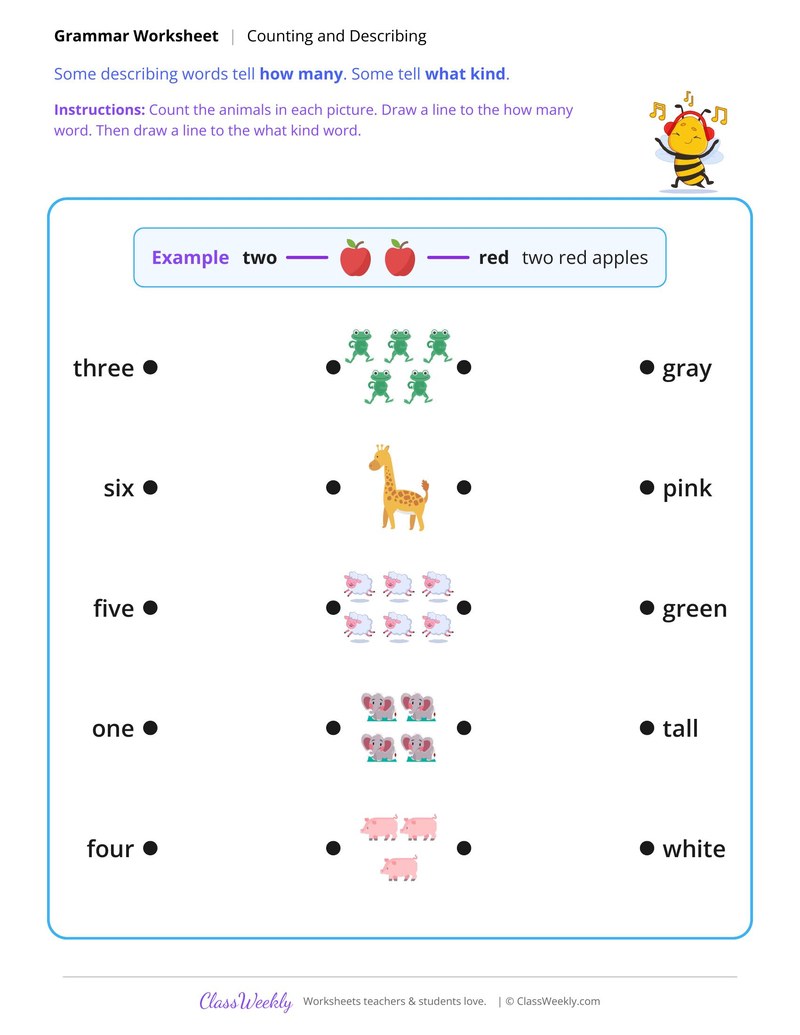
1st grade grammar worksheet: count animals like frogs, sheep and pigs, then draw lines to a how many word and a what kind word. Answer key included. Part of our identifying adjectives collection. Aligned to Common Core standards.
How do I use this worksheet?
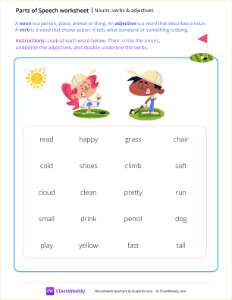
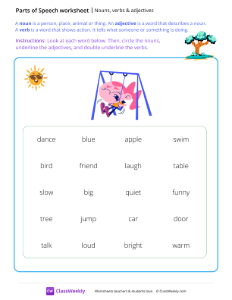
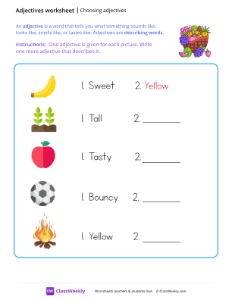
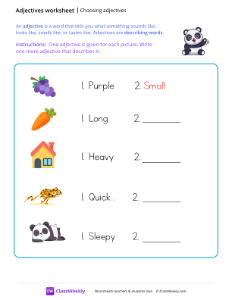
Introduce the skill with a brief whole-class activity, such as calling out examples and asking students to give a thumbs up when they hear identifying adjectives in a sentence. Then let students work through the first item together as a class, then finish the rest independently or with a partner, referring to a class anchor chart if one is available. When reviewing answers, ask students to explain why an answer is correct rather than just confirming it. These identifying adjectives worksheets work well as a focused practice activity, a homework assignment, or a warm-up at the start of a language arts lesson.
What students will practice
- Students will count the animals in each picture.
- Students will match a how many word like five to each group.
- Students will match a what kind word like gray, pink or tall to each group.
Curriculum Links
Common Core State Standards
Language · 1st Grade
Standard: Use frequently occurring adjectives.
View all L.1.1.F worksheets →Find this in the curriculum
Browse the grade, subject, and topic this belongs to.
FAQ
How do I use this identifying adjectives worksheet?
⌄
Introduce the skill with a brief whole-class activity, such as calling out examples and asking students to give a thumbs up when they hear identifying adjectives in a sentence. Then let students work through the first item together as a class, then finish the rest independently or with a partner, referring to a class anchor chart if one is available. When reviewing answers, ask students to explain why an answer is correct rather than just confirming it. These identifying adjectives worksheets work well as a focused practice activity, a homework assignment, or a warm-up at the start of a language arts lesson.
What does this worksheet teach?
⌄
Count animals like frogs, sheep and pigs, then draw lines to a how many word and a what kind word. The directions on the page read: Count the animals in each picture. Draw a line to the how many word. Then draw a line to the what kind word. The page opens with a worked example, and an answer key is included.
Can I use this identifying adjectives worksheet for homeschool or classroom?
⌄
Yes, both. We made it for 1st Grade adjectives, and the page works the same whether it lands on a kitchen table or a center rotation. At home, most families go through it together and talk the answers out loud, and that talking is where most of the learning happens with identifying adjectives. In class it runs well as independent work while you pull a small group. Print one copy or thirty, whichever the day needs.
How do you explain what an adjective is to a 1st grader?
⌄
An adjective is a describing word - it tells us what something looks, feels, sounds, tastes, or smells like, helping us picture it better.
What kinds of clues help students identify adjectives in a sentence?
⌄
Students learn to ask 'What kind?' or 'How many?' about a noun - if the answer is a word in the sentence, that word is likely an adjective.
Is identifying adjectives in sentences different from writing adjectives?
⌄
Yes - identifying asks students to recognize adjectives in existing text, while writing adjectives asks them to generate descriptive words on their own.
What adjectives should 1st graders know?
⌄
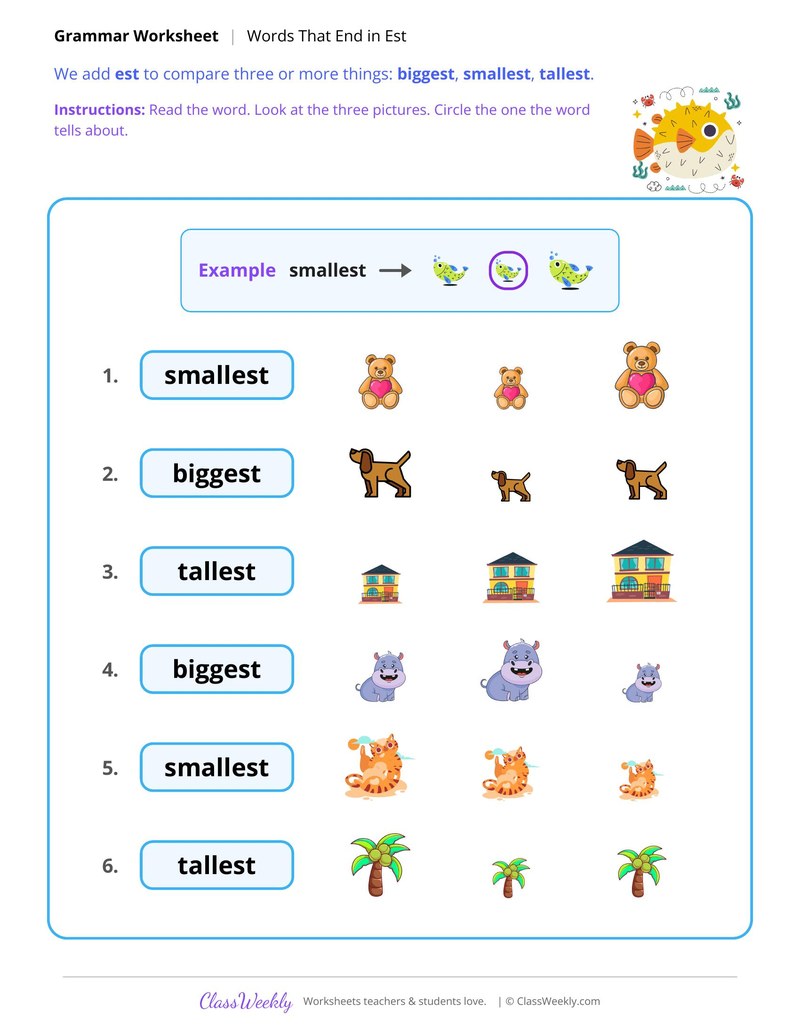
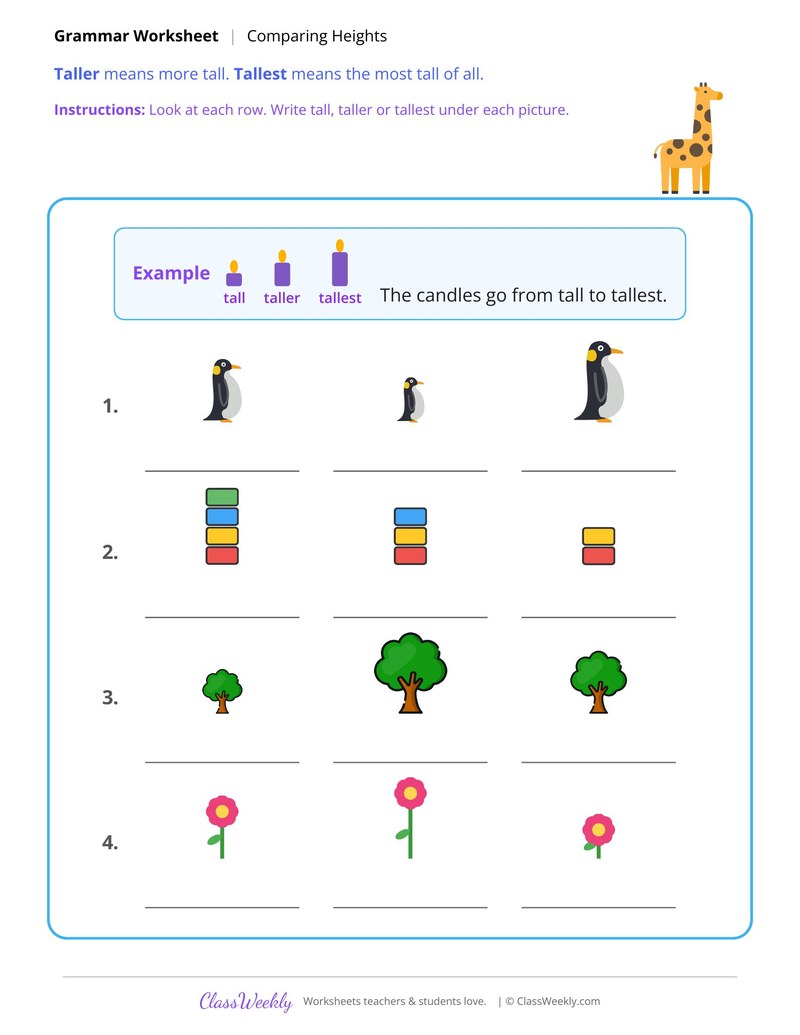
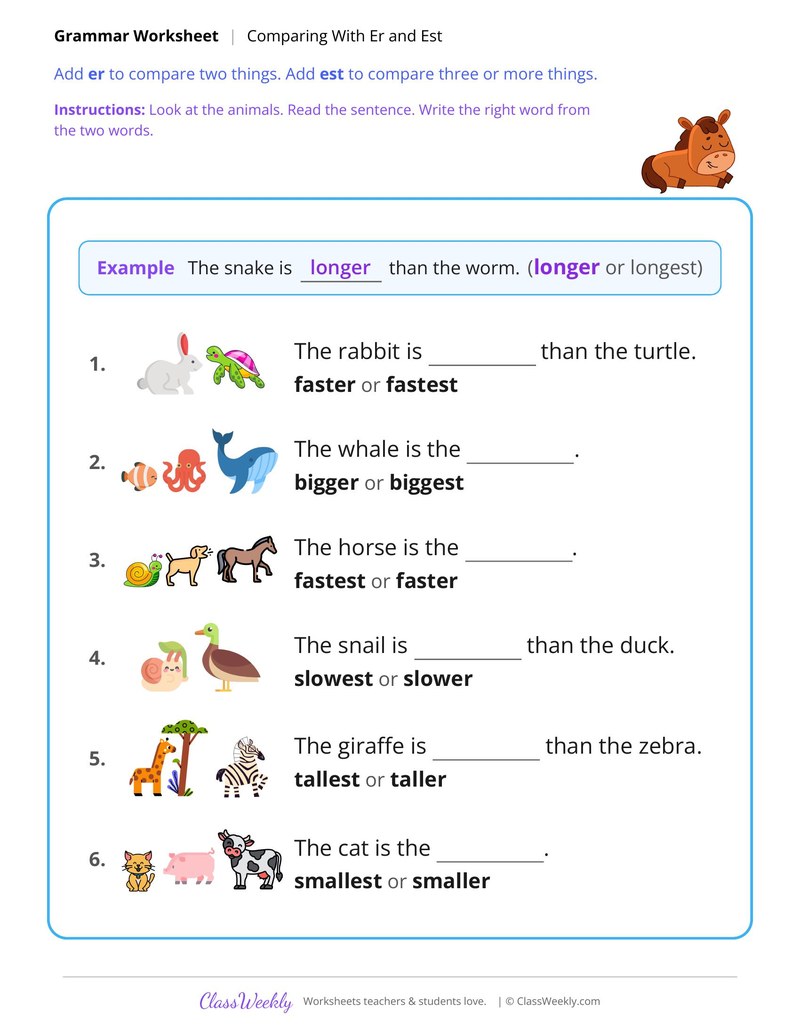
1st graders use frequently occurring adjectives (L.1.1.F), such as color, size, number and sense words. They learn that an adjective describes a noun and can tell what kind or how many. They also start comparing with er and est, as in tall, taller and tallest.
How do you teach adjectives that compare?
⌄
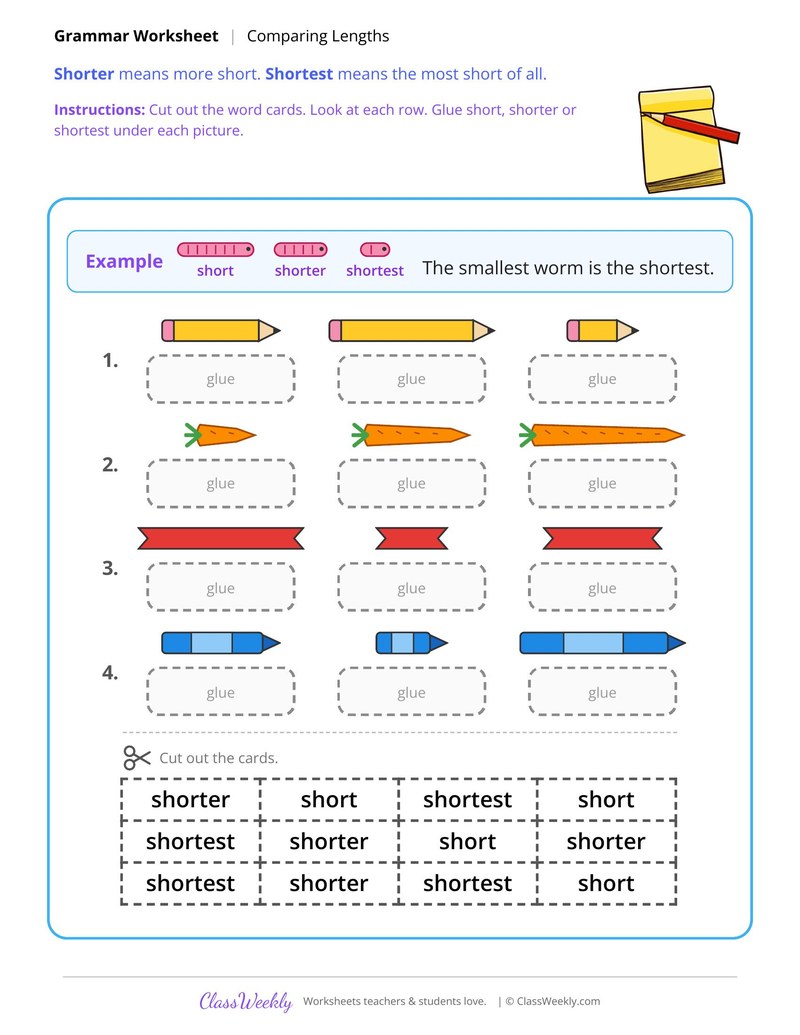
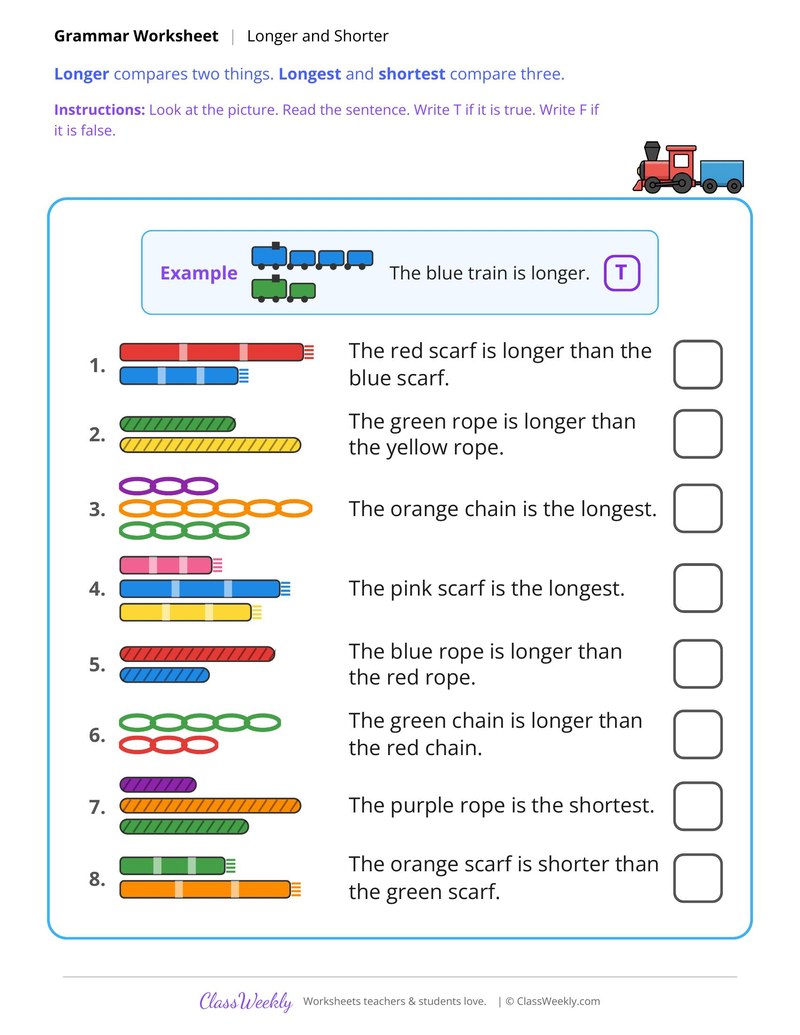
Show two or three real objects and compare them out loud: this pencil is longer, that one is the longest. Our sheets use the same idea with pictures, so children circle the biggest ball, write taller or shorter, and cut and glue short, shorter and shortest cards.
What are sense words?
⌄
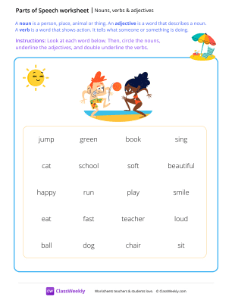
Sense words describe how something looks, sounds, smells, tastes or feels, like shiny, loud, stinky, sour or fuzzy. Children sort them under the five senses, match them to body parts and use them to describe a snack or a day at the beach.
Are number words adjectives?
⌄
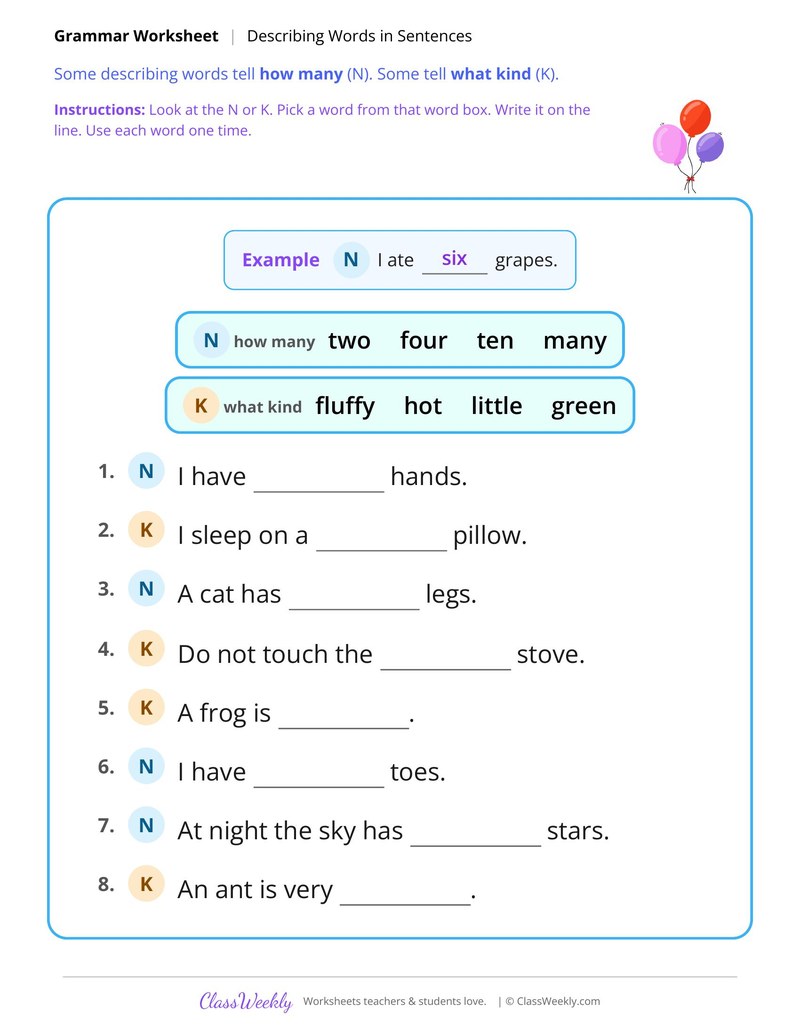
Yes. A number word like three in three hats tells how many, so it works as a describing word. Some sheets have children count pictures and write or circle the number word, and others sort describing words into what kind and how many.
Ratings & Reviews
No reviews yet. Be the first to share what you think.
Reviews are for ClassWeekly members.
Make a Request
Spotted something to fix, or want a worksheet we don't have yet? Tell us and we'll make it.
Worksheet Details
| Grade | 1st Grade |
| Subject | Grammar & Writing |
| Topic | Adjectives |
| Standard | L.1.1.F |
| Pages | 1 page |
| Difficulty | Medium |
Learn More
What is ClassWeekly?
ClassWeekly offers free worksheets and printable learning resources for kids, from preschool up. All worksheets are aligned to Common Core, NGSS, and C3 Framework standards and designed by educators. Become a member to access the full library and download unlimited PDFs.