Is Doing or Did Picture Match
Written by Adi Ackerman, Head Teacher
"Is Doing or Did Picture Match" is written for 1st Grade (Ages 6-7), and it covers Common Core L.1.4.C. If your little one is a year younger but already steady on verbs, the page still works. You may just need to read the instructions out loud. And if they are older and past and present tense never quite stuck, this is a short review rather than busywork.
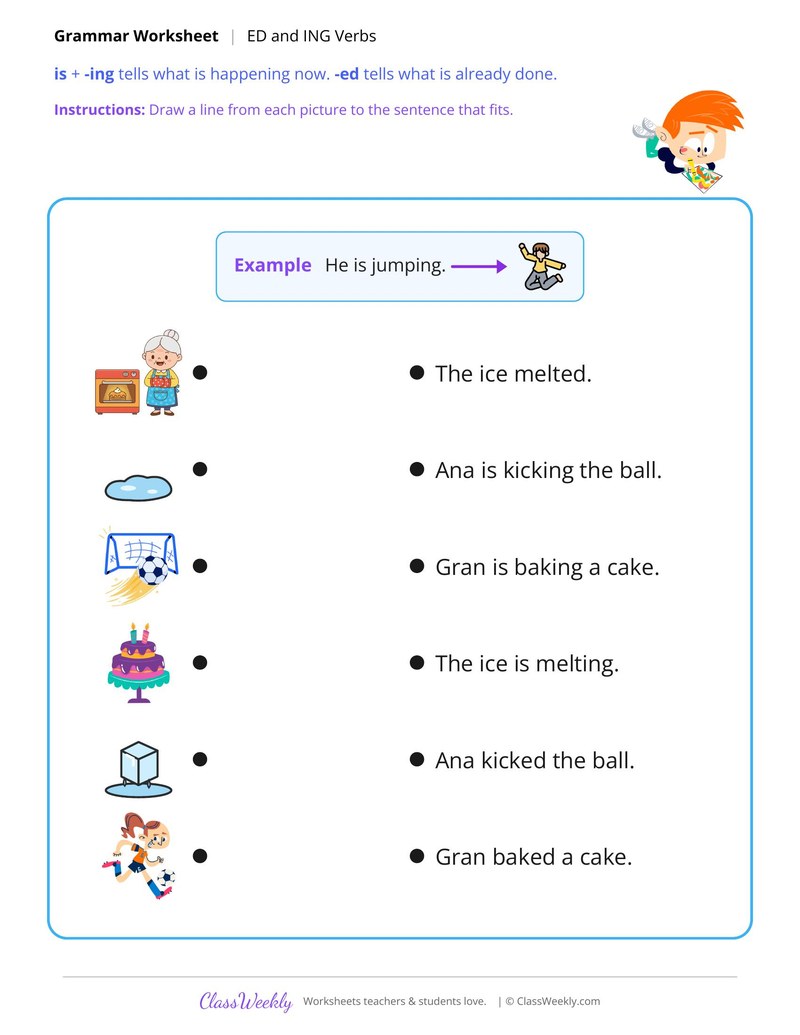
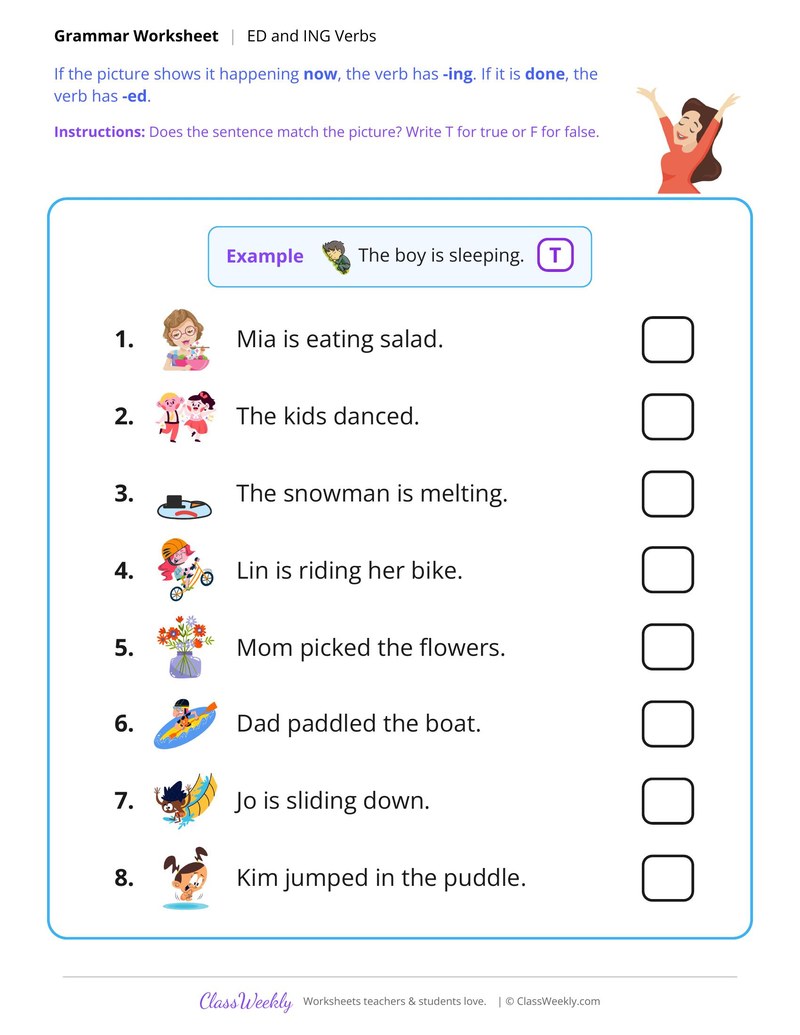
1st grade grammar worksheet: match pictures to sentences like The ice is melting and The ice melted to show ing or ed. Answer key included. Part of our past and present tense verbs collection. Aligned to Common Core standards.
How do I use this worksheet?
Introduce the skill with a brief whole-class activity, such as calling out examples and asking students to give a thumbs up when they hear past and present tense in a sentence. Then let students work through the first item together as a class, then finish the rest independently or with a partner, referring to a class anchor chart if one is available. When reviewing answers, ask students to explain why an answer is correct rather than just confirming it. These past and present tense worksheets work well as a focused practice activity, a homework assignment, or a warm-up at the start of a language arts lesson.
What students will practice
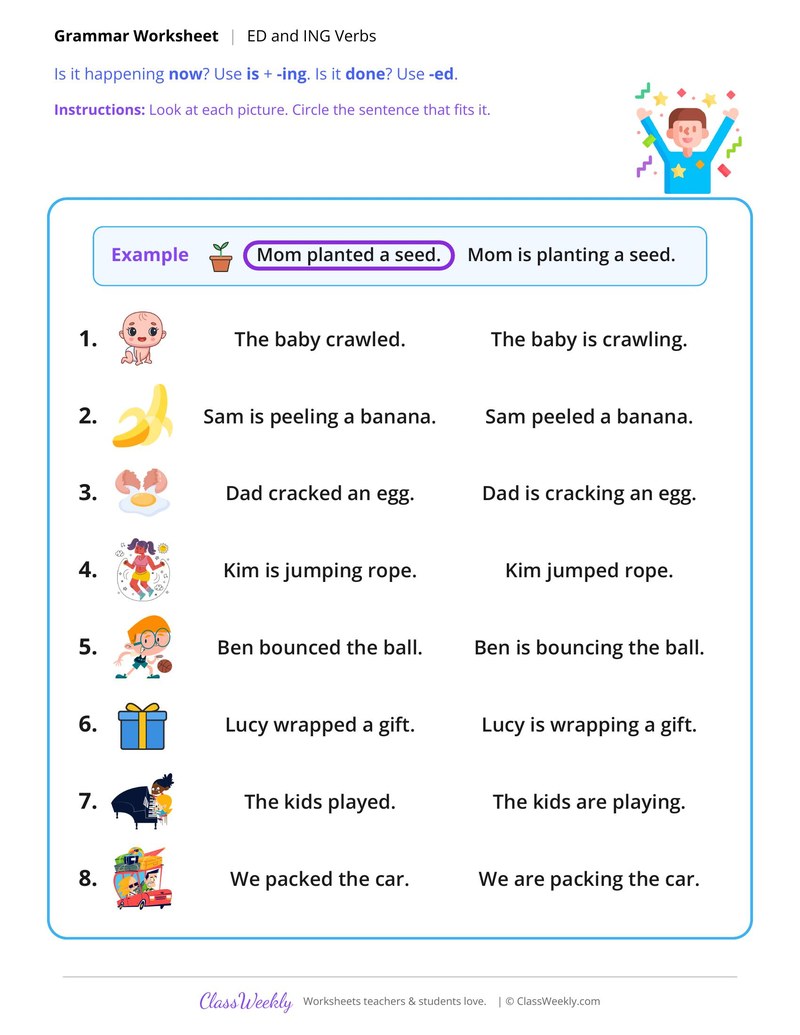
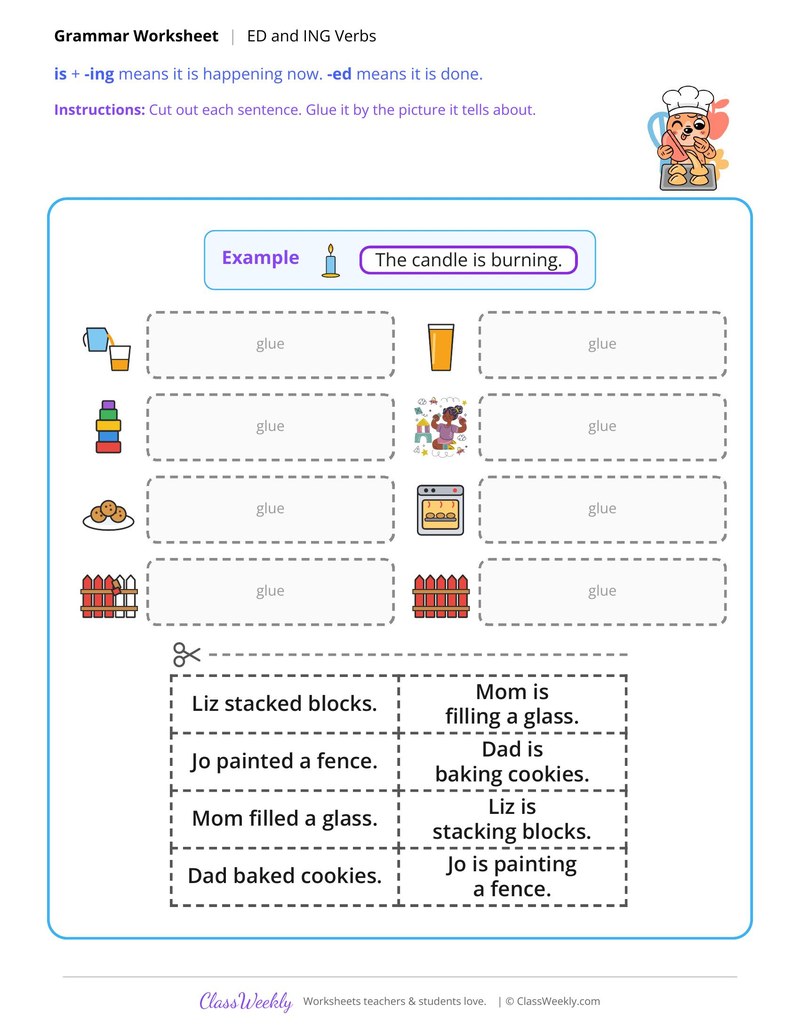
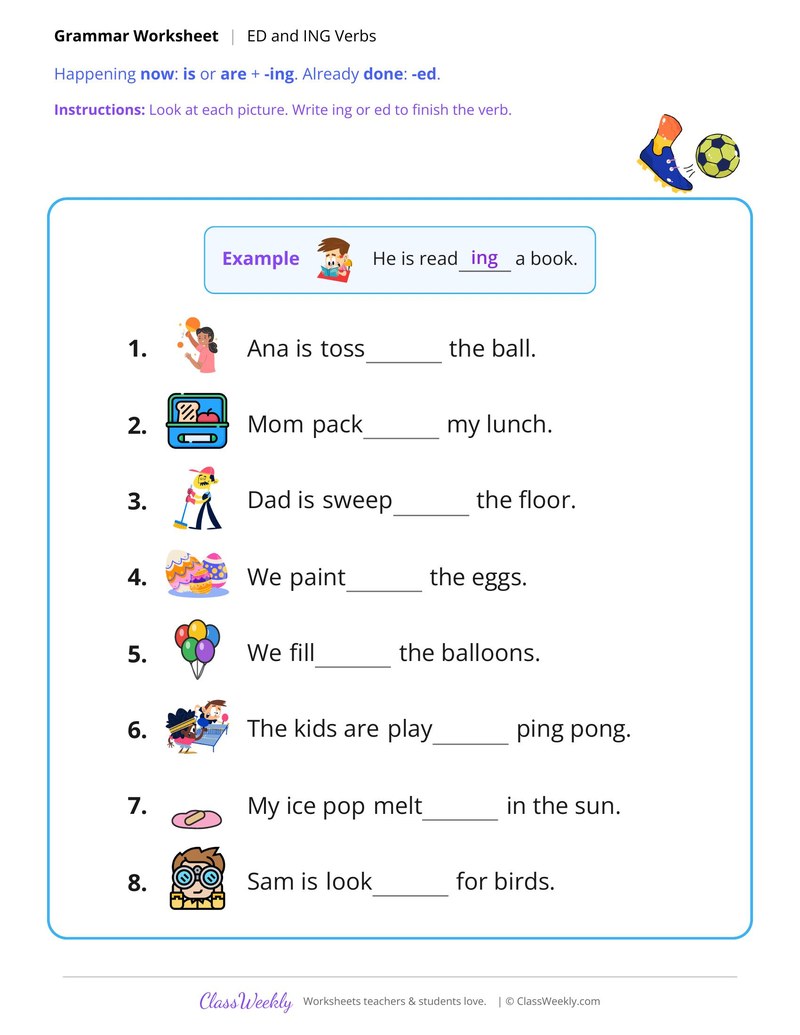
- Students will learn that is with ing tells what is happening.
- Students will learn that ed tells what is already done.
- Students will match pictures to sentences like Gran baked a cake.
Curriculum Links
Common Core State Standards
Language · 1st Grade
Standard: Identify frequently occurring root words (e.g., look) and their inflectional forms (e.g., looks, looked, looking).
View all L.1.4.C worksheets →Find this in the curriculum
Browse the grade, subject, and topic this belongs to.
FAQ
How do I use this past and present tense worksheet?
⌄
Introduce the skill with a brief whole-class activity, such as calling out examples and asking students to give a thumbs up when they hear past and present tense in a sentence. Then let students work through the first item together as a class, then finish the rest independently or with a partner, referring to a class anchor chart if one is available. When reviewing answers, ask students to explain why an answer is correct rather than just confirming it. These past and present tense worksheets work well as a focused practice activity, a homework assignment, or a warm-up at the start of a language arts lesson.
What does this worksheet teach?
⌄
Match pictures to sentences like The ice is melting and The ice melted to show ing or ed. The directions on the page read: Draw a line from each picture to the sentence that fits. The page opens with a worked example, and an answer key is included.
Can I use this past and present tense worksheet for homeschool or classroom?
⌄
Yes, both. We made it for 1st Grade verbs, and the page works the same whether it lands on a kitchen table or a center rotation. At home, most families go through it together and talk the answers out loud, and that talking is where most of the learning happens with past and present tense. In class it runs well as independent work while you pull a small group. Print one copy or thirty, whichever the day needs.
What is the difference between past and present tense for 1st graders?
⌄
Present tense describes what is happening now (she jumps), while past tense tells what already happened (she jumped).
Do these worksheets cover irregular past tense verbs like 'went' or 'saw'?
⌄
Many past and present tense worksheets include a mix of regular verbs (-ed endings) and common irregular forms that 1st graders encounter frequently.
How does this skill connect to reading comprehension?
⌄
Recognizing verb tense helps students understand the timeline of a story and follow whether events are happening now or in the past.
What verb skills should 1st graders learn?
⌄
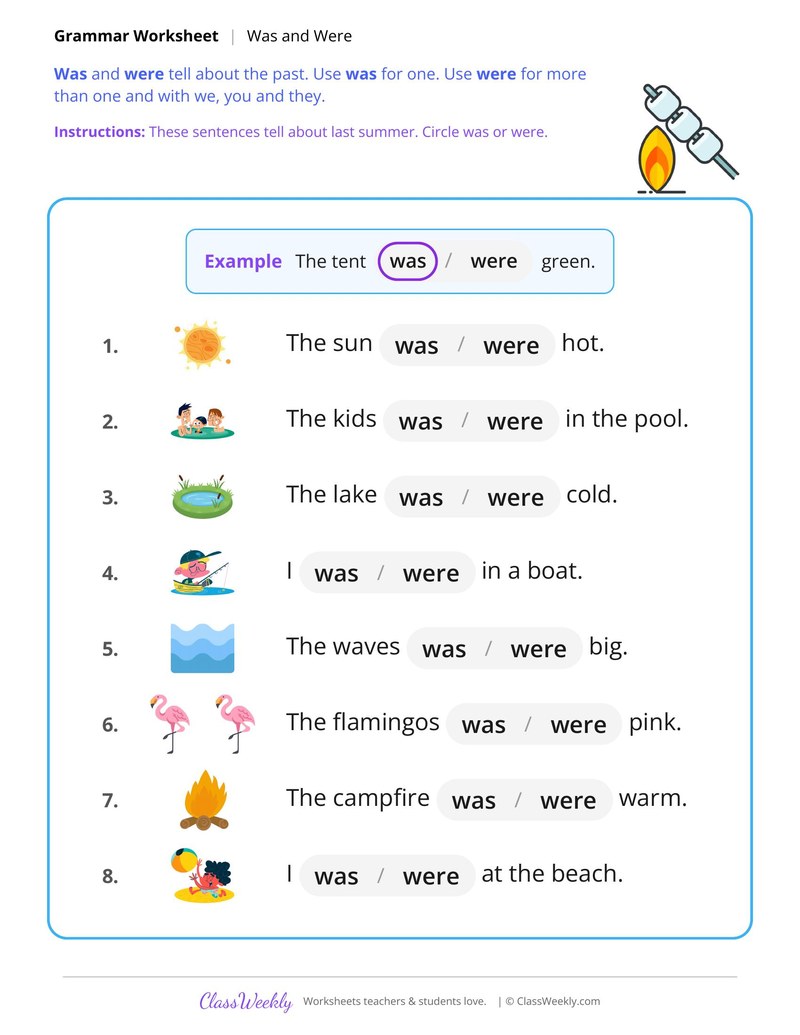
1st graders name action verbs, match verbs to singular and plural subjects (L.1.1.C) and use verbs to show past, present and future (L.1.1.E). That includes choosing is or are, was or were and has or have, and adding ed, ing or will.
How do you teach is and are to 1st graders?
⌄
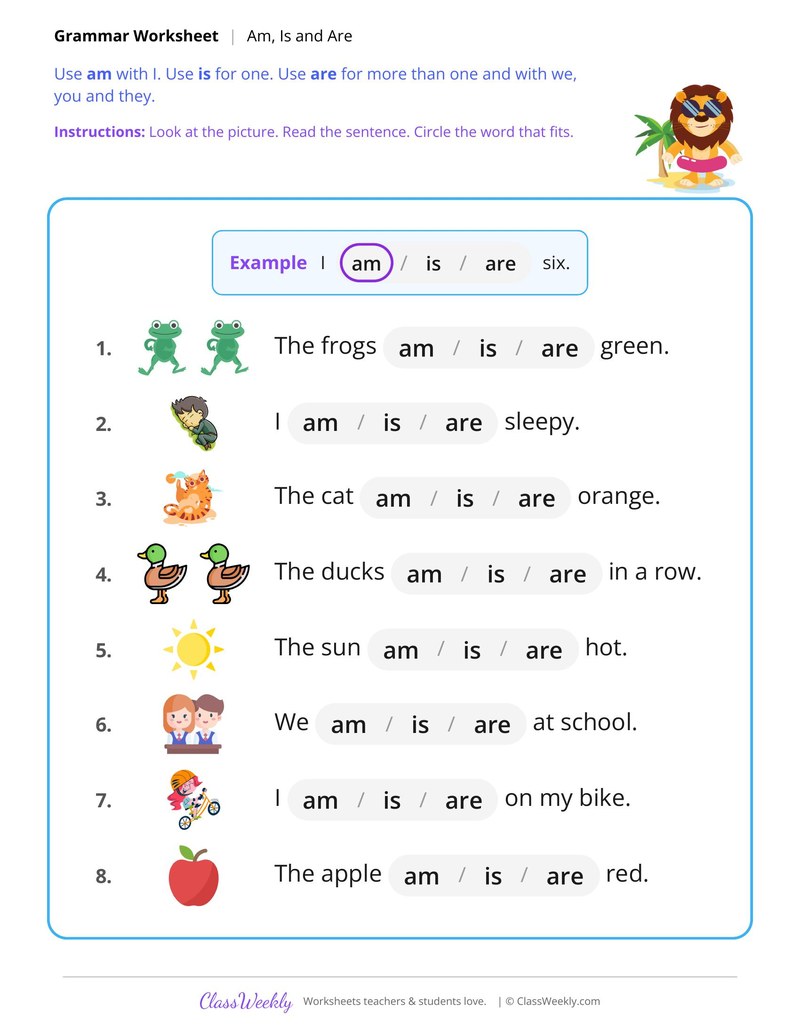
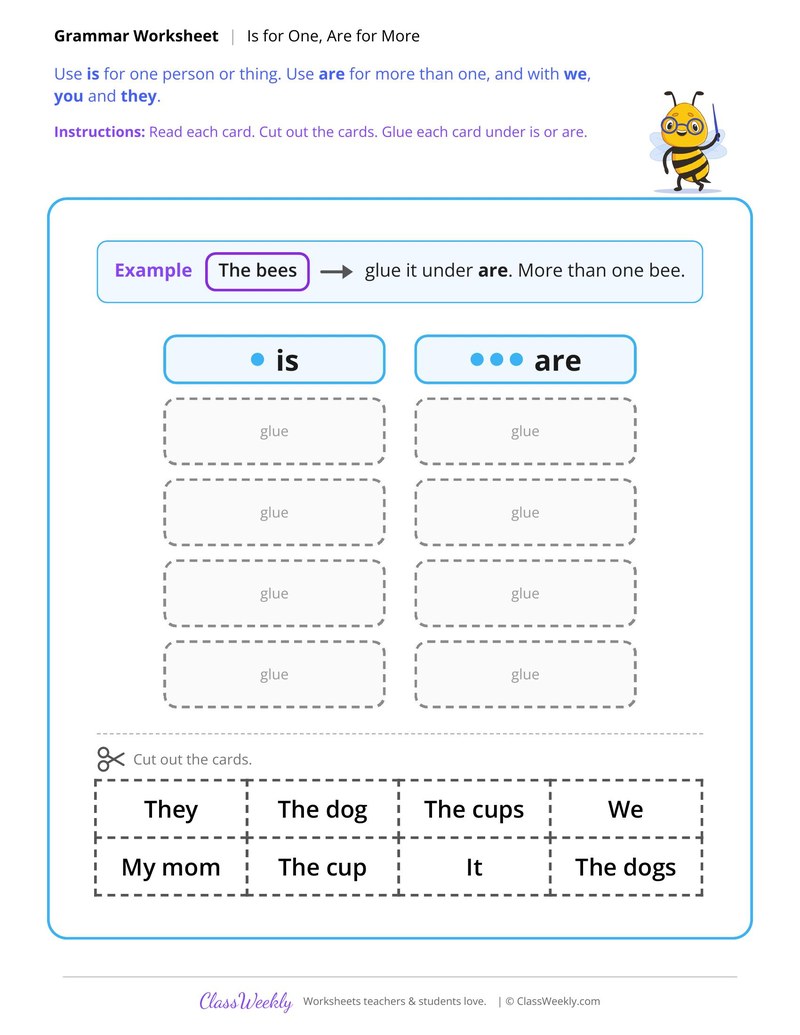
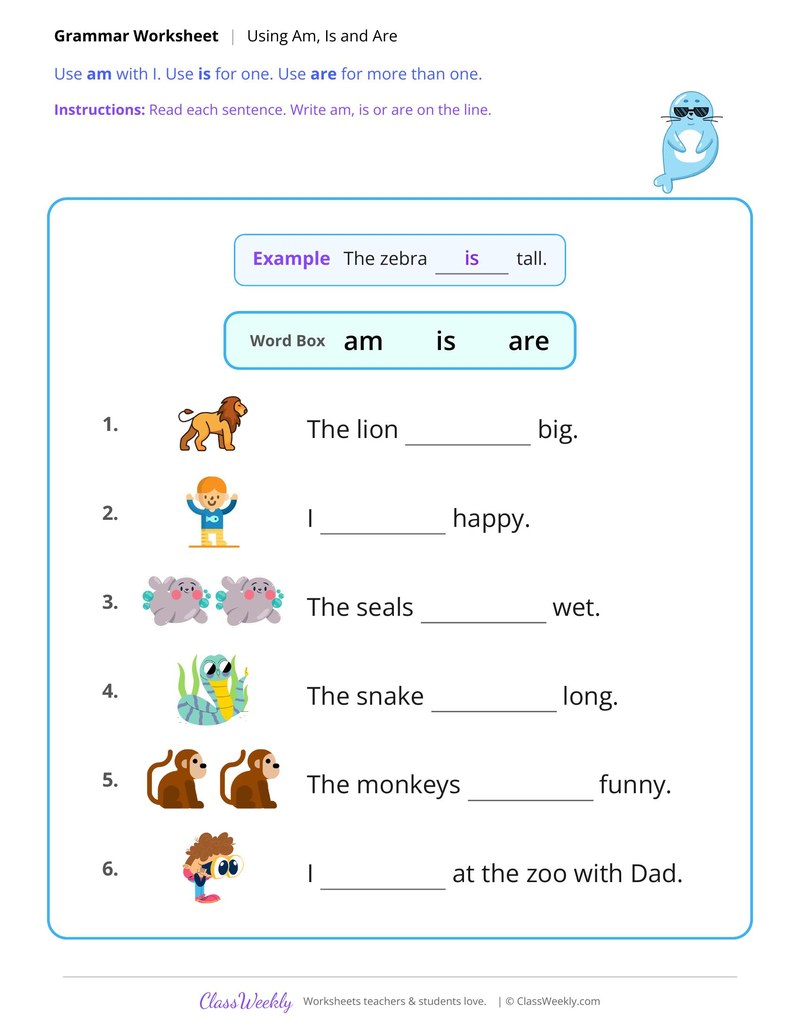
Use is for one person or thing and are for more than one, and with we, you and they. Use am with I. Our sheets have children circle, sort and write am, is or are, then do the same with was and were for the past.
How do 1st graders learn past, present and future?
⌄
Start with a simple timeline: ed tells about before, a verb with is and ing tells what is happening, and will tells about later. Children sort sentences onto timelines, color them by time and write the verb that fits Lily's day.
What is subject and verb agreement?
⌄
It means the verb matches the subject. One dog runs, but two dogs run. Children circle One or More for a subject, then pick the subject that fits a verb like sings or buzz.
Ratings & Reviews
No reviews yet. Be the first to share what you think.
Reviews are for ClassWeekly members.
Make a Request
Spotted something to fix, or want a worksheet we don't have yet? Tell us and we'll make it.
Worksheet Details
| Grade | 1st Grade |
| Subject | Grammar & Writing |
| Topic | Verbs |
| Standard | L.1.4.C |
| Pages | 1 page |
| Difficulty | Medium |
Learn More
What is ClassWeekly?
ClassWeekly offers free worksheets and printable learning resources for kids, from preschool up. All worksheets are aligned to Common Core, NGSS, and C3 Framework standards and designed by educators. Become a member to access the full library and download unlimited PDFs.