Count Strawberries in Rows, Up to 15
Written by Adi Ackerman, Head Teacher
"Count Strawberries in Rows, Up to 15" is written for Kindergarten (Ages 5-6), and it covers Common Core K.CC.B.5. If your little one is a year younger but already steady on counting, the page still works. You may just need to read the instructions out loud. And if they are older and count up to 20 never quite stuck, this is a short review rather than busywork.
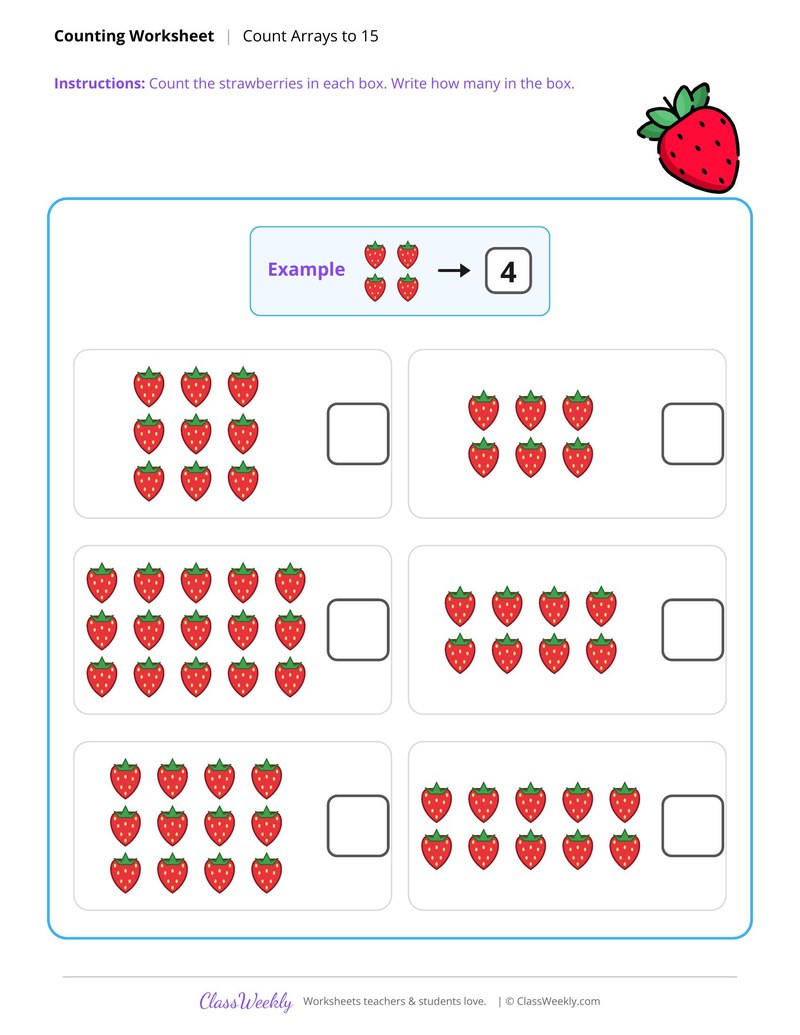
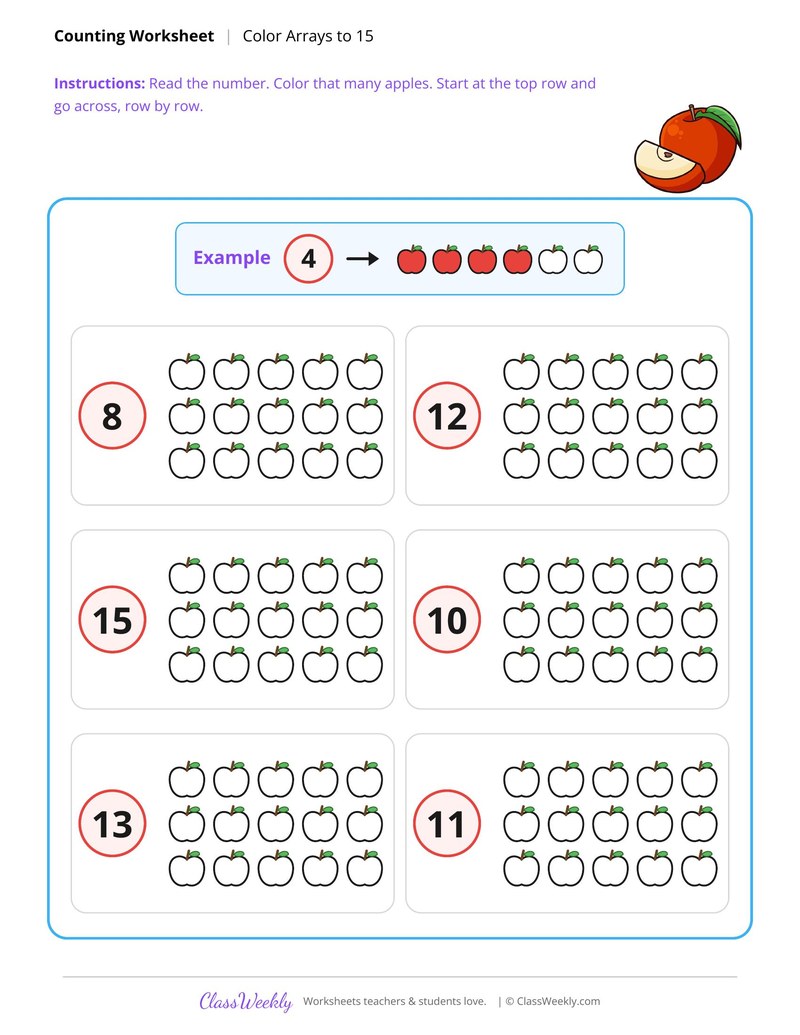
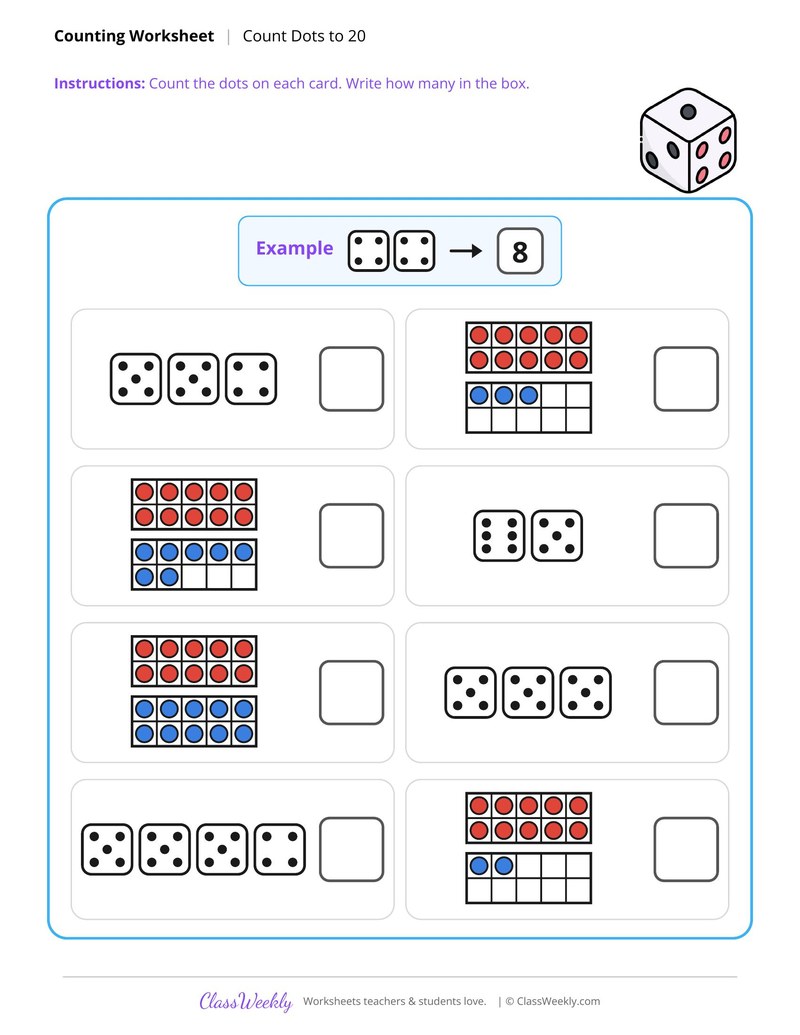
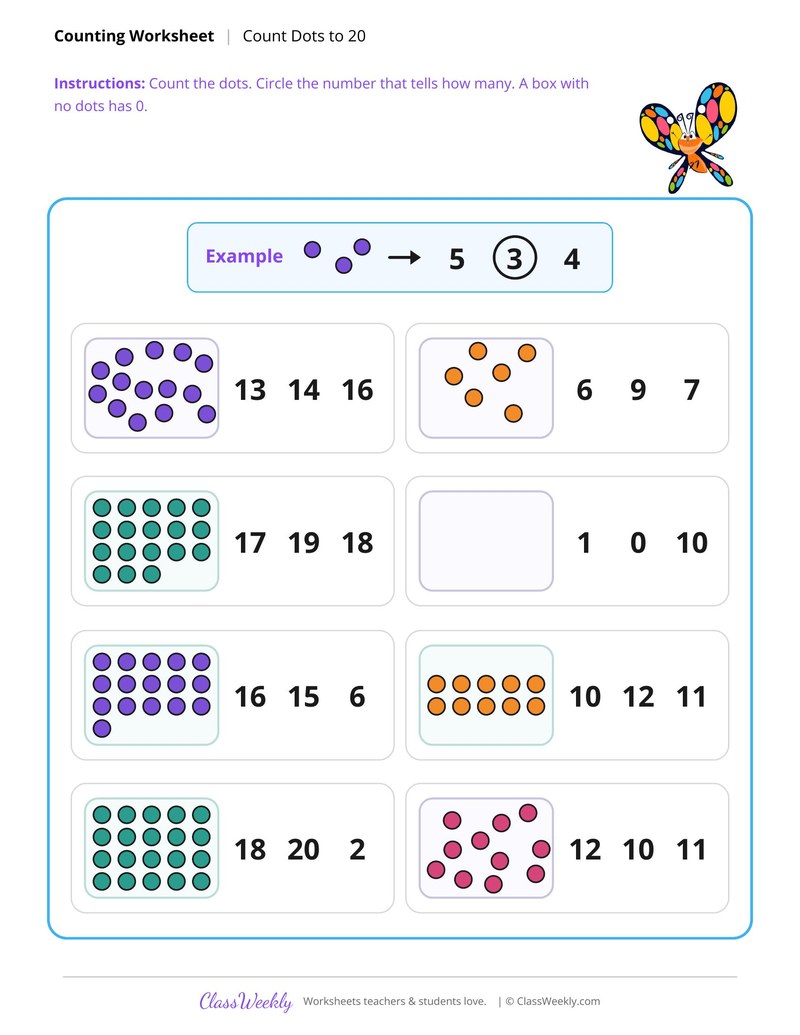
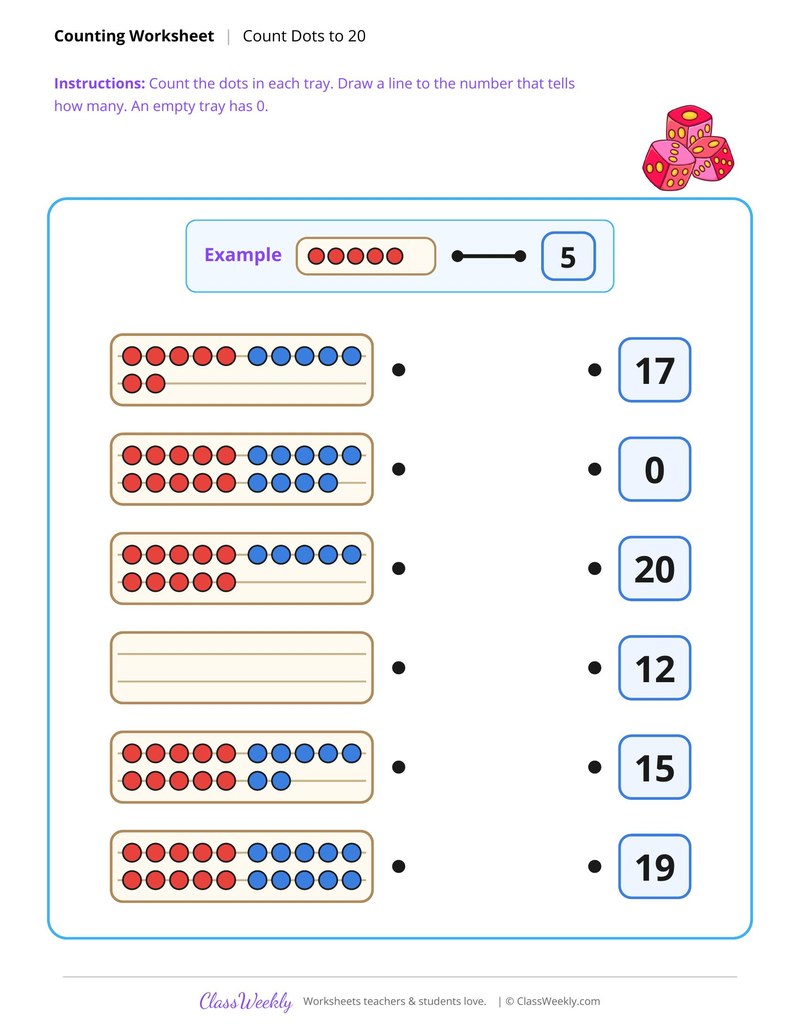
Kindergarten math worksheet: count the strawberries set out in rows in each box and write how many, up to 15. Answer key included. Part of our count up to 20 counting collection. Aligned to Common Core standards.
How do I use this worksheet?
Show your child how to cross out or touch each picture as they count it. Count slowly through the teens. Check with the answer key.
What students will practice
- Students will count strawberries set out in rows.
- Students will write how many in the box.
- Students will count groups up to 15.
Curriculum Links
Common Core State Standards
Counting and Cardinality · Kindergarten
Standard: Count to answer 'how many?' questions about as many as 20 things arranged in a line, a rectangular array, or a circle, or as many as 10 things in a scattered configuration.
View all K.CC.B.5 worksheets →Find this in the curriculum
Browse the grade, subject, and topic this belongs to.
FAQ
How do I use this count up to 20 worksheet?
⌄
Show your child how to cross out or touch each picture as they count it. Count slowly through the teens. Check with the answer key.
What does this worksheet teach?
⌄
Count the strawberries set out in rows in each box and write how many, up to 15. The directions on the page read: Count the strawberries in each box. Write how many in the box. The page opens with a worked example, and an answer key is included.
Can I use this count up to 20 worksheet for homeschool or classroom?
⌄
Yes, both. We made it for Kindergarten counting, and the page works the same whether it lands on a kitchen table or a center rotation. At home, most families go through it together and talk the answers out loud, and that talking is where most of the learning happens with count up to 20. In class it runs well as independent work while you pull a small group. Print one copy or thirty, whichever the day needs.
Why are teen numbers especially hard for kindergartners?
⌄
Numbers 11-19 are difficult because English number names for teens don't follow a consistent pattern the way numbers 20 and above do. 'Eleven' and 'twelve' give no hint of the digits inside them, unlike 'twenty-one' or 'thirty-two.' Children need extra repetition specifically with the teen numbers.
When do kindergartners learn to count to 20?
⌄
Most kindergarten classrooms target reliable counting to 20 by mid-year. Children who enter kindergarten already counting to 10 typically reach 20 within the first two months of instruction. The focus then shifts to recognizing and writing the teen numerals accurately.
How can parents help children practice counting to 20 at home?
⌄
Count real objects together: crackers at snack time, steps up the stairs, or toys lined up on the floor. When children count physical objects rather than just reciting numbers, they develop stronger one-to-one correspondence and are less likely to skip or double-count in the teens.
When do kindergarteners learn to count to 100?
⌄
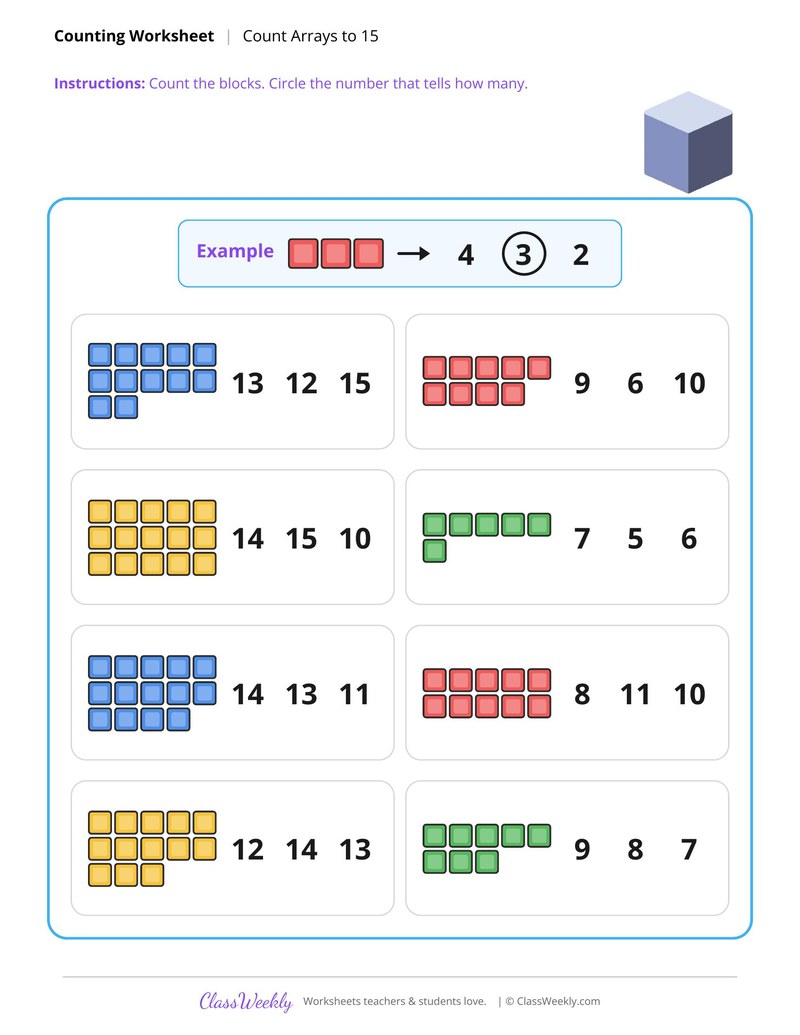
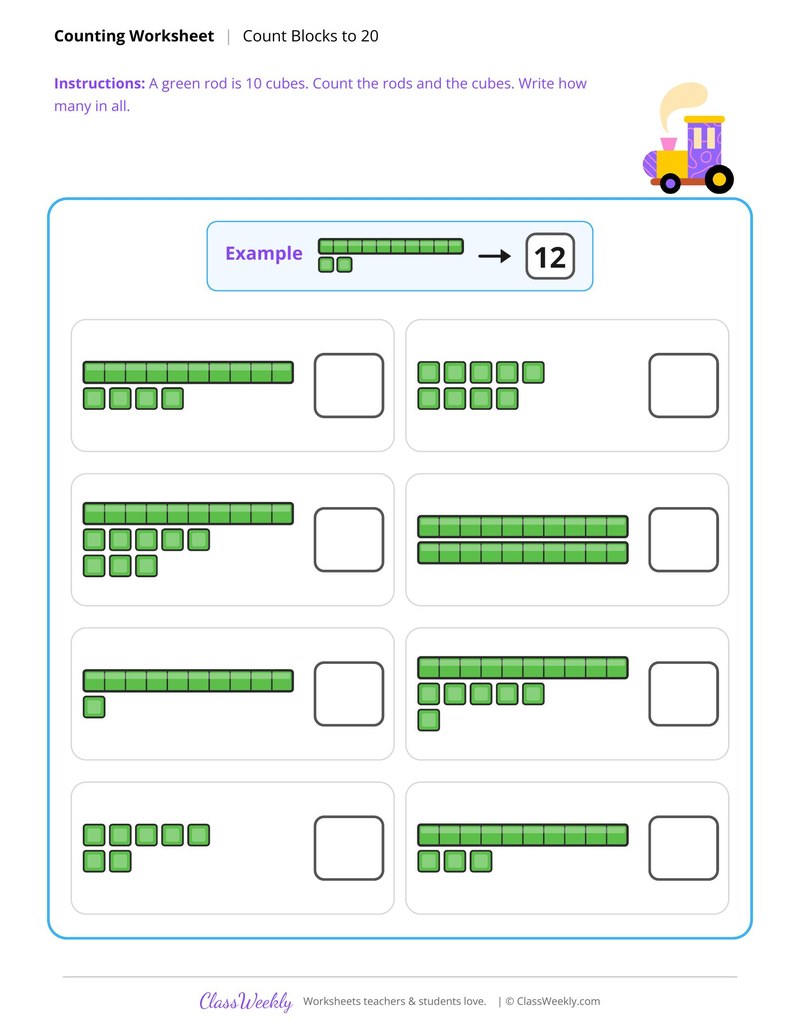
Counting to 100 by ones and by tens is the Common Core standard K.CC.A.1, expected by the end of kindergarten. Many children count reliably to 20 or 30 by midyear, then use counting by tens as a bridge to 100. Our block pages, where a rod is 10 cubes, let children count the rods by tens and then the loose cubes.
What is one-to-one correspondence, and why does it matter?
⌄
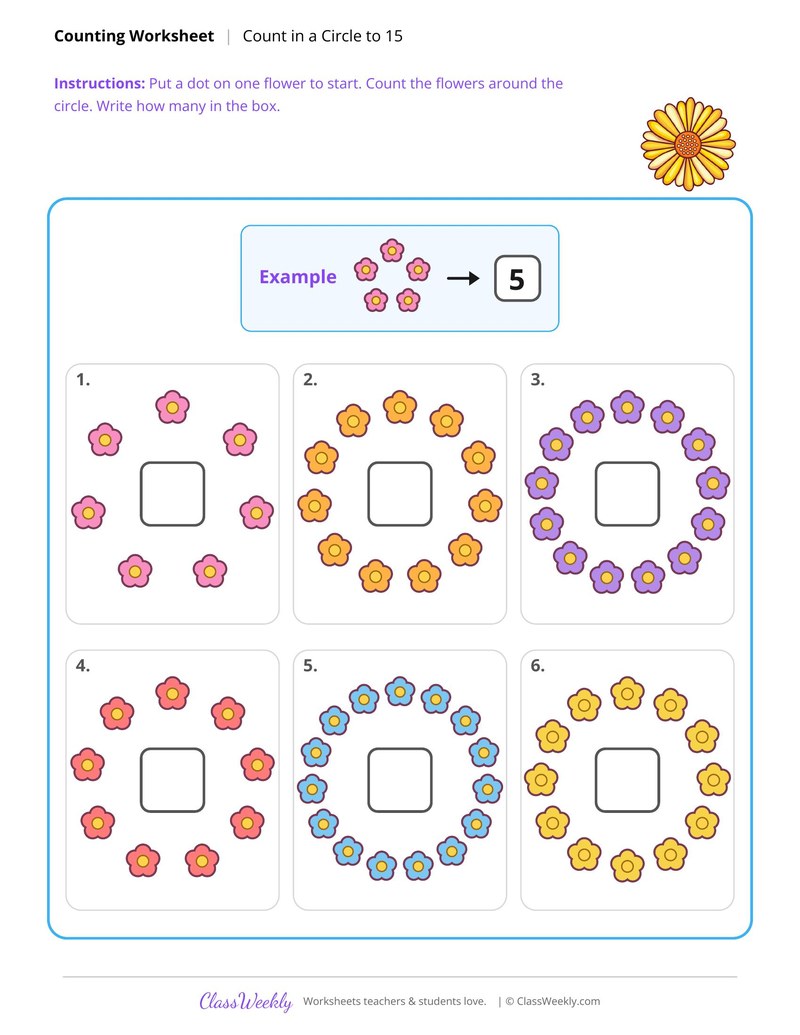
One-to-one correspondence means saying one number for each object counted (CCSS K.CC.B.4). It turns counting from a memorized chant into an understanding of how many. Pages like Count the Flowers in a Circle ask children to put a dot on one flower to start, so they know where they began.
How do kindergarteners learn teen numbers?
⌄
Kindergarteners learn that a teen number is 10 ones and some more ones (CCSS K.NBT.A.1). Our teen pages show this with two ten frames, a ten rod and cubes, and egg cartons, then move to sentences like 16 = 10 + 6. Children color, circle, match, cut and glue before writing the sentence themselves.
Do kindergarteners learn tens and ones?
⌄
Yes, as an early look at place value. Tens and ones pages show a rod as 1 ten and a cube as 1 one, and children write or circle the tens and ones for numbers up to 30, then count rods by tens up to 100. It builds on the teen number idea of 10 ones and some more.
How can I tell if my kindergartener needs more counting practice?
⌄
Watch whether your child counts a small group without skipping or counting an object twice, and can write the number to match. A child who says numbers quickly but loses track while counting objects needs more practice with small groups, such as the dot cards and cube towers to 10.
Ratings & Reviews
No reviews yet. Be the first to share what you think.
Reviews are for ClassWeekly members.
Make a Request
Spotted something to fix, or want a worksheet we don't have yet? Tell us and we'll make it.
Worksheet Details
| Grade | Kindergarten |
| Subject | Math |
| Topic | Counting |
| Standard | K.CC.B.5 |
| Pages | 1 page |
| Difficulty | Medium |
Learn More
What is ClassWeekly?
ClassWeekly offers free worksheets and printable learning resources for kids, from preschool up. All worksheets are aligned to Common Core, NGSS, and C3 Framework standards and designed by educators. Become a member to access the full library and download unlimited PDFs.