Sort Big and Small Letter Blocks
Written by Adi Ackerman, Head Teacher
"Sort Big and Small Letter Blocks" is written for Kindergarten (Ages 5-6), and it covers Common Core RF.K.1.D. If your little one is a year younger but already steady on letters, the page still works. You may just need to read the instructions out loud. And if they are older and upper lower case never quite stuck, this is a short review rather than busywork.
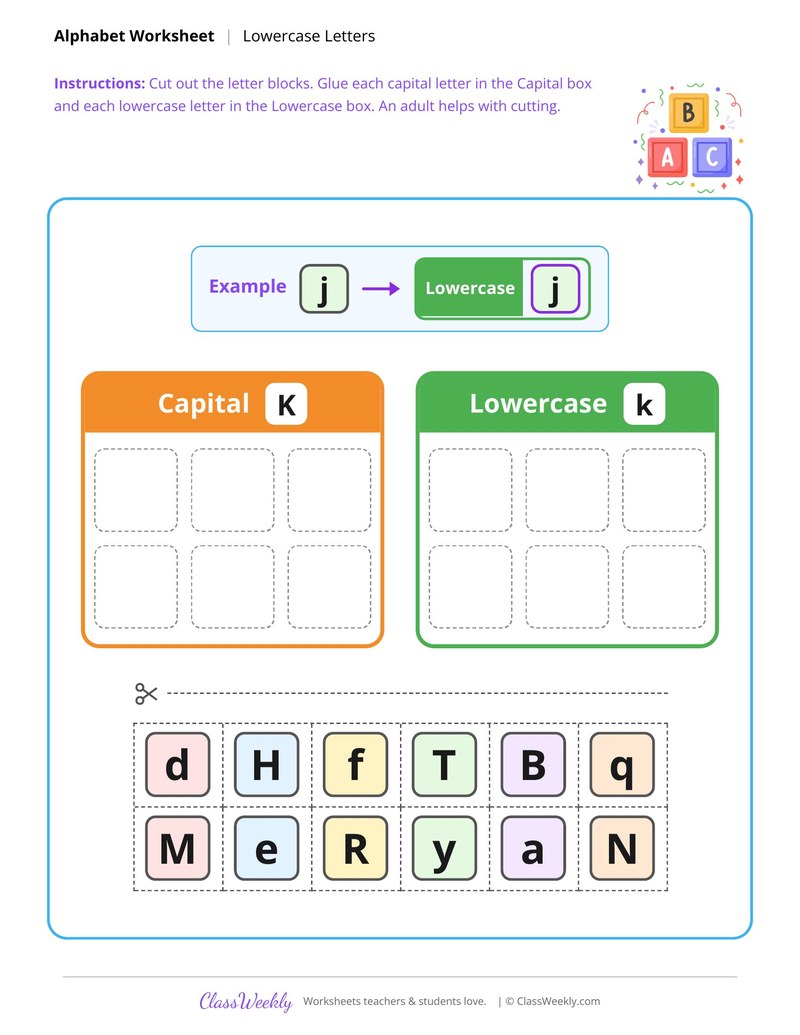
Kindergarten reading worksheet: cut out letter blocks like K, k and H and glue each in the Capital box or the Lowercase box. Answer key included. Part of our upper lower case letters collection. Aligned to Common Core standards.
How do I use this worksheet?
Begin with a shared reading or oral warm-up that highlights upper lower case so students hear and see the skill in context before practicing it independently. Have students work through it with your modeling first (do the first item together on the board), then try the rest with a partner, especially for phonics-based tasks where saying an answer aloud first helps. After completing the worksheet, use one or two examples from the page to start a discussion: "Where else have you seen this in your reading?" These upper lower case worksheets are ideal for use during small group reading time, as independent center work, or as a homework activity.
What students will practice
- Students will tell capital letters from lowercase letters.
- Students will cut out letter blocks with help from an adult.
- Students will glue each block in the Capital box or the Lowercase box.
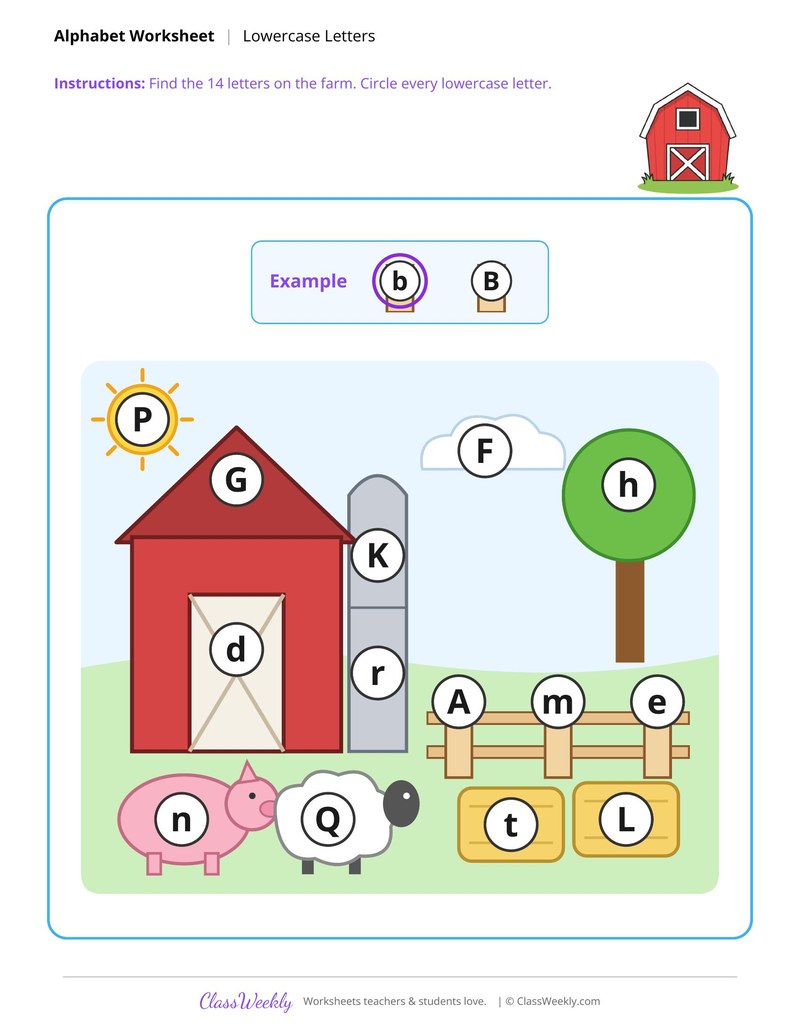
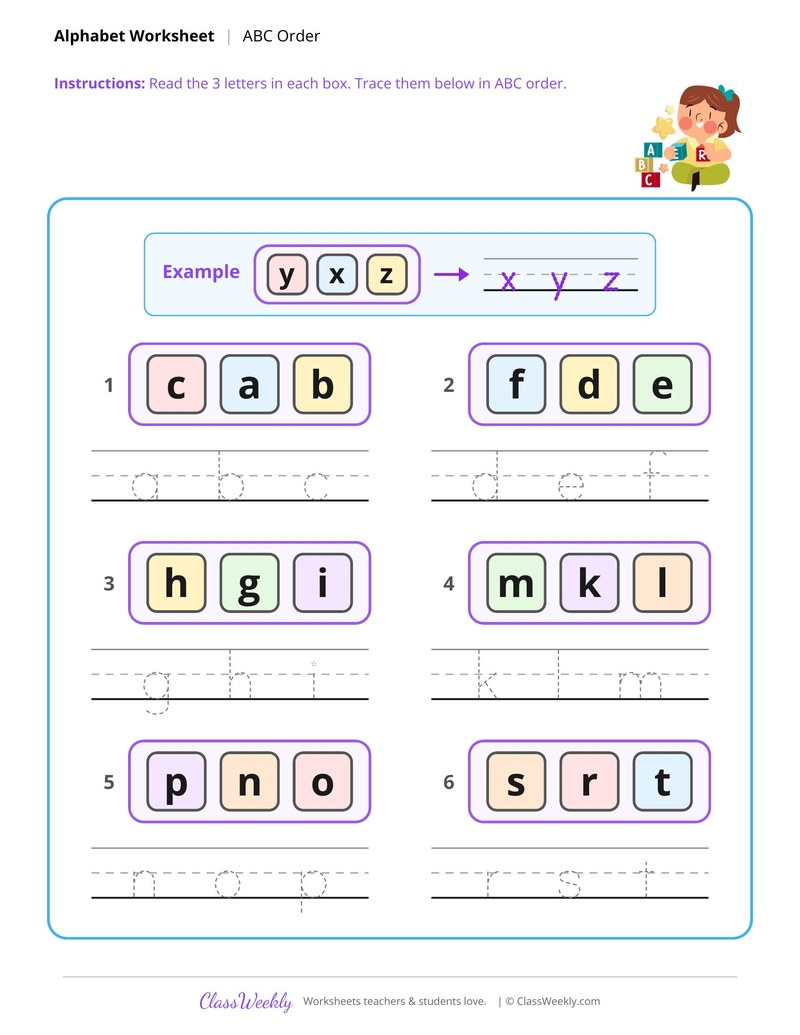
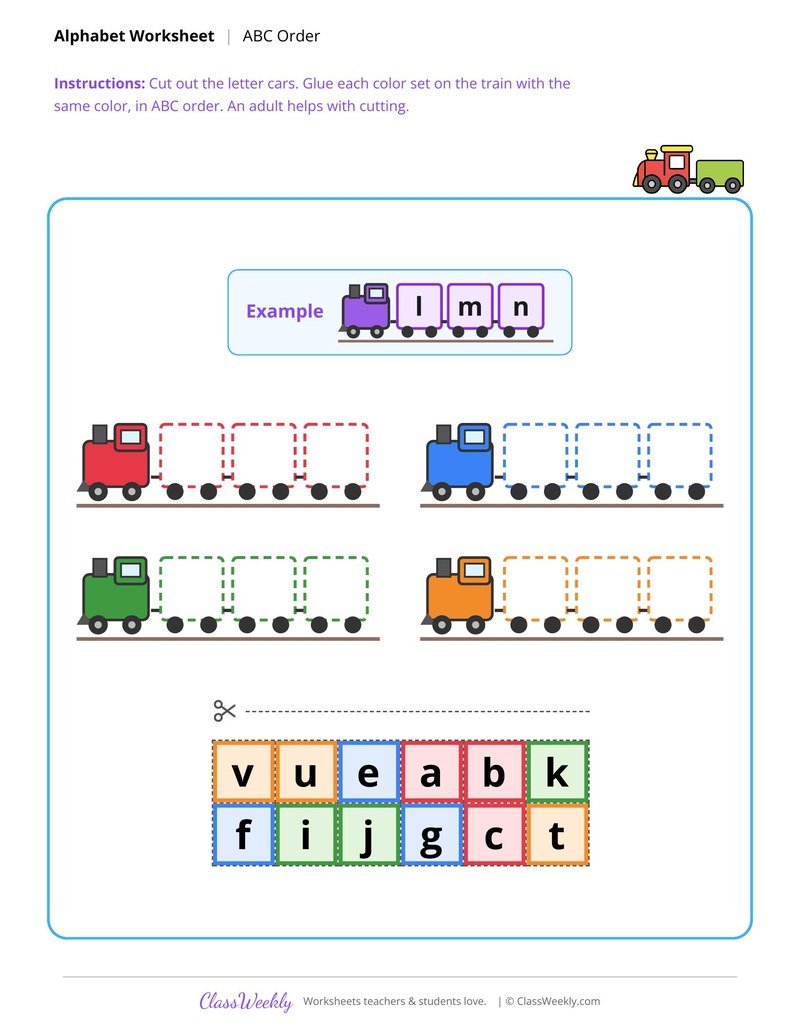


Curriculum Links
Common Core State Standards
Reading: Foundational Skills · Kindergarten
Standard: Recognize and name all upper- and lowercase letters of the alphabet.
View all RF.K.1.D worksheets →Find this in the curriculum
Browse the grade, subject, and topic this belongs to.
FAQ
How do I use this upper lower case worksheet?
⌄
Begin with a shared reading or oral warm-up that highlights upper lower case so students hear and see the skill in context before practicing it independently. Have students work through it with your modeling first (do the first item together on the board), then try the rest with a partner, especially for phonics-based tasks where saying an answer aloud first helps. After completing the worksheet, use one or two examples from the page to start a discussion: "Where else have you seen this in your reading?" These upper lower case worksheets are ideal for use during small group reading time, as independent center work, or as a homework activity.
What does this worksheet teach?
⌄
Cut out letter blocks like K, k and H and glue each in the Capital box or the Lowercase box. The directions on the page read: Cut out the letter blocks. Glue each capital letter in the Capital box and each lowercase letter in the Lowercase box. An adult helps with cutting. The page opens with a worked example, and an answer key is included.
Can I use this upper lower case worksheet for homeschool or classroom?
⌄
Yes, both. We made it for Kindergarten letters, and the page works the same whether it lands on a kitchen table or a center rotation. At home, most families go through it together and talk the answers out loud, and that talking is where most of the learning happens with upper lower case. In class it runs well as independent work while you pull a small group. Print one copy or thirty, whichever the day needs.
Why do kindergartners need to learn both uppercase and lowercase letters?
⌄
Real-world text uses both forms constantly-uppercase at the beginning of sentences and proper nouns, lowercase throughout. Children who only know uppercase letters will struggle to read books and printed materials, so mastering both forms is essential for reading fluency.
Is it normal for kindergartners to confuse uppercase and lowercase letters?
⌄
Yes, this is very common, especially with letter pairs like Bb, Dd, Pp, and Qq that look similar. Most kindergartners (ages 5-6) gradually sort out these distinctions over the course of the year with consistent exposure and practice.
How can parents help with uppercase and lowercase letter practice at home?
⌄
Play matching games with letter cards at home-lay out uppercase letters and ask your child to find the lowercase partner. Point out both forms in books as you read together, saying things like 'That's a capital T-it looks like this lowercase t.'
What Common Core standard covers uppercase and lowercase letters?
⌄
CCSS.ELA-LITERACY.RF.K.1d requires kindergartners to recognize and name all upper- and lowercase letters of the alphabet. Matching and sorting worksheets for both cases directly practice this standard.
What letter skills should a kindergartner have?
⌄
By the end of kindergarten, children should recognize and name every capital and lowercase letter (CCSS RF.K.1.D). They should also match each big letter to its small letter and begin to say the letters in ABC order.
How can I help my child stop mixing up b and d?
⌄
Practice one tricky letter at a time. Sheets like Find the b Among d, p and q and Color the Small d Balloons ask children to pick out a single letter from look alike letters. The Mirror Letter Match b and d sheet ties each letter to a first sound, like b for bus and d for dog.
Does my child need to read words on the letters sheets?
⌄
No. Children find, match, color or circle letters, and on the listening sheets an adult reads each letter name aloud from a list on the page. Cut and glue sheets say that an adult helps with cutting.
Which letters sheet should we start with?
⌄
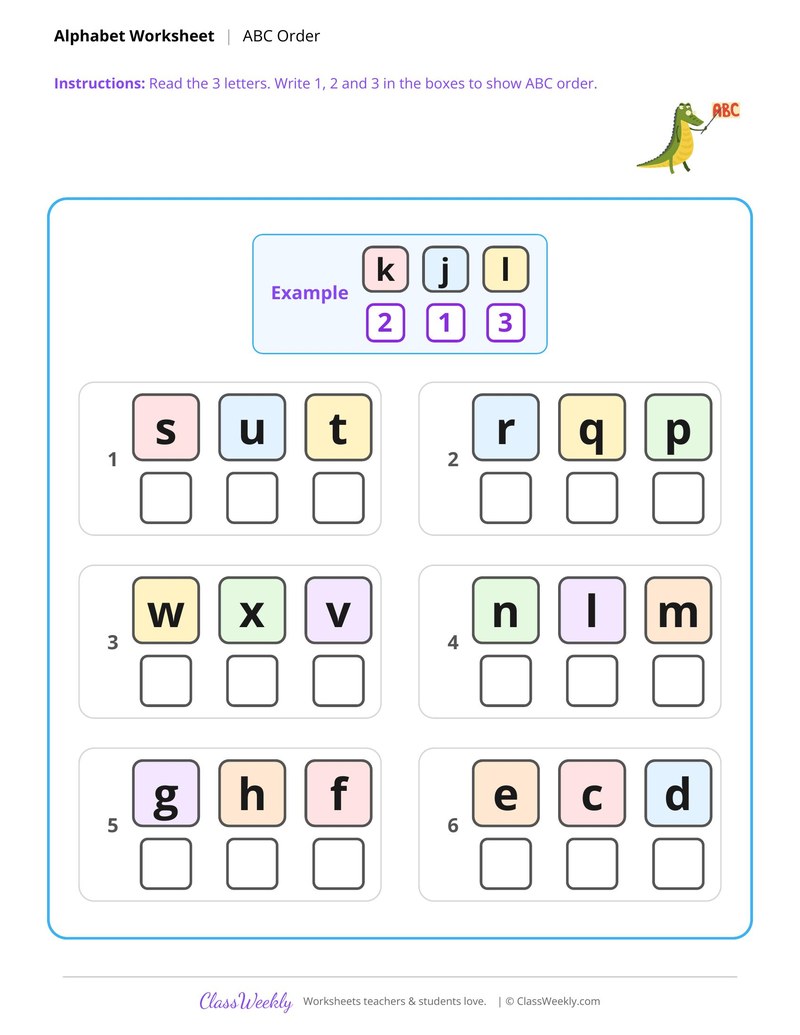
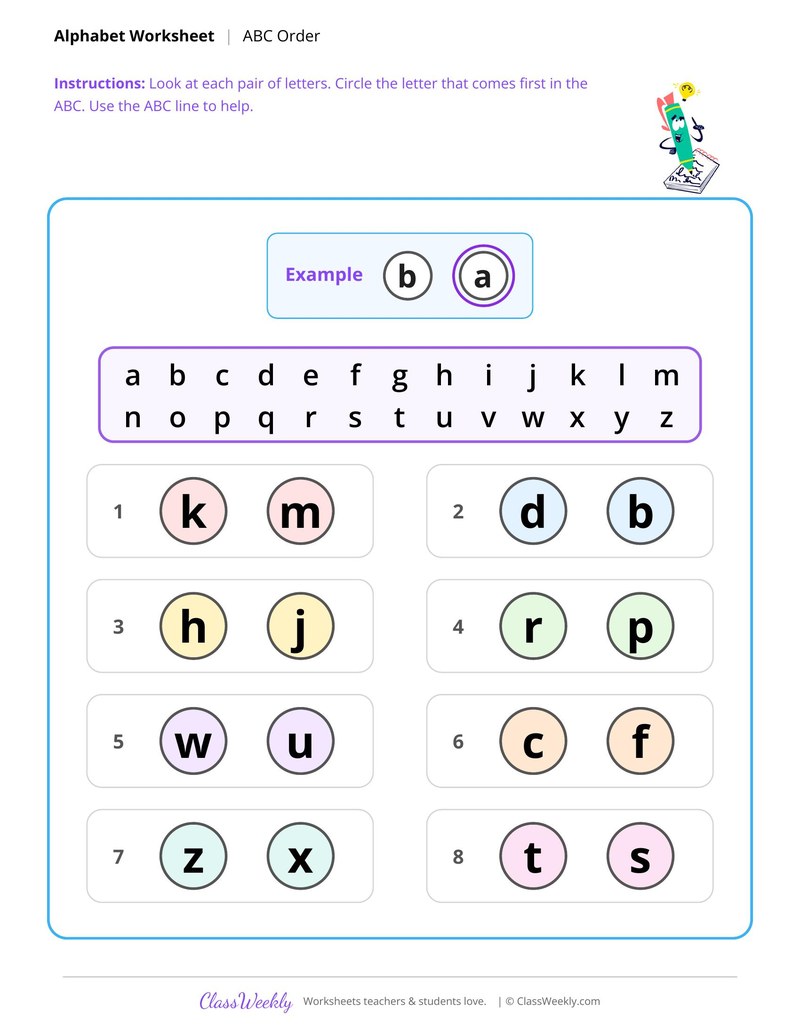
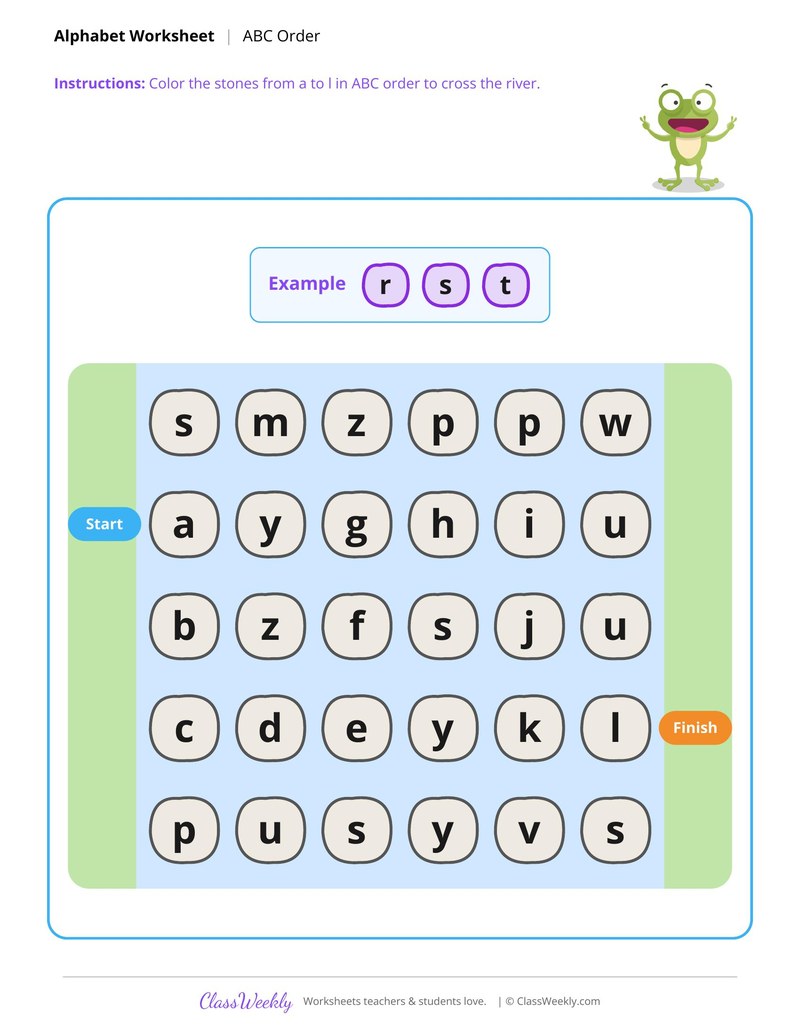
Start with a review set in alphabet order, A to H, then I to P and Q to Z. Each set has a circle page, a color by letter page, a big and small letter match and a path maze. Move to ABC order and the tricky letter pages after that.
Ratings & Reviews
No reviews yet. Be the first to share what you think.
Reviews are for ClassWeekly members.
Make a Request
Spotted something to fix, or want a worksheet we don't have yet? Tell us and we'll make it.
Worksheet Details
| Grade | Kindergarten |
| Subject | Reading |
| Topic | Letters |
| Standard | RF.K.1.D |
| Pages | 1 page |
| Difficulty | Medium |
Learn More
What is ClassWeekly?
ClassWeekly offers free worksheets and printable learning resources for kids, from preschool up. All worksheets are aligned to Common Core, NGSS, and C3 Framework standards and designed by educators. Become a member to access the full library and download unlimited PDFs.