Baby Animal Help True or False
Written by Adi Ackerman, Head Teacher
"Baby Animal Help True or False" is written for 1st Grade (Ages 6-7), and it covers NGSS 1-LS1-2. If your little one is a year younger but already steady on animals, the page still works. You may just need to read the instructions out loud. And if they are older and how animals help their young never quite stuck, this is a short review rather than busywork.
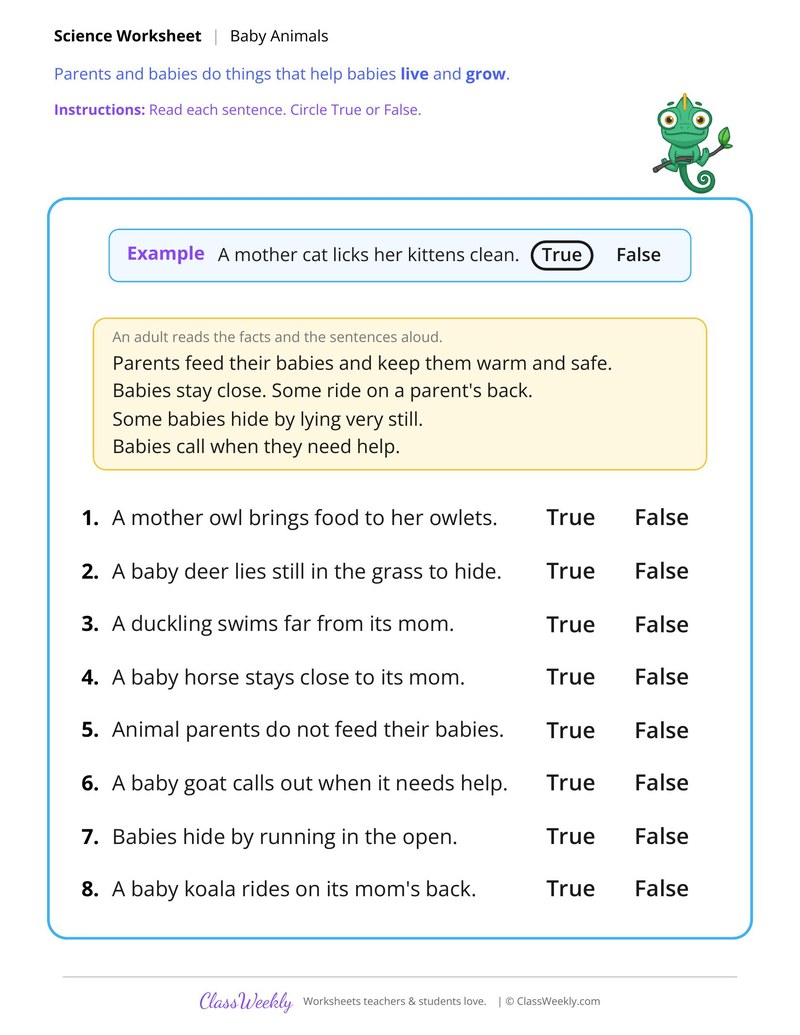
1st grade science worksheet: circle True or False for facts on owl parents, hiding deer and a koala riding on mom's back. Answer key included. Part of our how animals help their young collection. Aligned to NGSS standards.
How do I use this worksheet?
Start with something students can look at or think about: a photo, a short video, a jar on the windowsill, or a question like "what do you already know about how animals help their young?" Then let them work through the first item together as a class, then finish the rest independently or with a partner, keeping a word bank or anchor chart in view so the vocabulary stays available. When you review, ask students how they knew, and let them point to the part of the diagram or reading that told them. These how animals help their young worksheets work well as a lead in before an investigation, as a way to capture what students noticed afterward, or as review before an assessment.
What students will practice
- Students will circle True or False for eight sentences about baby animals.
- Students will explain that parents feed babies and keep them warm and safe.
- Students will describe how a baby deer hides by lying still in the grass.
Curriculum Links
Next Generation Science Standards
Science · 1st Grade
Find this in the curriculum
Browse the grade, subject, and topic this belongs to.
FAQ
How do I use this how animals help their young worksheet?
⌄
Start with something students can look at or think about: a photo, a short video, a jar on the windowsill, or a question like "what do you already know about how animals help their young?" Then let them work through the first item together as a class, then finish the rest independently or with a partner, keeping a word bank or anchor chart in view so the vocabulary stays available. When you review, ask students how they knew, and let them point to the part of the diagram or reading that told them. These how animals help their young worksheets work well as a lead in before an investigation, as a way to capture what students noticed afterward, or as review before an assessment.
What does this worksheet teach?
⌄
Circle True or False for facts on owl parents, hiding deer and a koala riding on mom's back. The directions on the page read: Read each sentence. Circle True or False. The page opens with a worked example, and an answer key is included.
Can I use this how animals help their young worksheet for homeschool or classroom?
⌄
Yes, both. We made it for 1st Grade animals, and the page works the same whether it lands on a kitchen table or a center rotation. At home, most families go through it together and talk the answers out loud, and that talking is where most of the learning happens with how animals help their young. In class it runs well as independent work while you pull a small group. Print one copy or thirty, whichever the day needs.
What does how animals help their young teach first graders?
⌄
First graders learn that many animals, but not all, actively care for their young after birth or hatching. They explore specific examples: a mother bird bringing food to nestlings, a wolf pack protecting pups, a penguin keeping its egg warm. Students compare animals that provide extended care (mammals, many birds) with those that do not (most fish, insects), and begin to understand how parental behavior is an adaptation that helps offspring survive.
When do first graders learn about animal parental care?
⌄
How animals help their young is an NGSS 1-LS1-2 standard addressed in Grade 1 life science, typically as part of the animals unit after students have learned about animal needs and life cycles. The standard asks students to read texts and media about animal behaviors, including parental care, that help young animals survive. It pairs naturally with lessons on animal inherited traits and adaptations.
How can I use these worksheets at home?
⌄
Watch a short nature clip about an animal family, a mother duck leading ducklings, a lion pride protecting cubs, and pause to discuss what the parent is doing and why. Then complete the worksheet to compare care strategies across two or three animal types. Ask your child: which animal do you think needs the most help from its parents, and why? The discussion builds reasoning skills alongside science content.
What do 1st graders learn about animals in science?
⌄
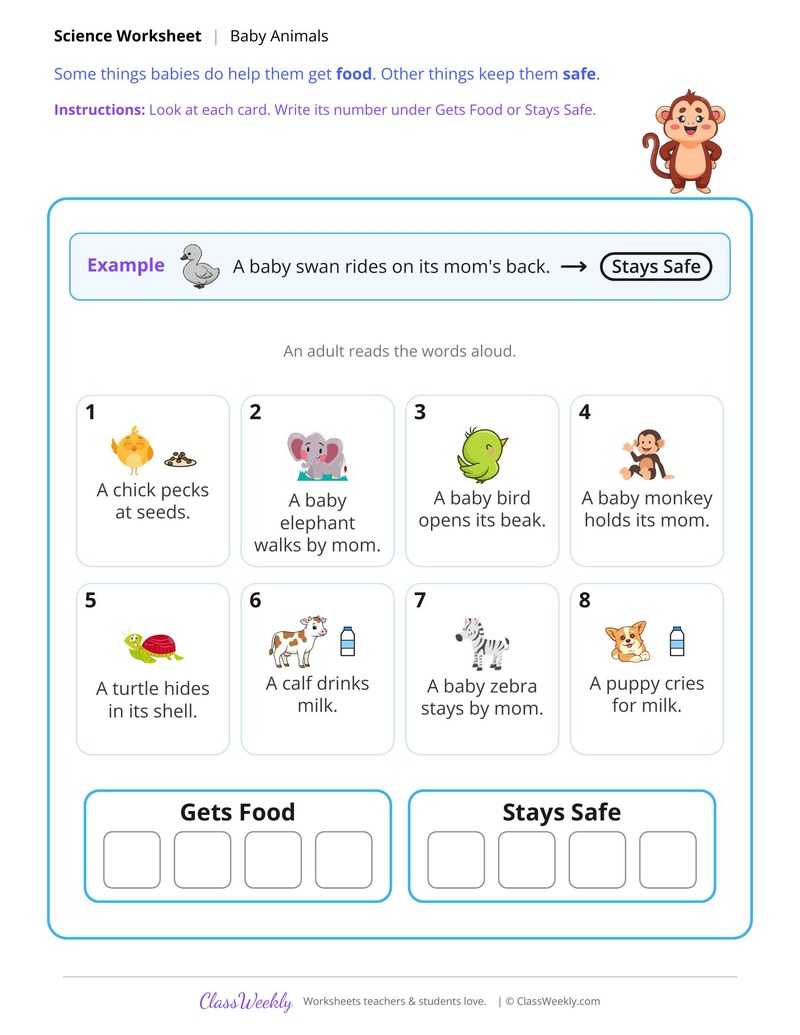
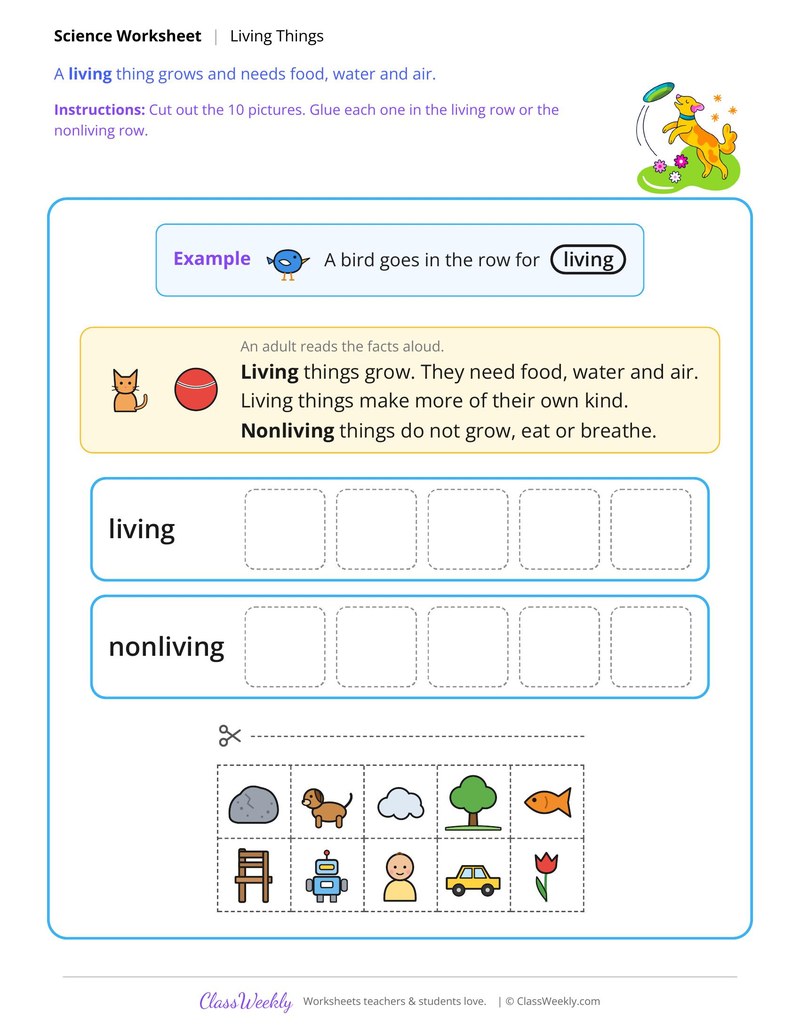
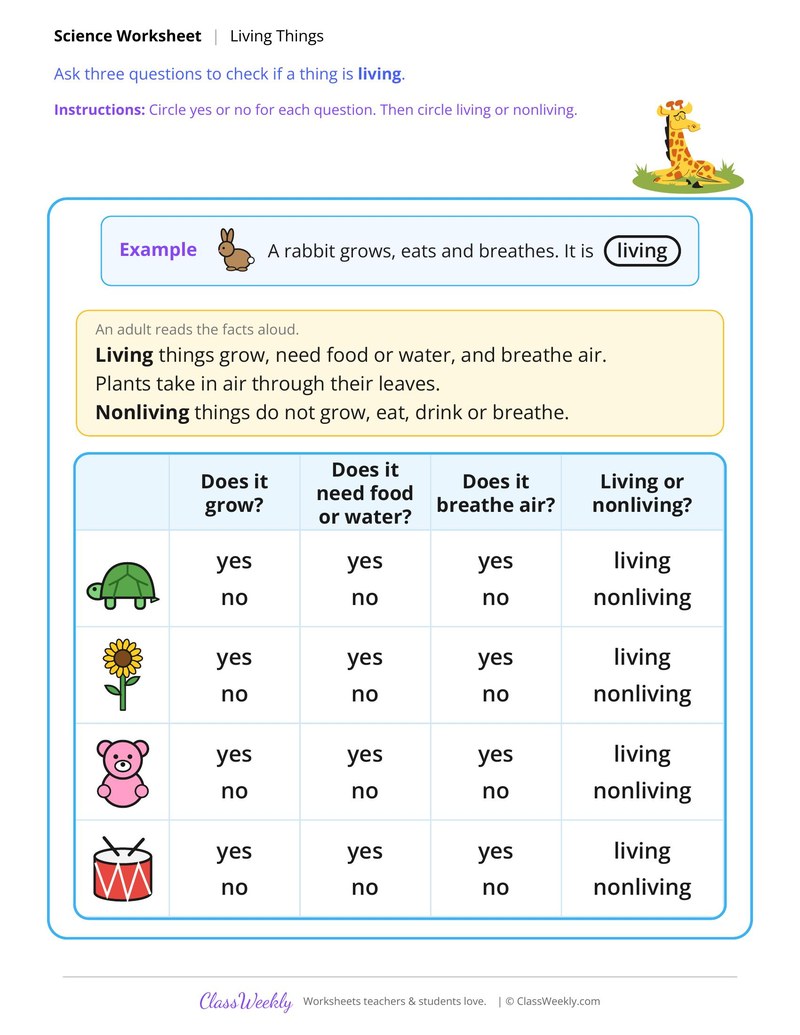
They learn that animals need food, water, air and shelter, and that body parts like webbed feet, trunks and claws each have a job. They also see that baby animals look like their parents and that parents feed their young and keep them warm and safe.
How do these worksheets teach that young animals are like their parents?
⌄
Children glue a calf, a lamb and a duckling under their parents, circle the parent of a baby panda or penguin, and match ocean babies to grown whales and seals. A memory card game shows that some babies, like a tadpole or a caterpillar, do not look like their parents at first.
How do camels and polar bears fit where they live?
⌄
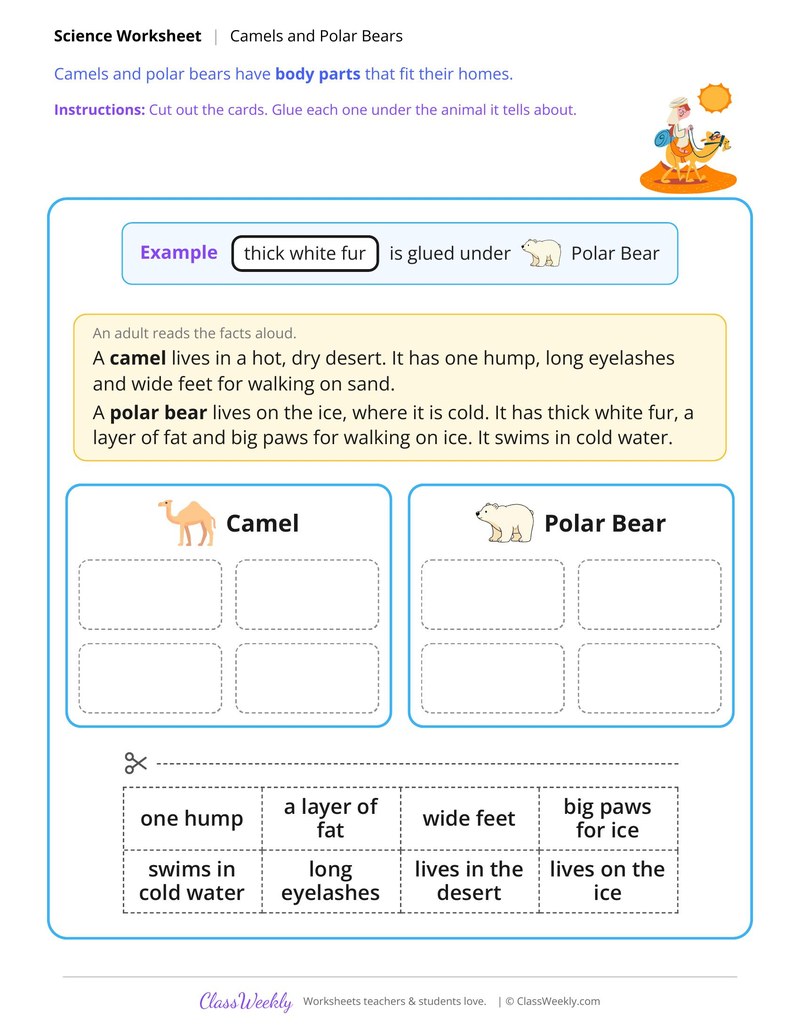
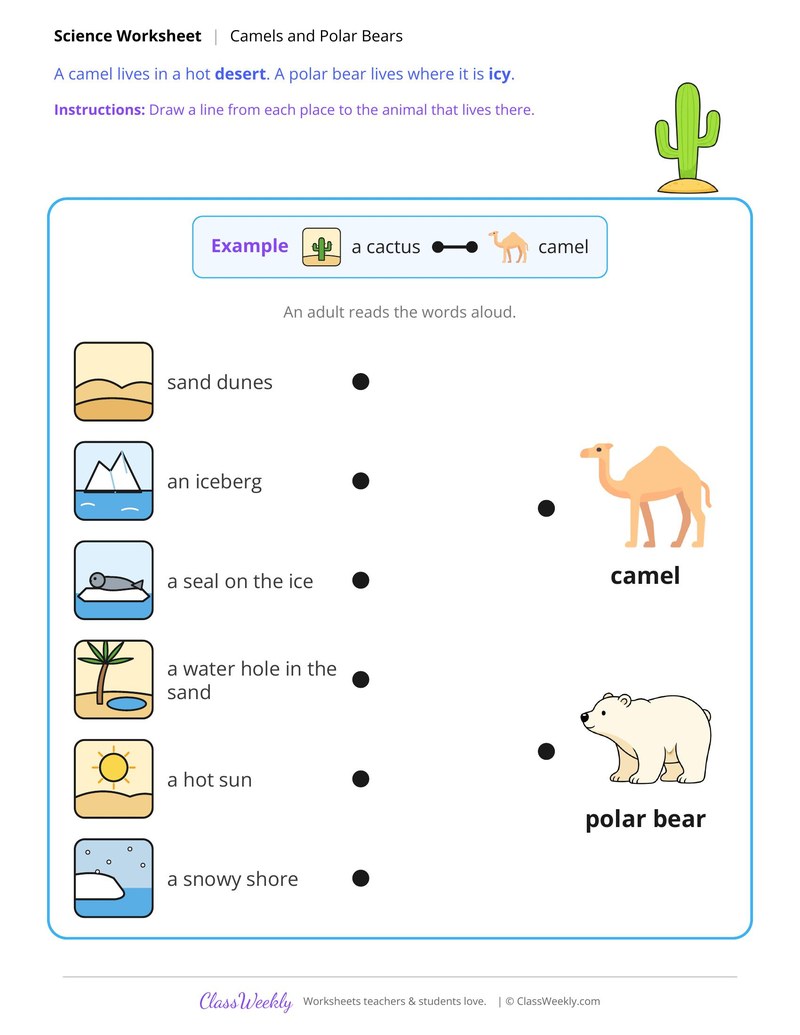
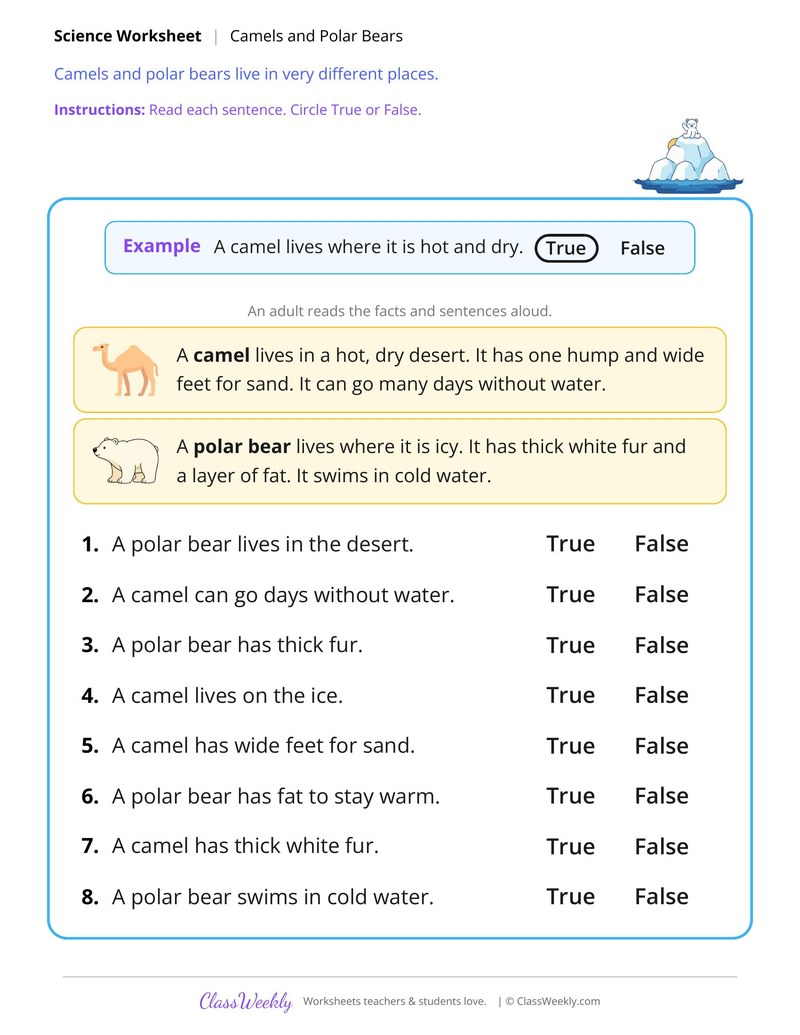
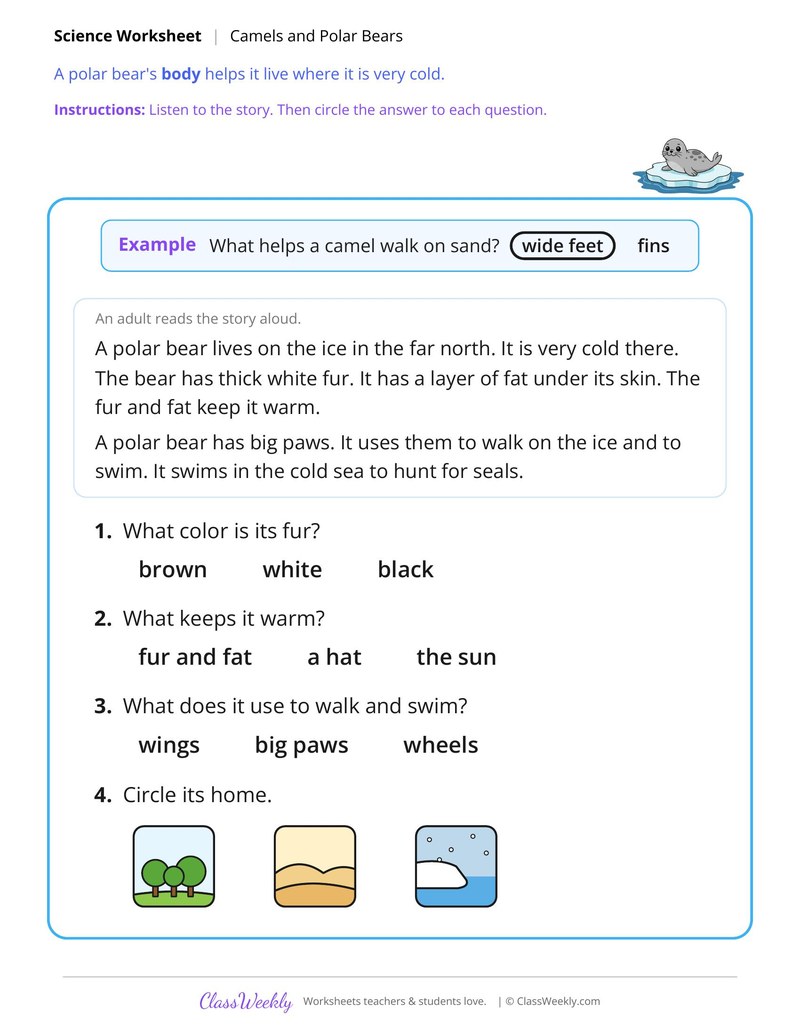
A camel has one hump and wide feet for walking on sand in a hot, dry desert. A polar bear has thick white fur, a layer of fat and big paws for walking on ice. The camel and polar bear sheets have children sort these traits and answer questions about them.
Do the animal worksheets have answer keys?
⌄
Most sheets come with an answer key, so an adult can check the matching, sorting and True or False pages quickly. Many sheets also open with a worked example that shows the child what to do.
Ratings & Reviews
No reviews yet. Be the first to share what you think.
Reviews are for ClassWeekly members.
Make a Request
Spotted something to fix, or want a worksheet we don't have yet? Tell us and we'll make it.
Learn More
What is ClassWeekly?
ClassWeekly offers free worksheets and printable learning resources for kids, from preschool up. All worksheets are aligned to Common Core, NGSS, and C3 Framework standards and designed by educators. Become a member to access the full library and download unlimited PDFs.