Animal Groups Color Sort
Written by Adi Ackerman, Head Teacher
"Animal Groups Color Sort" is written for 2nd Grade (Ages 7-8). If your little one is a year younger but already steady on animals, the page still works. You may just need to read the instructions out loud. And if they are older and animal classification never quite stuck, this is a short review rather than busywork.
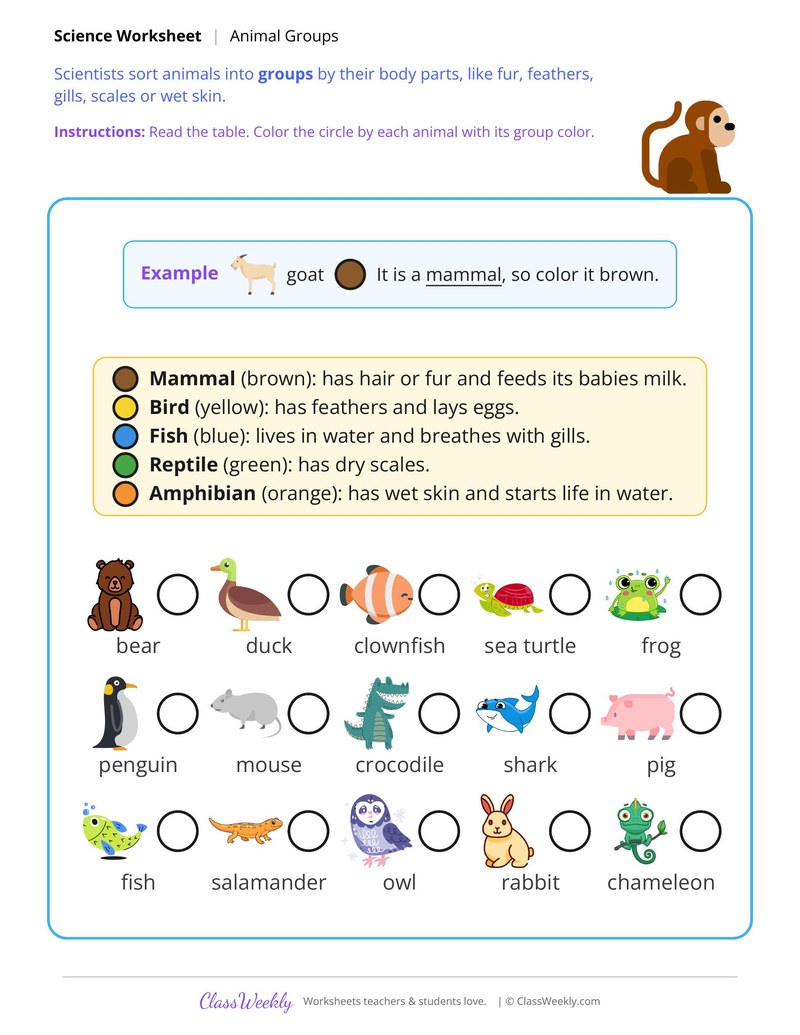
2nd grade science worksheet: color the circle by each animal, from a bear and duck to a frog and shark, by its group color. Answer key included. Part of our animal classification animals collection.
How do I use this worksheet?
Start with something students can look at or think about: a photo, a short video, a jar on the windowsill, or a question like "what do you already know about animal classification?" Then let them work through it independently after a quick group example, checking in with a partner if they get stuck, keeping a word bank or anchor chart in view so the vocabulary stays available. When you review, ask students how they knew, and let them point to the part of the diagram or reading that told them. These animal classification worksheets work well as a lead in before an investigation, as a way to capture what students noticed afterward, or as review before an assessment.
What students will practice
- Students will sort animals into mammals, birds, fish, reptiles and amphibians using body clues.
- Students will read a table that links each animal group to a color.
- Students will color circles for animals such as a penguin, a crocodile and a salamander.
Curriculum Links
Find this in the curriculum
Browse the grade, subject, and topic this belongs to.
FAQ
How do I use this animal classification worksheet?
⌄
Start with something students can look at or think about: a photo, a short video, a jar on the windowsill, or a question like "what do you already know about animal classification?" Then let them work through it independently after a quick group example, checking in with a partner if they get stuck, keeping a word bank or anchor chart in view so the vocabulary stays available. When you review, ask students how they knew, and let them point to the part of the diagram or reading that told them. These animal classification worksheets work well as a lead in before an investigation, as a way to capture what students noticed afterward, or as review before an assessment.
What does this worksheet teach?
⌄
Color the circle by each animal, from a bear and duck to a frog and shark, by its group color. The directions on the page read: Read the table. Color the circle by each animal with its group color. The page opens with a worked example, and an answer key is included.
Can I use this animal classification worksheet for homeschool or classroom?
⌄
Yes, both. We made it for 2nd Grade animals, and the page works the same whether it lands on a kitchen table or a center rotation. At home, most families go through it together and talk the answers out loud, and that talking is where most of the learning happens with animal classification. In class it runs well as independent work while you pull a small group. Print one copy or thirty, whichever the day needs.
What does animal classification teach second graders?
⌄
Students learn to group animals by shared physical traits such as body covering, how they breathe, whether they are warm or cold-blooded, and how they reproduce. For 7-8 year olds, sorting activities with pictures help make abstract categories feel concrete and memorable.
When do second graders learn animal classification?
⌄
Animal classification is a core Grade 2 life science topic, often introduced early in the year as a foundation for deeper animal studies. It builds directly on Kindergarten and Grade 1 lessons where students identified animal body parts and basic needs.
How can I use these worksheets at home?
⌄
Play an animal sorting game using animal cards or stickers, ask your child to group them by skin type (fur, scales, feathers, skin). Then use the worksheets to label and confirm the groups. A trip to a zoo or aquarium is a perfect real-world extension.
What do 2nd grade animal worksheets cover?
⌄
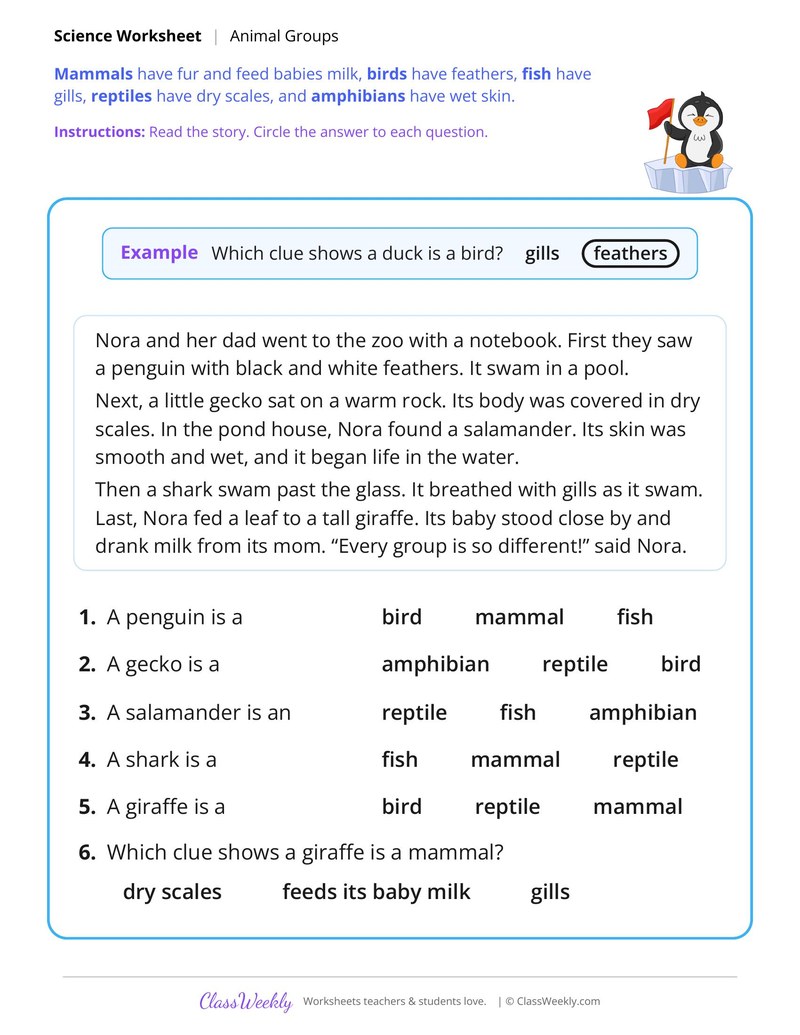
Habitats, body parts, adaptations, coverings, diets, classification, traits, life cycles and food chains. Most pages pair a short passage or fact box with questions, a chart, a sort or a cut and glue activity, like the zoo story on animal groups or the caribou herd pages.
How do 2nd graders sort animals into groups?
⌄
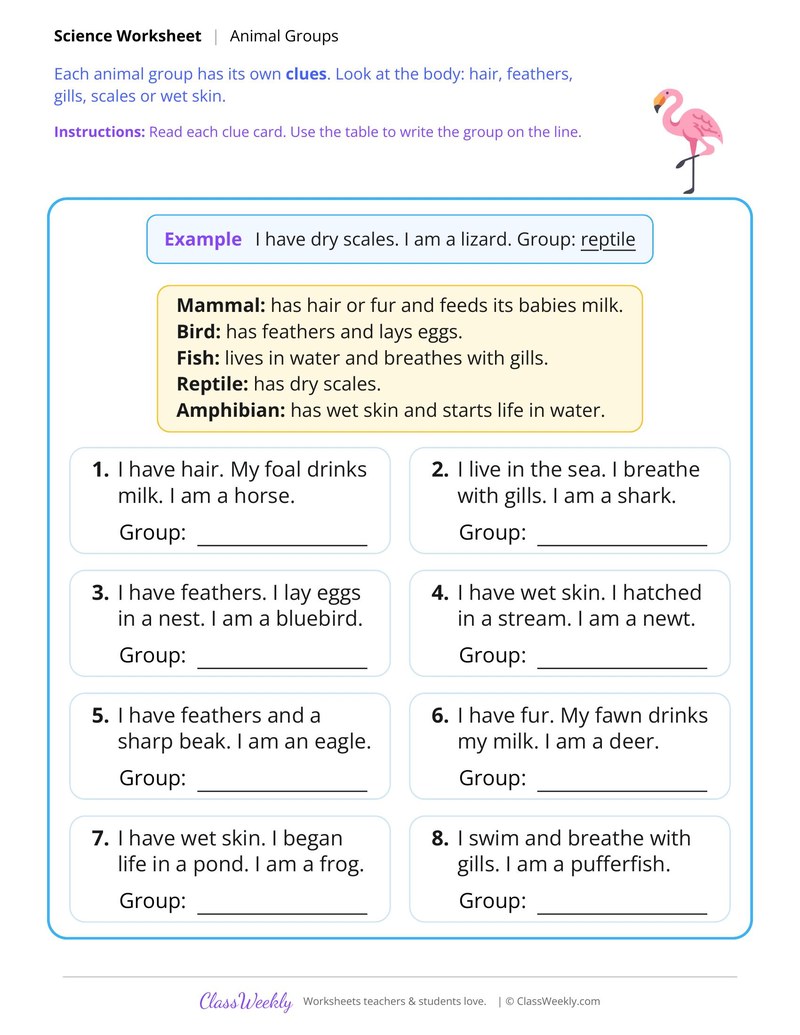
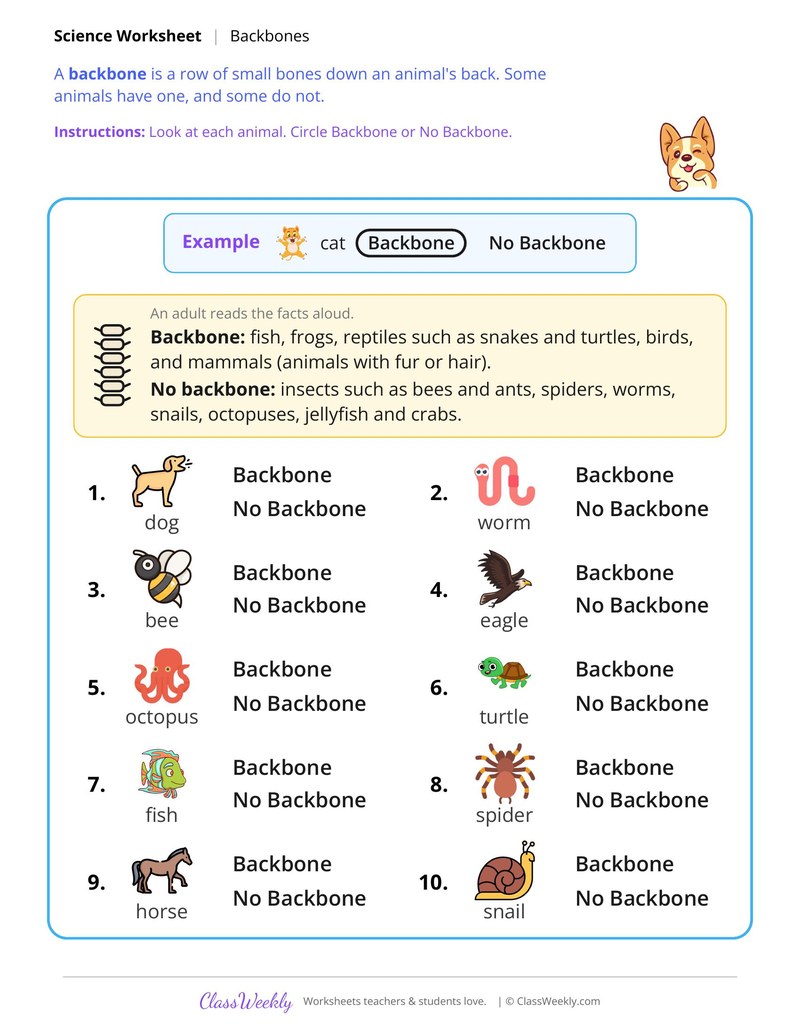
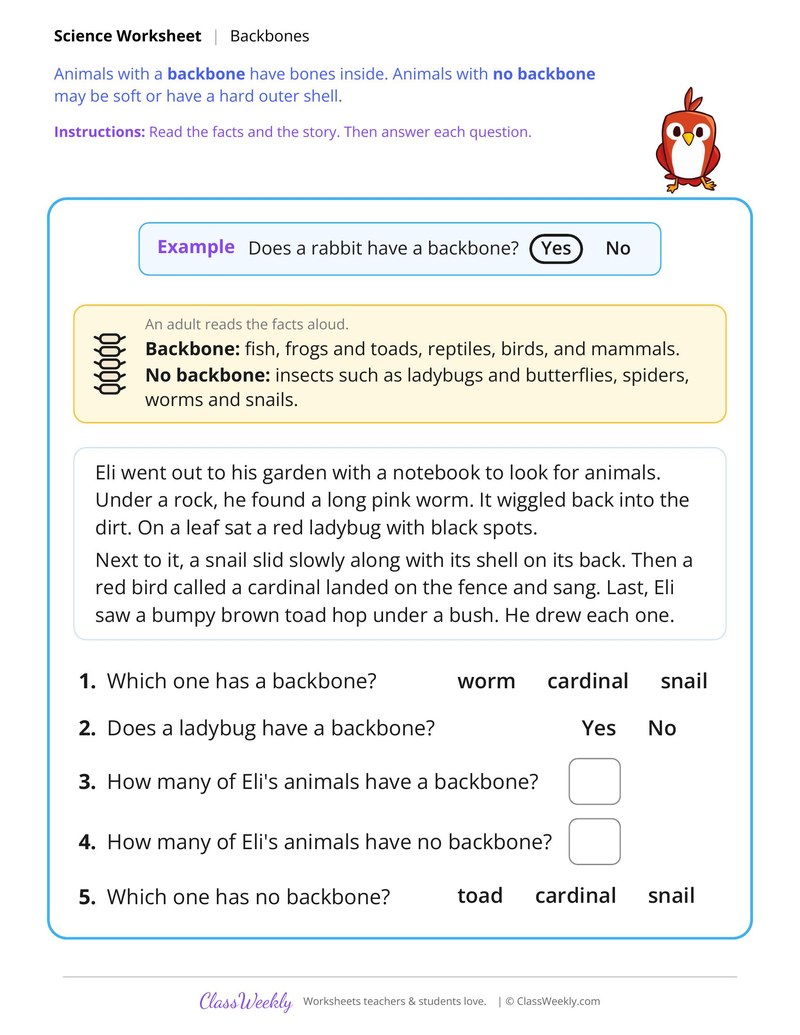
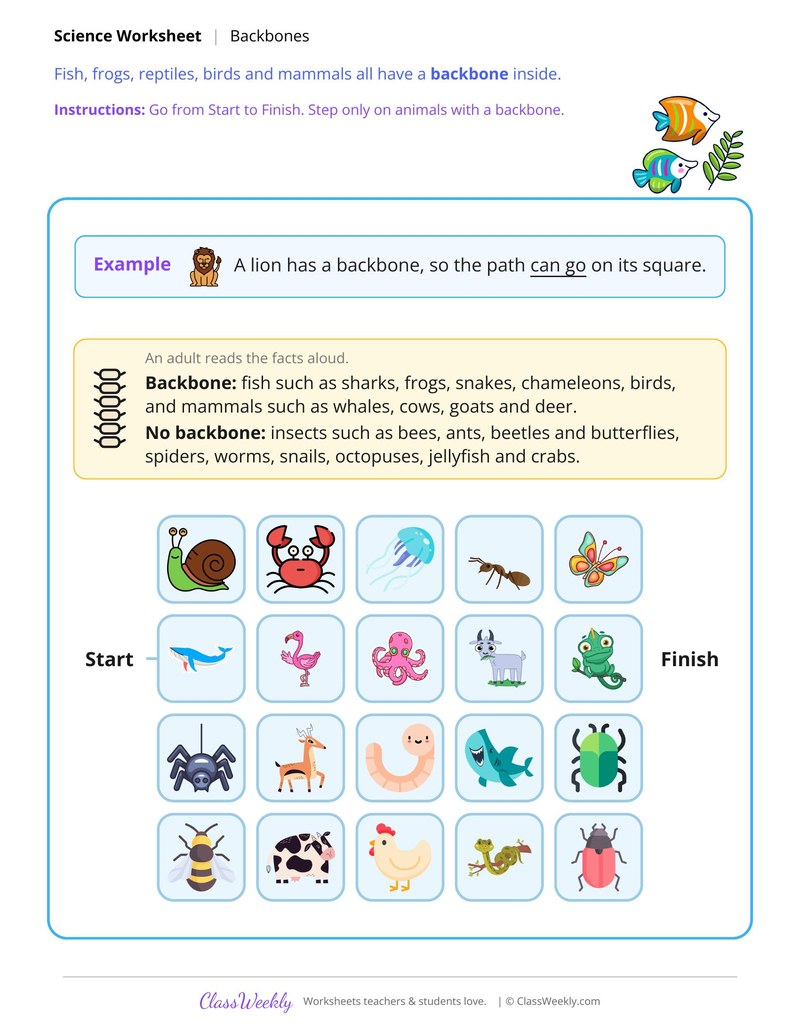
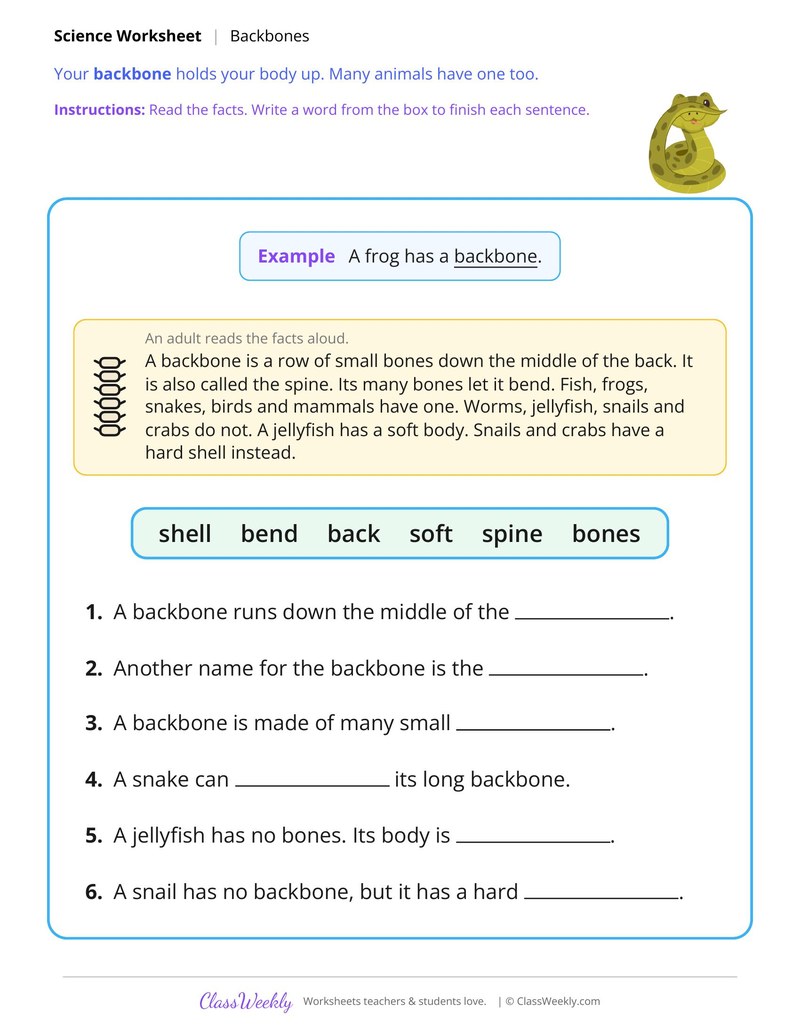
They look at body clues. Mammals have hair or fur and feed babies milk, birds have feathers, fish breathe with gills, reptiles have dry scales and amphibians have wet skin. Other pages sort animals with a backbone, like a dog or an eagle, from animals with none, like a worm or a snail.
Which NGSS standard do these animal worksheets support?
⌄
The habitat pages, such as the desert camel and Arctic polar bear sheets, support 2-LS4-1, observing plants and animals to compare the diversity of life in different habitats. Classification, life cycles and food chains have no 2nd grade NGSS standard, so those pages give an early start on later grades.
Why do some animals live in groups?
⌄
The caribou pages show that a herd keeps animals safe. Many eyes and ears watch for wolves, calves stay in the middle and the herd walks far together to find food.
Is there an answer key for each worksheet?
⌄
Yes. Every animal sheet in this topic comes with an answer key, and each one opens with a worked example.
Ratings & Reviews
No reviews yet. Be the first to share what you think.
Reviews are for ClassWeekly members.
Make a Request
Spotted something to fix, or want a worksheet we don't have yet? Tell us and we'll make it.
Learn More
What is ClassWeekly?
ClassWeekly offers free worksheets and printable learning resources for kids, from preschool up. All worksheets are aligned to Common Core, NGSS, and C3 Framework standards and designed by educators. Become a member to access the full library and download unlimited PDFs.