Weather Window Words
Written by Adi Ackerman, Head Teacher
"Weather Window Words" is written for 2nd Grade (Ages 7-8). If your little one is a year younger but already steady on weather and climate, the page still works. You may just need to read the instructions out loud. And if they are older and weather words never quite stuck, this is a short review rather than busywork.
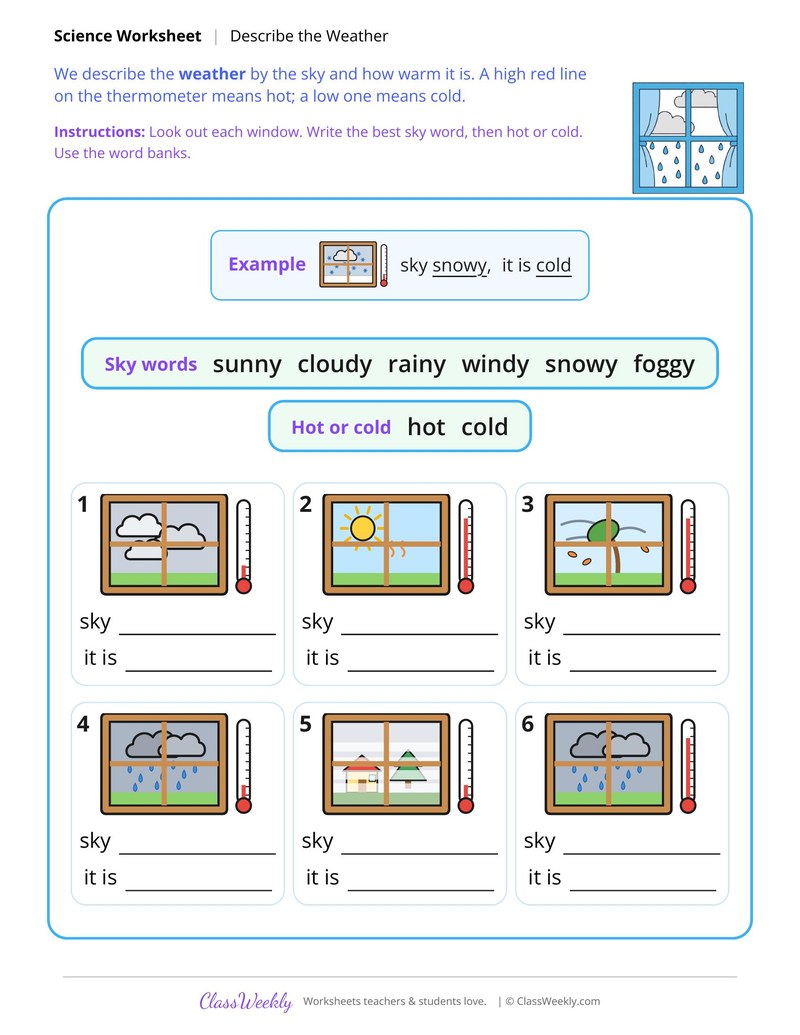
2nd grade science worksheet: look out six windows and write the sky word, like snowy or foggy, and hot or cold for each. Answer key included. Part of our weather words collection.
How do I use this worksheet?
Start with something students can look at or think about: a photo, a short video, a jar on the windowsill, or a question like "what do you already know about weather words?" Then let them work through it independently after a quick group example, checking in with a partner if they get stuck, keeping a word bank or anchor chart in view so the vocabulary stays available. When you review, ask students how they knew, and let them point to the part of the diagram or reading that told them. These weather words worksheets work well as a lead in before an investigation, as a way to capture what students noticed afterward, or as review before an assessment.
What students will practice
- Students will describe the weather by the sky and how warm it is.
- Students will read a thermometer line as hot or cold.
- Students will write sky words such as sunny, windy and rainy.
Curriculum Links
Find this in the curriculum
Browse the grade, subject, and topic this belongs to.
FAQ
How do I use this weather words worksheet?
⌄
Start with something students can look at or think about: a photo, a short video, a jar on the windowsill, or a question like "what do you already know about weather words?" Then let them work through it independently after a quick group example, checking in with a partner if they get stuck, keeping a word bank or anchor chart in view so the vocabulary stays available. When you review, ask students how they knew, and let them point to the part of the diagram or reading that told them. These weather words worksheets work well as a lead in before an investigation, as a way to capture what students noticed afterward, or as review before an assessment.
What does this worksheet teach?
⌄
Look out six windows and write the sky word, like snowy or foggy, and hot or cold for each. The directions on the page read: Look out each window. Write the best sky word, then hot or cold. Use the word banks. The page opens with a worked example, and an answer key is included.
Can I use this weather words worksheet for homeschool or classroom?
⌄
Yes, both. We made it for 2nd Grade weather and climate, and the page works the same whether it lands on a kitchen table or a center rotation. At home, most families go through it together and talk the answers out loud, and that talking is where most of the learning happens with weather words. In class it runs well as independent work while you pull a small group. Print one copy or thirty, whichever the day needs.
What do weather words worksheets teach second graders?
⌄
Students build a working weather vocabulary and learn to choose precise words instead of general ones, saying overcast rather than cloudy or drizzle rather than rain. Matching, sorting, and sentence activities move the words from recognition into actual use.
When do second graders learn weather vocabulary?
⌄
Weather words come early in the Grade 2 weather and climate unit because students need the terms before they can record observations or read a forecast. The vocabulary supports every later lesson on measurement, forecasting, and climate zones.
How can I use these worksheets at home?
⌄
Keep a two week weather log and ask your child to pick the most exact word for each day from the worksheet list. Comparing their choice to the word used on a weather app or the evening forecast sharpens the vocabulary quickly.
What do 2nd grade weather worksheets cover?
⌄
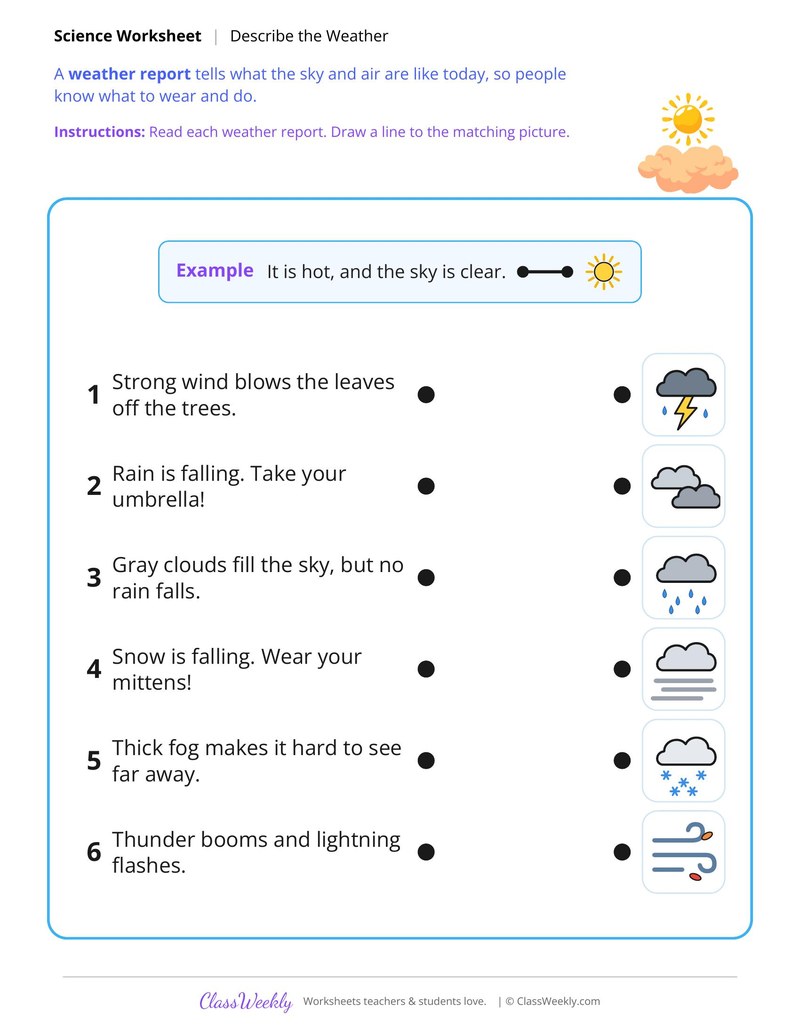
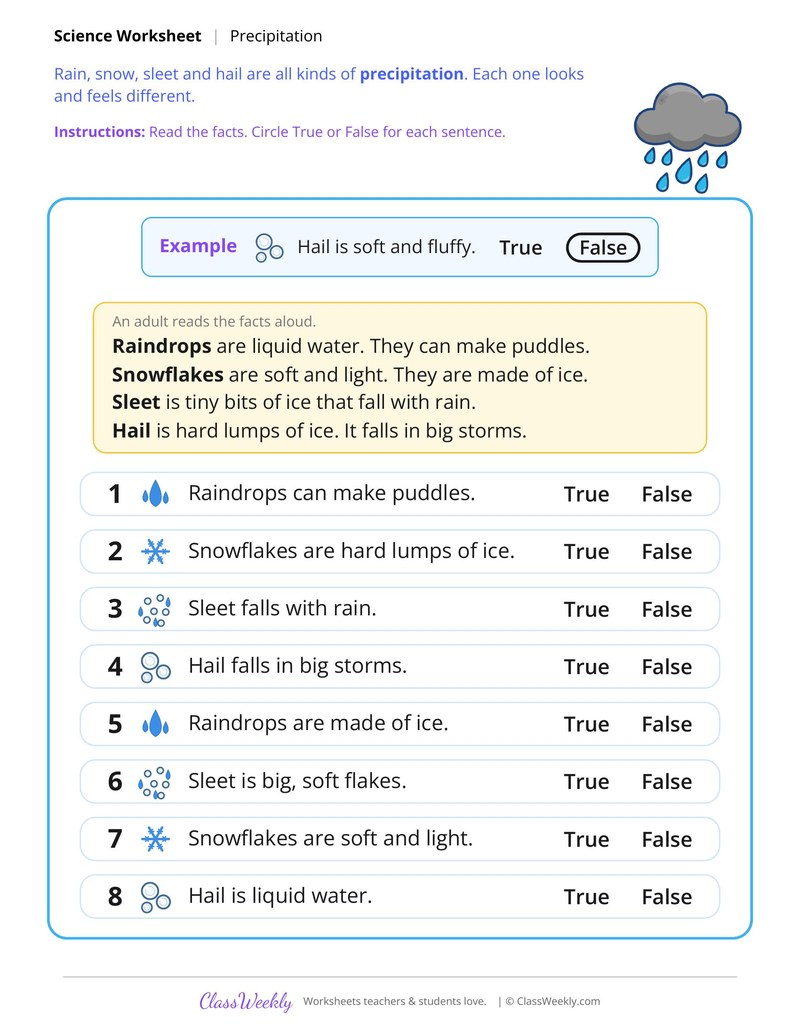
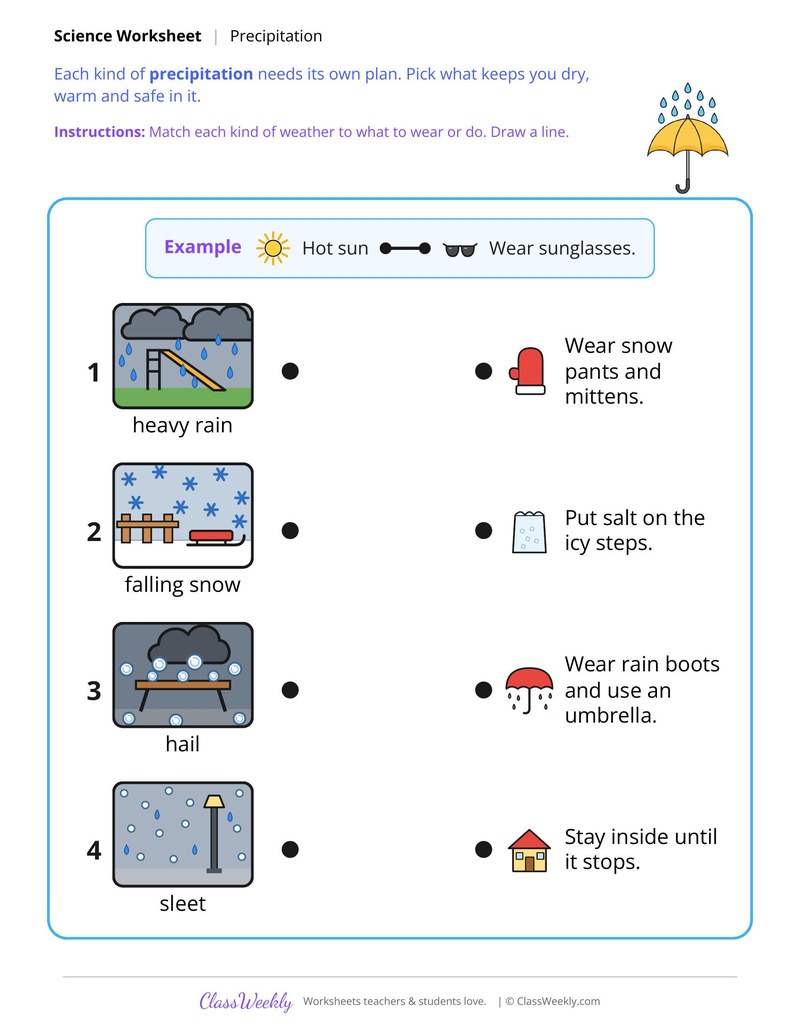
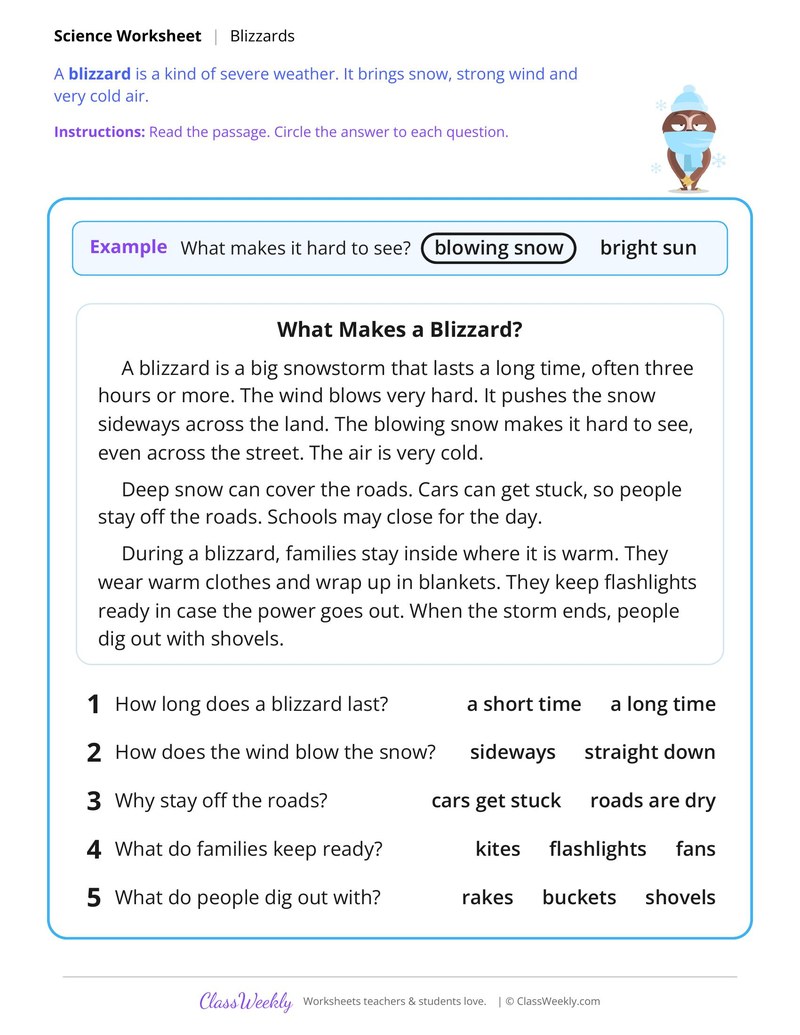
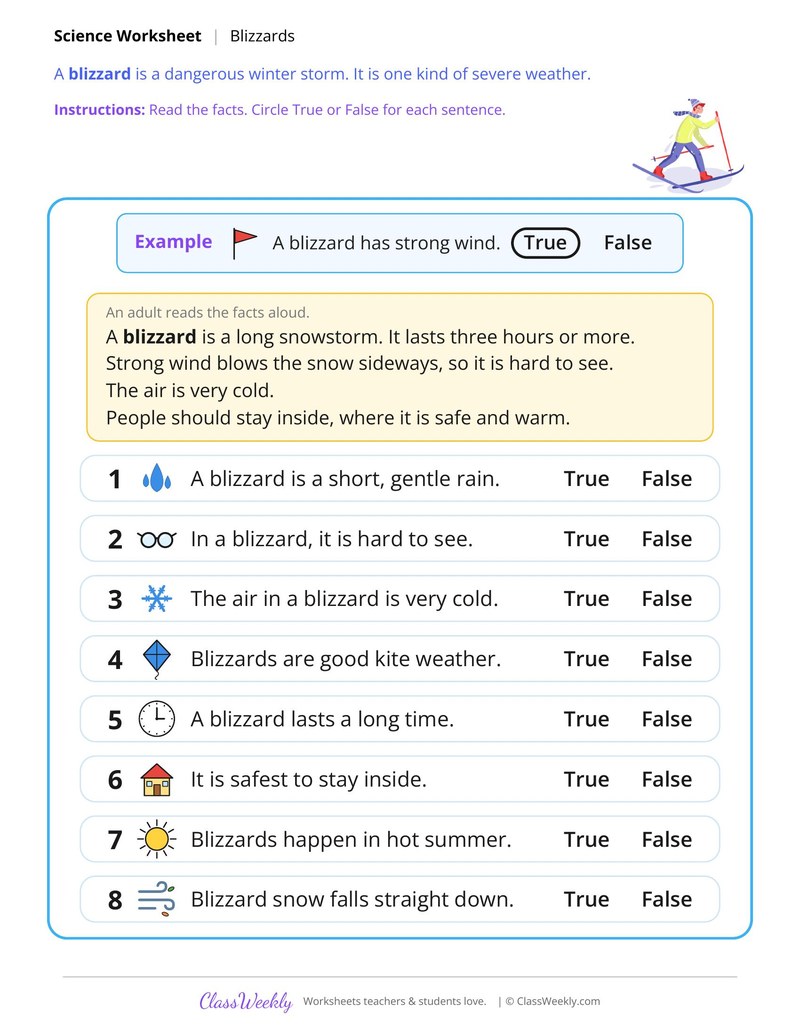
Weather words, clouds, kinds of precipitation, reading a thermometer, weather reports, the water cycle and severe weather like blizzards. Most pages pair a short fact box or chart with circle, match or true or false questions.
What are the kinds of precipitation?
⌄
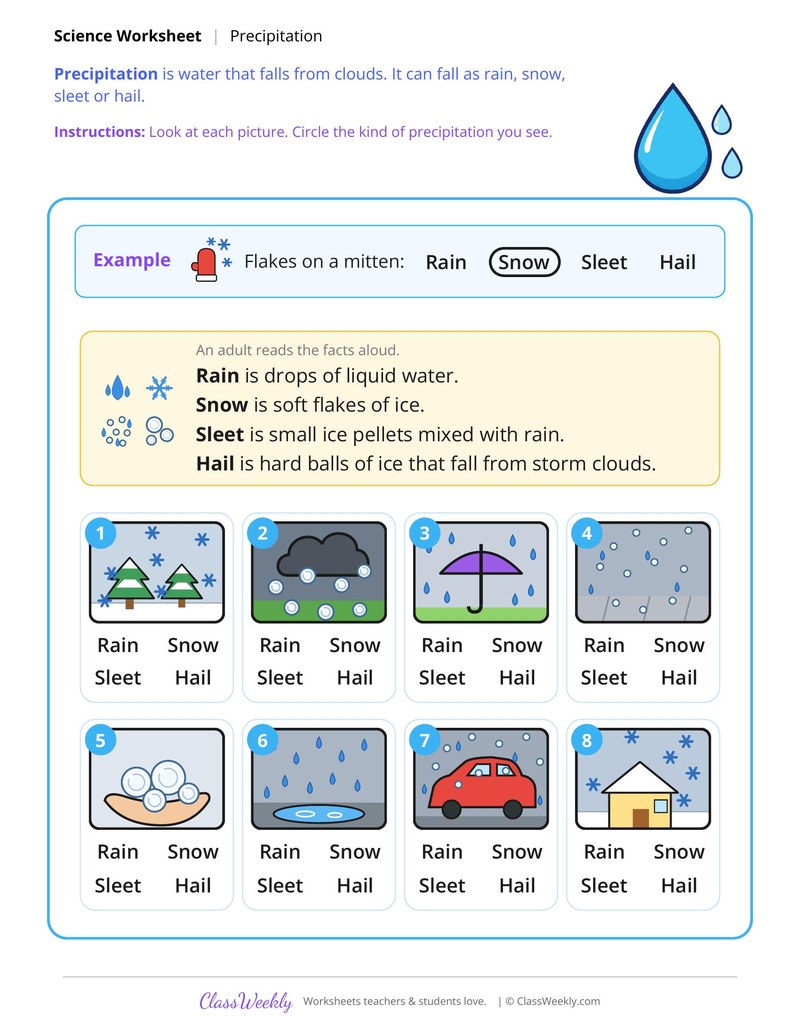
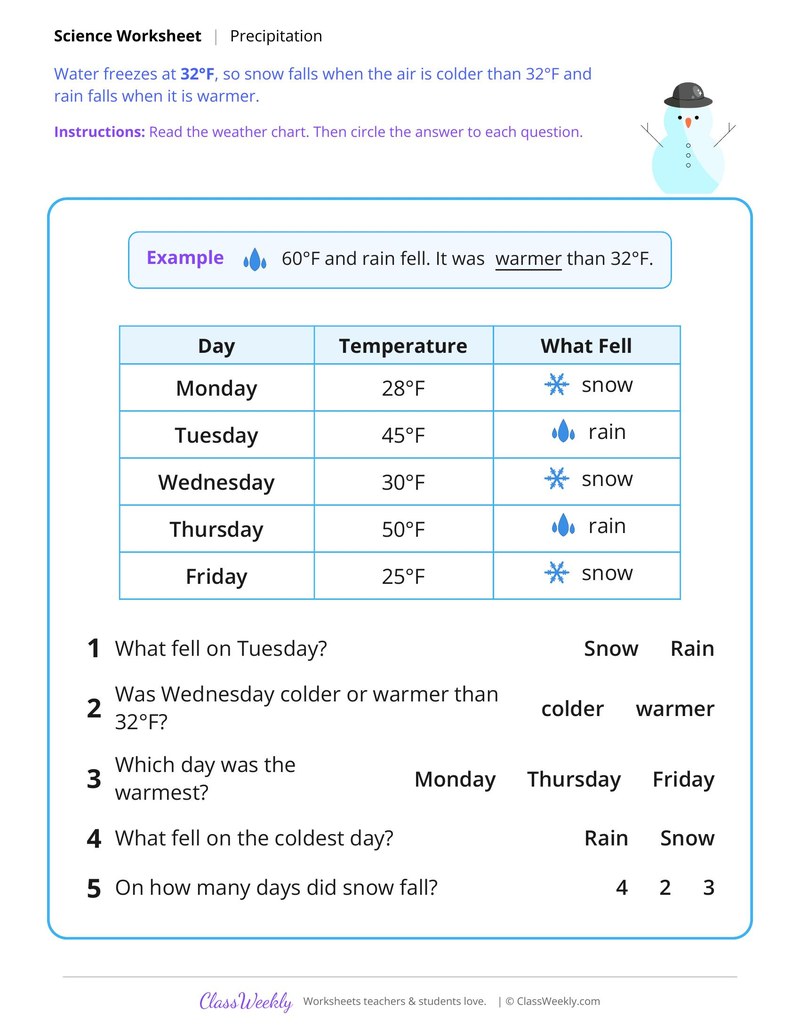
Rain is drops of liquid water, snow is soft flakes of ice, sleet is small ice pellets mixed with rain and hail is hard balls of ice from storm clouds. Water freezes at 32°F, so snow falls when the air is colder than that.
How do 2nd graders read a thermometer?
⌄
They find where the red line stops and count up from the closest number. On some pages each small mark stands for 2 degrees, so children count by twos.
What should a family do in a blizzard?
⌄
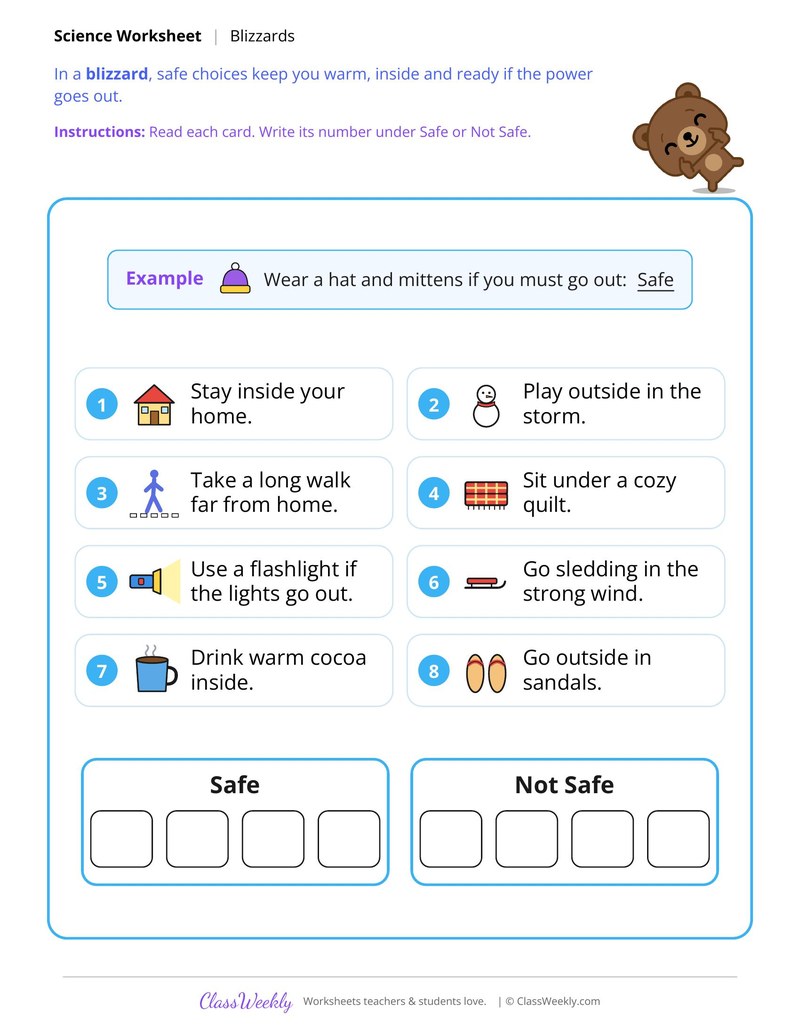
Stay inside where it is warm, wear warm clothes and keep a kit with flashlights, batteries, water, canned food and a first aid kit in case the power goes out.
Do these weather worksheets have answer keys?
⌄
Yes. Every weather and climate sheet in this topic comes with an answer key.
Ratings & Reviews
No reviews yet. Be the first to share what you think.
Reviews are for ClassWeekly members.
Make a Request
Spotted something to fix, or want a worksheet we don't have yet? Tell us and we'll make it.
Worksheet Details
| Grade | 2nd Grade |
| Subject | Science |
| Topic | Weather and Climate |
| Pages | 1 page |
| Difficulty | Medium |
What is ClassWeekly?
ClassWeekly offers free worksheets and printable learning resources for kids, from preschool up. All worksheets are aligned to Common Core, NGSS, and C3 Framework standards and designed by educators. Become a member to access the full library and download unlimited PDFs.