Lemonade Stand Story
Written by Adi Ackerman, Head Teacher
"Lemonade Stand Story" is written for 2nd Grade (Ages 7-8). If your little one is a year younger but already steady on Economics, the page still works. You may just need to read the instructions out loud. And if they are older and producers and consumers never quite stuck, this is a short review rather than busywork.
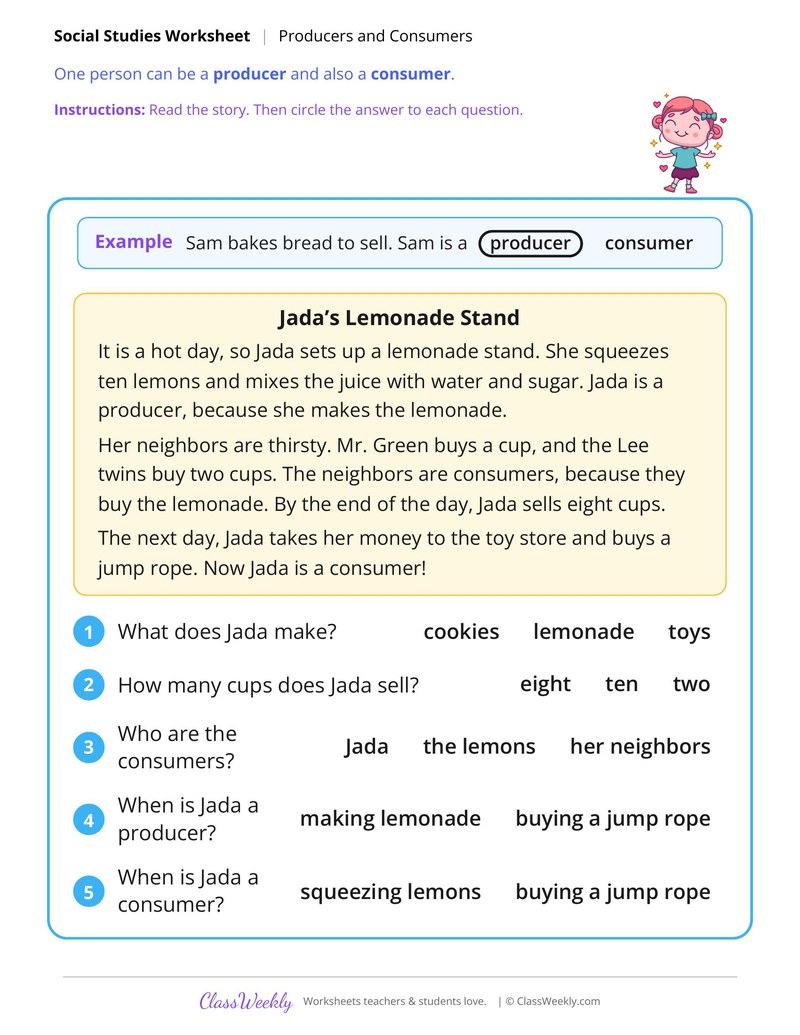
2nd grade social studies worksheet: read about Jada and her lemonade stand and circle when she is a producer or a consumer. Answer key included. Part of our producers and consumers economics collection.
How do I use this worksheet?
Start with a question students can talk about right away: "What do you already know about producers and consumers?" or a picture on the board to look at together. Then let students work through it independently after a quick group example, checking in with a partner if they get stuck, keeping a map, calendar, or word bank in view if the activity uses one. When you review, ask students what surprised them or what they'd like to find out next. These producers and consumers worksheets work well as a class discussion starter, an independent center activity, or a take-home page to talk about with family.
What students will practice
- Students will learn that one person can be both a producer and a consumer.
- Students will read how Jada makes lemonade and sells eight cups.
- Students will circle answers about who the consumers are.
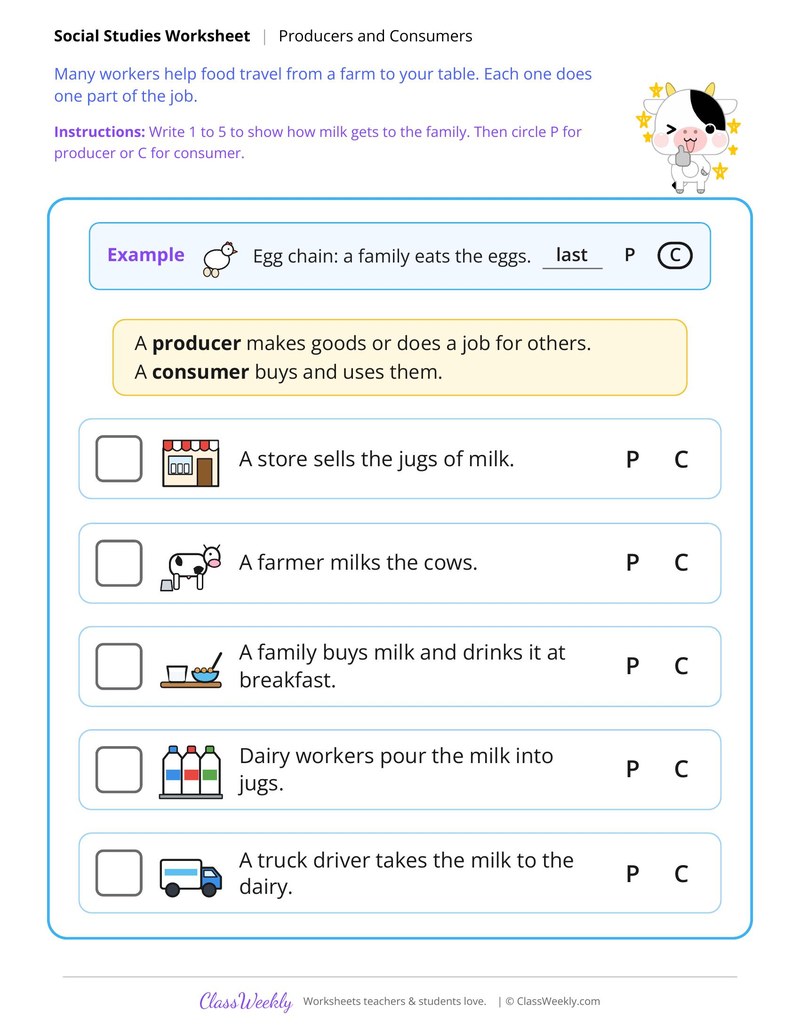
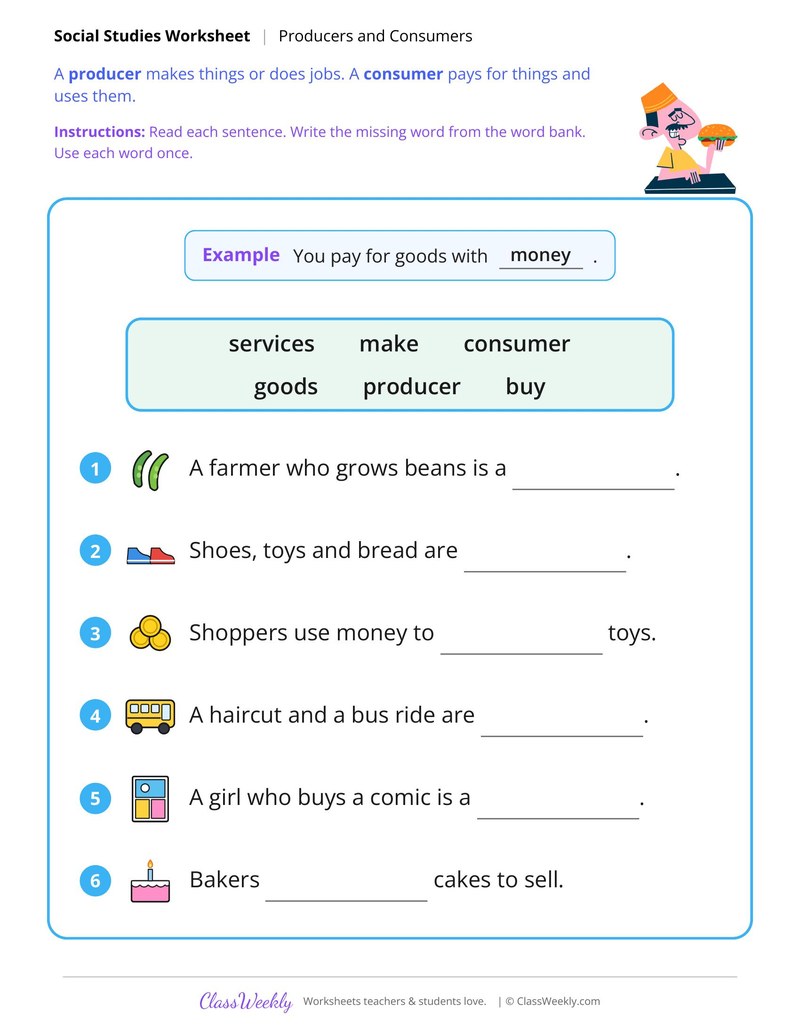
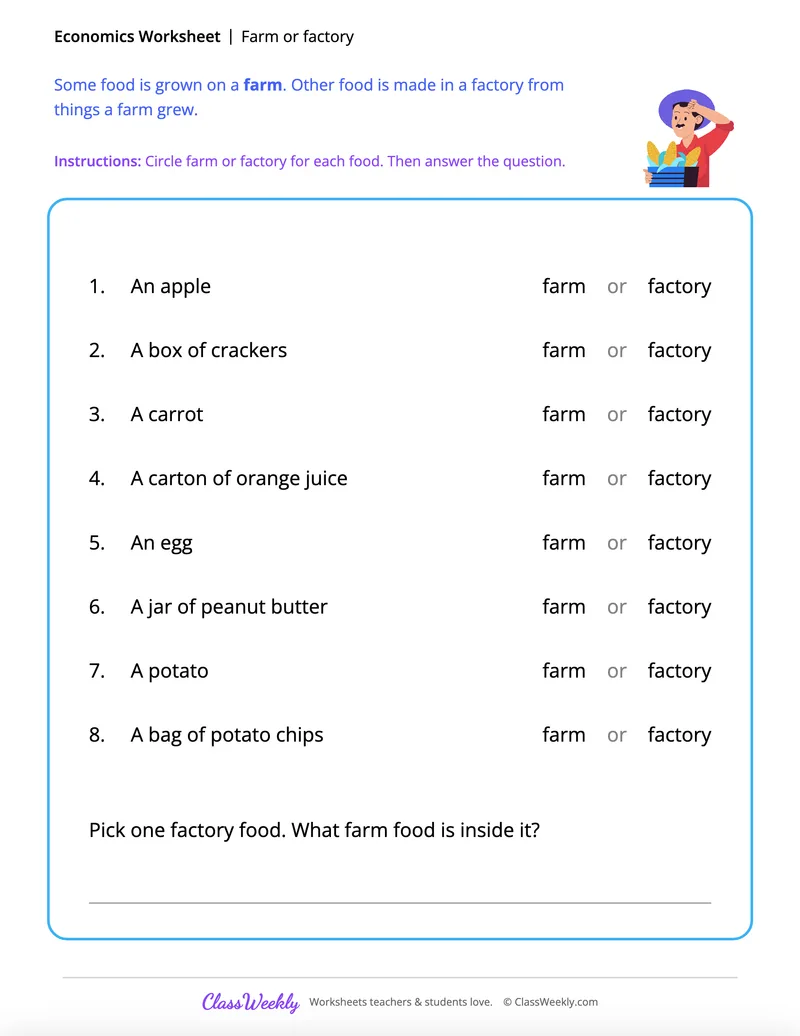
Curriculum Links
Find this in the curriculum
Browse the grade, subject, and topic this belongs to.
FAQ
How do I use this producers and consumers worksheet?
⌄
Start with a question students can talk about right away: "What do you already know about producers and consumers?" or a picture on the board to look at together. Then let students work through it independently after a quick group example, checking in with a partner if they get stuck, keeping a map, calendar, or word bank in view if the activity uses one. When you review, ask students what surprised them or what they'd like to find out next. These producers and consumers worksheets work well as a class discussion starter, an independent center activity, or a take-home page to talk about with family.
What does this worksheet teach?
⌄
Read about Jada and her lemonade stand and circle when she is a producer or a consumer. The directions on the page read: Read the story. Then circle the answer to each question. The page opens with a worked example, and an answer key is included.
Can I use this producers and consumers worksheet for homeschool or classroom?
⌄
Yes, both. We made it for 2nd Grade Economics, and the page works the same whether it lands on a kitchen table or a center rotation. At home, most families go through it together and talk the answers out loud, and that talking is where most of the learning happens with producers and consumers. In class it runs well as independent work while you pull a small group. Print one copy or thirty, whichever the day needs.
What is the difference between goods and services?
⌄
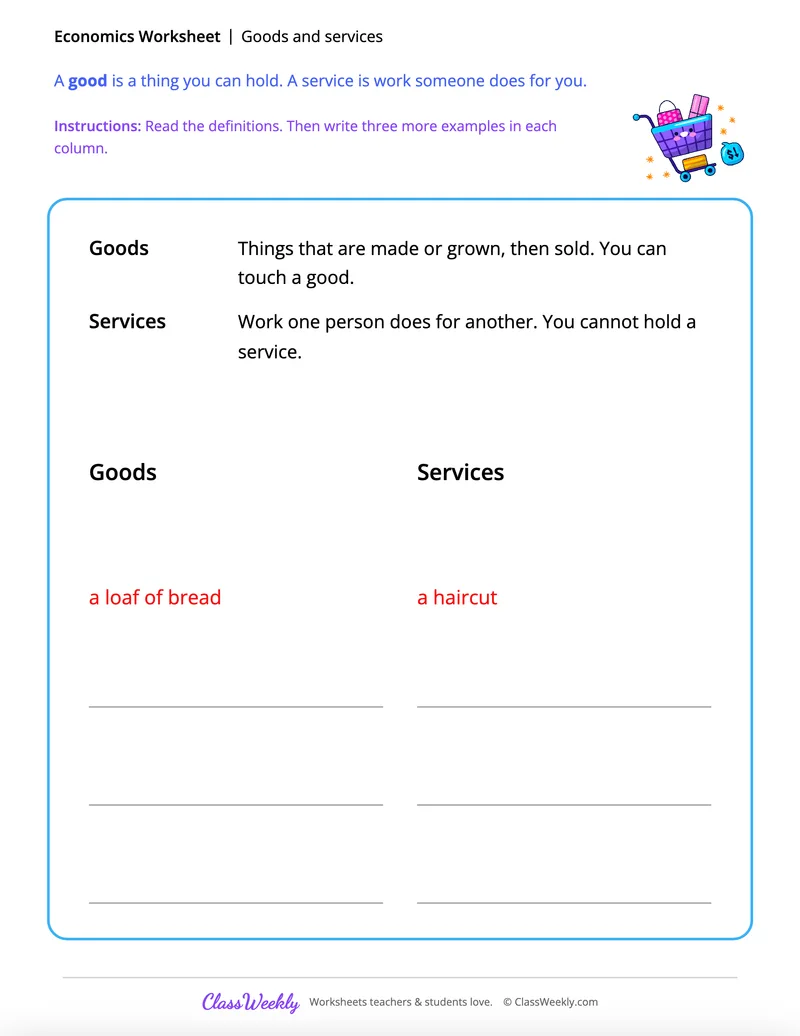
Goods are things you can touch and use, like a ball, shoes or a loaf of bread. Services are jobs people do for you, like a haircut, a checkup or fixing a sink.
What is a producer and what is a consumer?
⌄
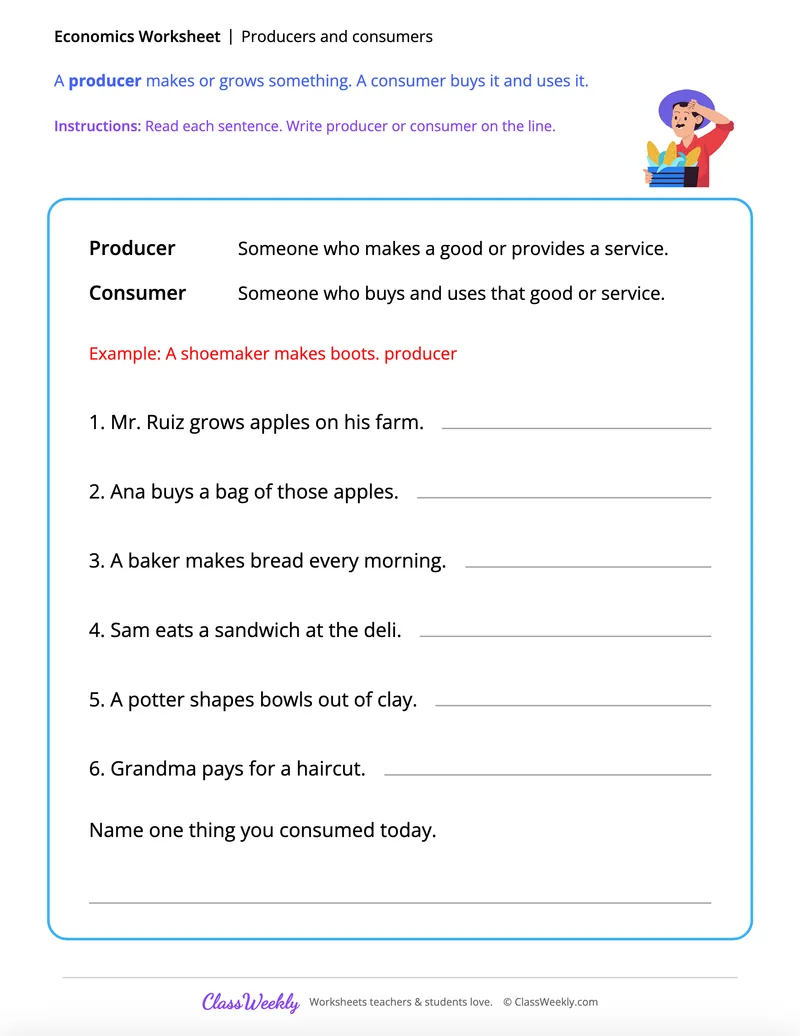
A producer makes goods or does a service, and a consumer buys or uses goods and services. One person can be both. In Lemonade Stand Story, Jada is a producer when she makes lemonade and a consumer when she buys a jump rope.
How do these sheets explain scarcity?
⌄
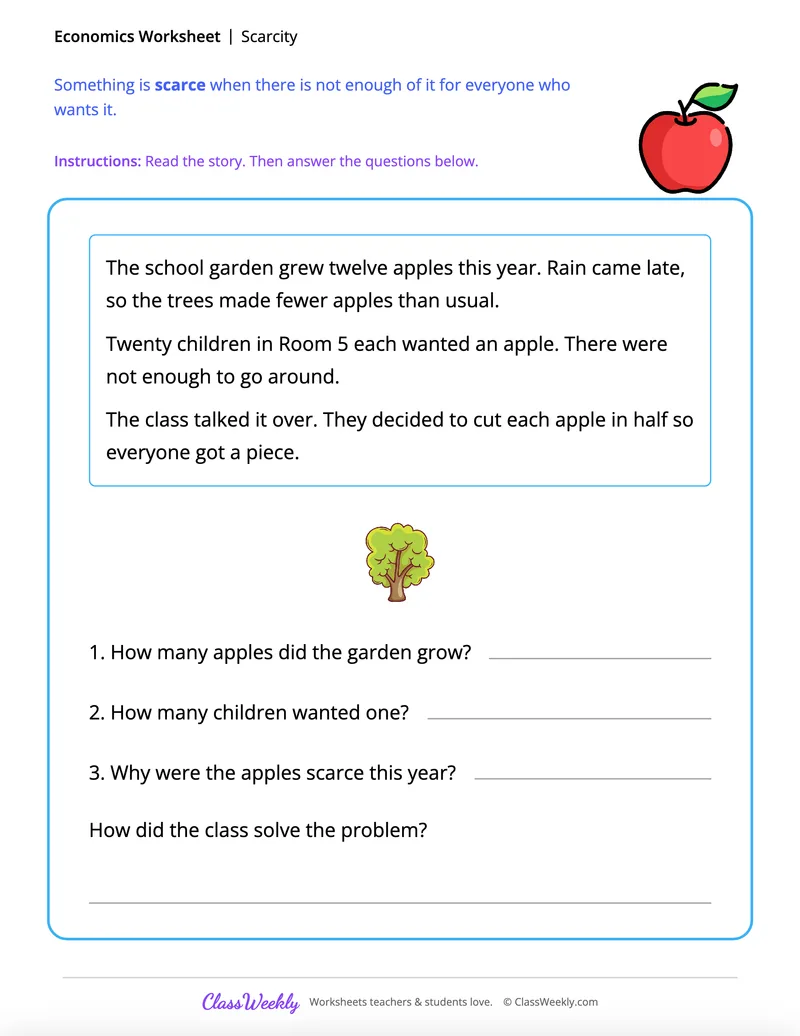
Something is scarce when there is not enough of it for everyone who wants it, like 5 tablets for 20 kids. Children read how Room 12 made a turns chart, sort cards into Scarce or Plenty, write what each kid gave up when choosing and find fair ways to share in a maze.
What is a natural resource?
⌄
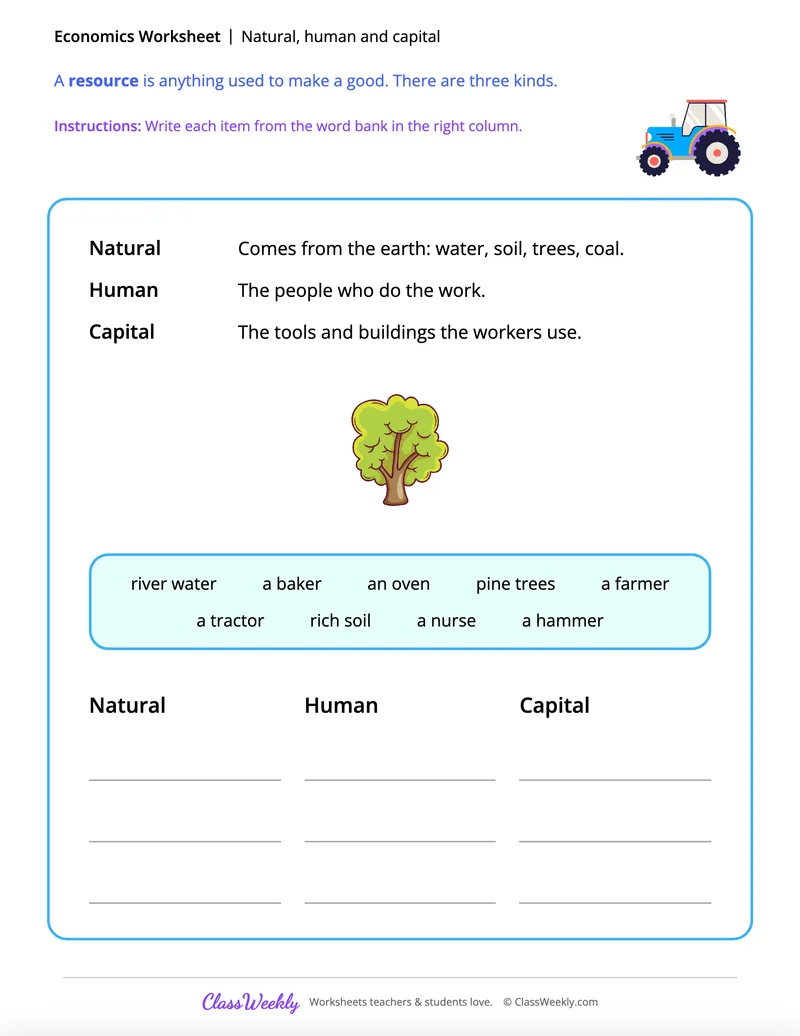
A natural resource comes from nature, and people did not make it. Trees, water, soil and sunlight are natural resources. Children trace things back to their source, like wood to trees and glass to sand, and read how Room 7 saved water and paper.
Ratings & Reviews
No reviews yet. Be the first to share what you think.
Reviews are for ClassWeekly members.
Make a Request
Spotted something to fix, or want a worksheet we don't have yet? Tell us and we'll make it.
Worksheet Details
| Grade | 2nd Grade |
| Subject | Social Studies |
| Topic | Economics |
| Pages | 1 page |
| Difficulty | Medium |
What is ClassWeekly?
ClassWeekly offers free worksheets and printable learning resources for kids, from preschool up. All worksheets are aligned to Common Core, NGSS, and C3 Framework standards and designed by educators. Become a member to access the full library and download unlimited PDFs.