Circle the Right Total
Written by Adi Ackerman, Head Teacher
"Circle the Right Total" is written for Kindergarten (Ages 5-6). If your little one is a year younger but already steady on money, the page still works. You may just need to read the instructions out loud. And if they are older and count coins never quite stuck, this is a short review rather than busywork.
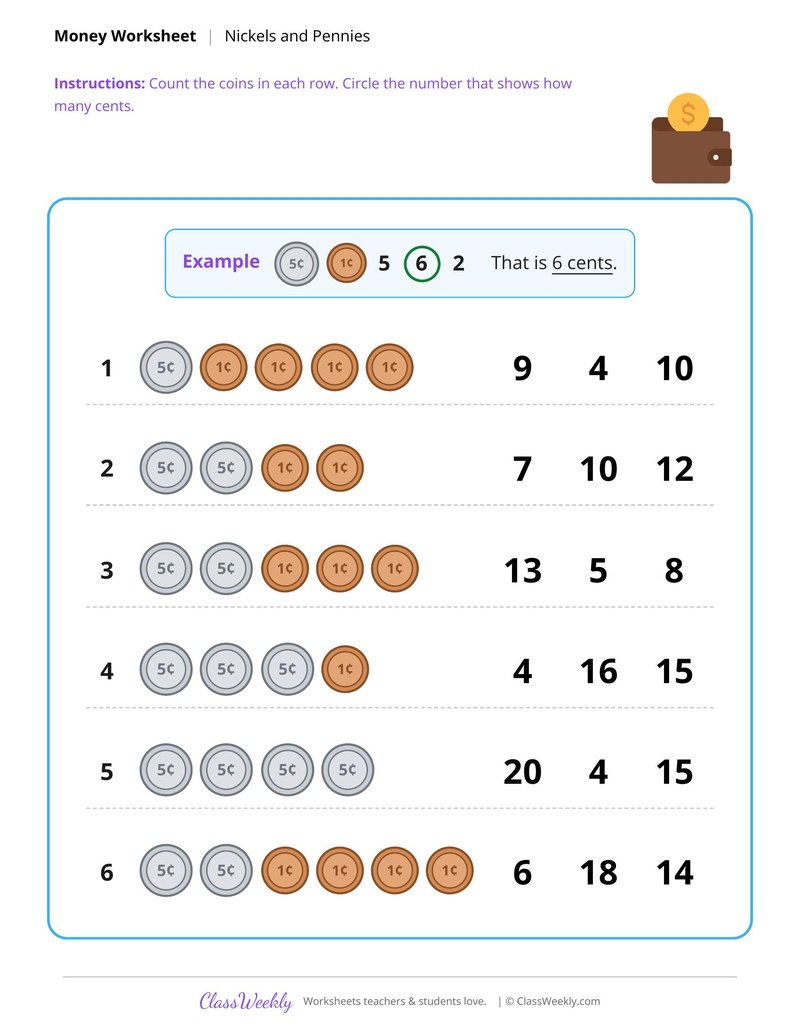
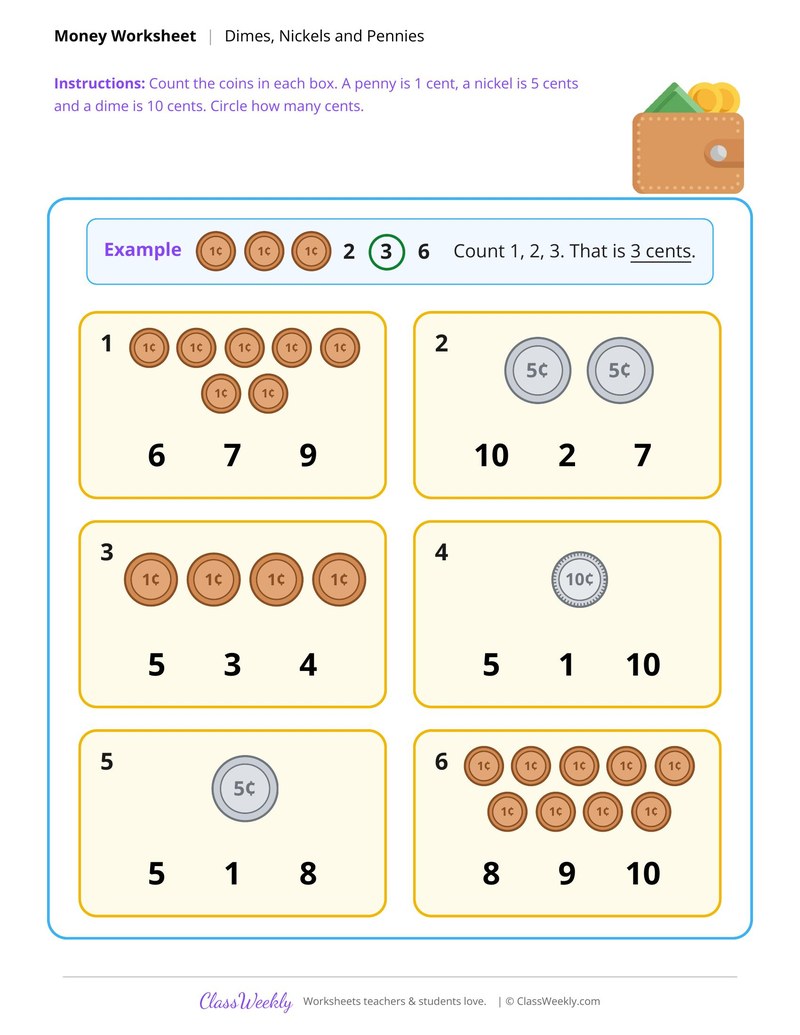
Kindergarten math worksheet: count nickels and pennies in each row and circle the total, up to 20 cents. Answer key included. Part of our count coins money collection.
How do I use this worksheet?
Before handing out the worksheet, briefly introduce the concept with a short oral warm-up or a visual model on the board. Let students work through it with your modeling first (do the first item together on the board), then try the rest with a partner, encouraging them to talk through their thinking: "What strategy are you using? How do you know that is right?" After completing the worksheet, review any missed problems together and discuss the reasoning rather than just the answer. For extra support, let students use manipulatives or draw pictures alongside the written problems. These count coins worksheets work well as daily practice, homework, or a focused review activity.
What students will practice
- Students will count the nickels by 5 and the pennies by 1.
- Students will find how many cents are in each row.
- Students will circle the number that shows the total.
Curriculum Links
Find this in the curriculum
Browse the grade, subject, and topic this belongs to.
FAQ
How do I use this count coins worksheet?
⌄
Before handing out the worksheet, briefly introduce the concept with a short oral warm-up or a visual model on the board. Let students work through it with your modeling first (do the first item together on the board), then try the rest with a partner, encouraging them to talk through their thinking: "What strategy are you using? How do you know that is right?" After completing the worksheet, review any missed problems together and discuss the reasoning rather than just the answer. For extra support, let students use manipulatives or draw pictures alongside the written problems. These count coins worksheets work well as daily practice, homework, or a focused review activity.
What does this worksheet teach?
⌄
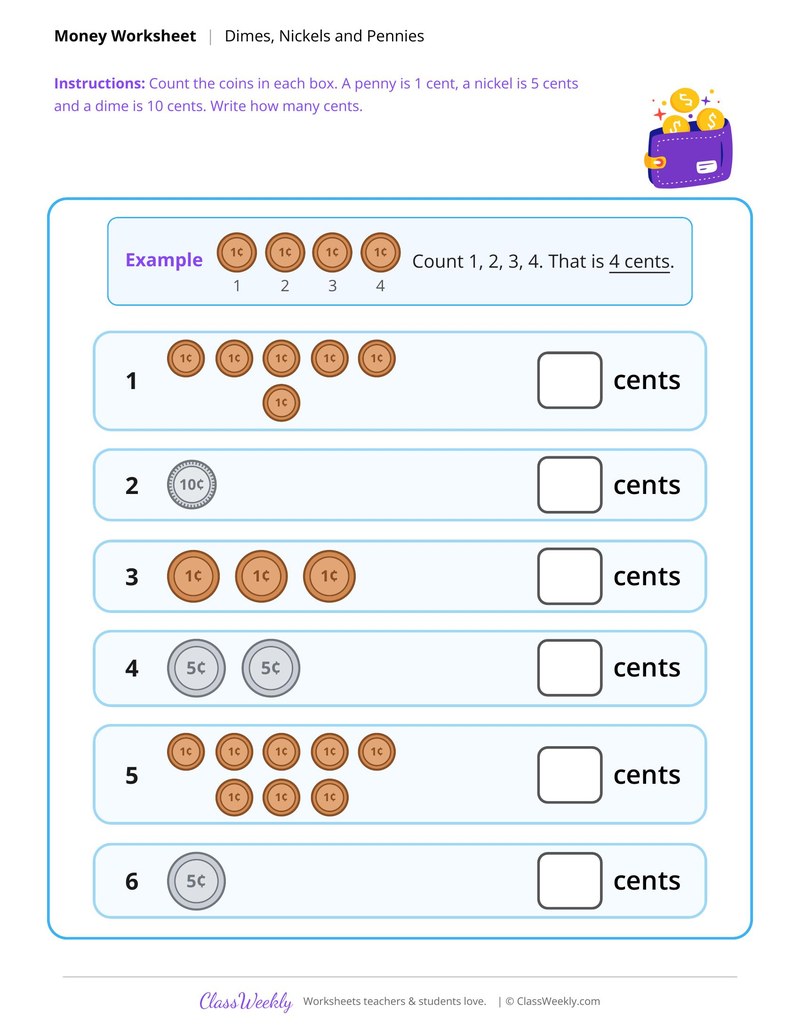
Count nickels and pennies in each row and circle the total, up to 20 cents. The directions on the page read: Count the coins in each row. Circle the number that shows how many cents. The page opens with a worked example, and an answer key is included.
Can I use this count coins worksheet for homeschool or classroom?
⌄
Yes, both. We made it for Kindergarten money, and the page works the same whether it lands on a kitchen table or a center rotation. At home, most families go through it together and talk the answers out loud, and that talking is where most of the learning happens with count coins. In class it runs well as independent work while you pull a small group. Print one copy or thirty, whichever the day needs.
What is the goal of counting coins in kindergarten?
⌄
The main goal is for children to recognize each coin and understand that it represents a specific value. Kindergartners are not expected to make change or add large amounts; the focus is on building familiarity and basic counting with coins.
Which coins do kindergartners typically learn to count?
⌄
Kindergartners most commonly work with pennies and are introduced to nickels and dimes. Quarters are often shown for identification purposes, but counting mixed groups of quarters is generally reserved for later grades.
How do coin-counting worksheets support classroom learning?
⌄
Teachers often use coin worksheets alongside a class store or play money activity to give children a meaningful context for counting. The worksheets reinforce skills practiced during hands-on activities and provide individual practice for assessment.
When should kindergarteners learn about money?
⌄
Many programs introduce coins in kindergarten as an extension of counting, even though Common Core money standards start in 2nd grade. Children begin by naming pennies, nickels and dimes and learning what each is worth.
How do you teach kindergarteners to count coins?
⌄
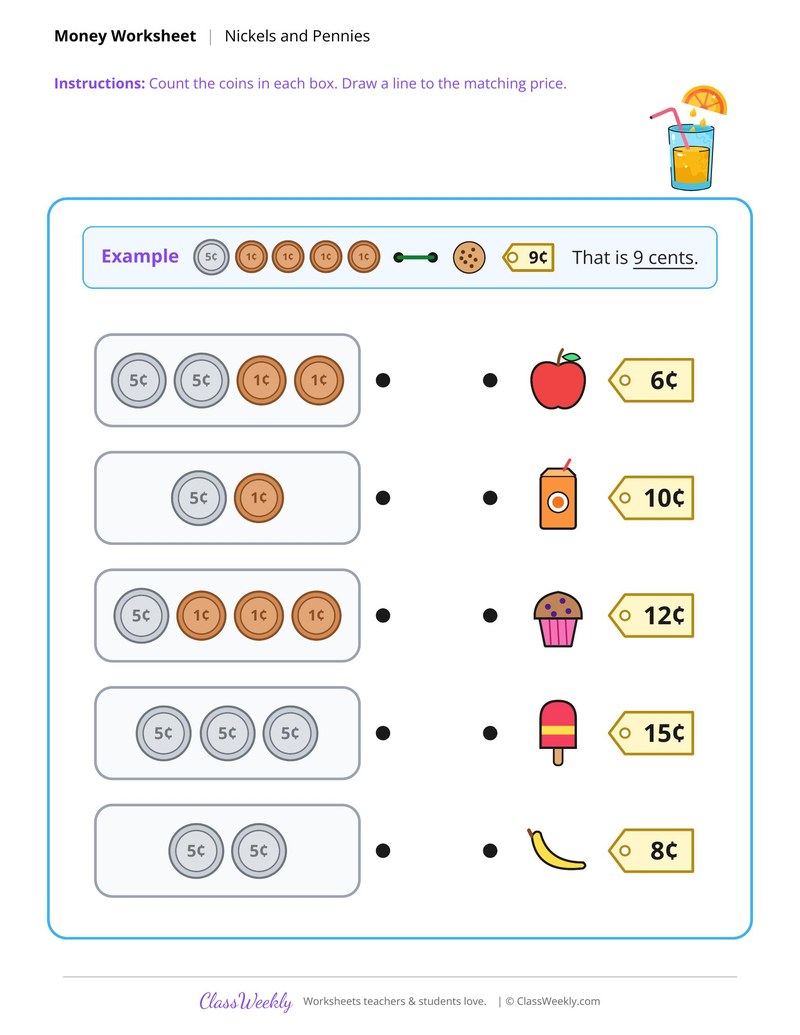
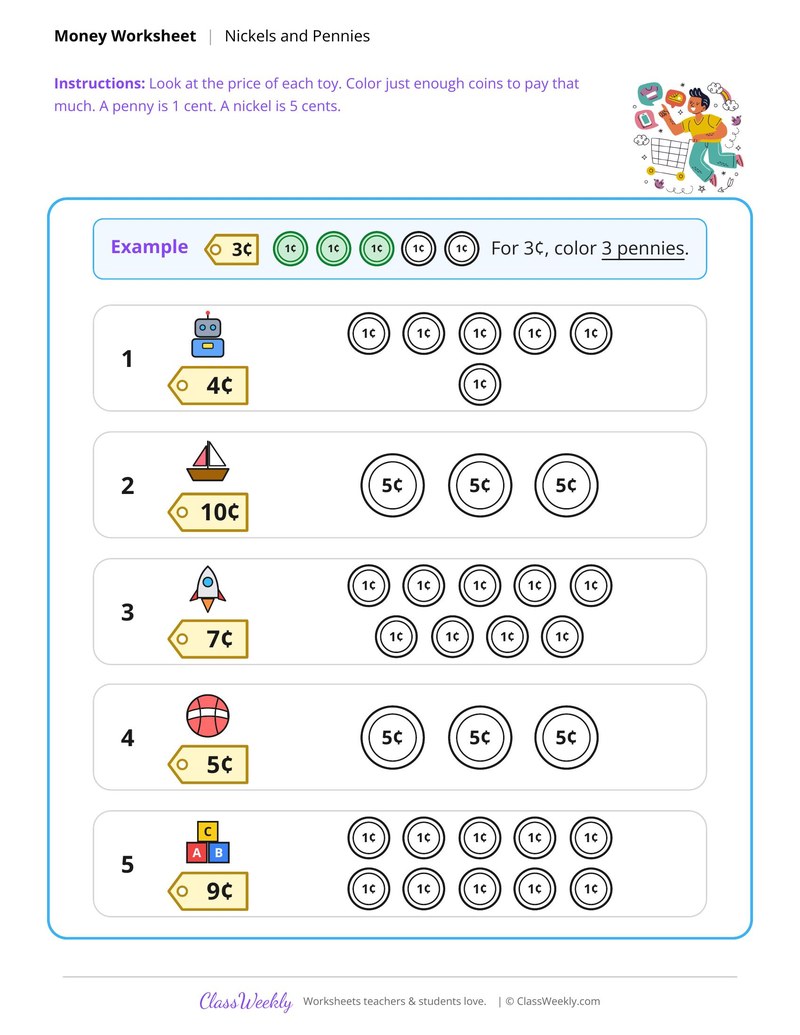
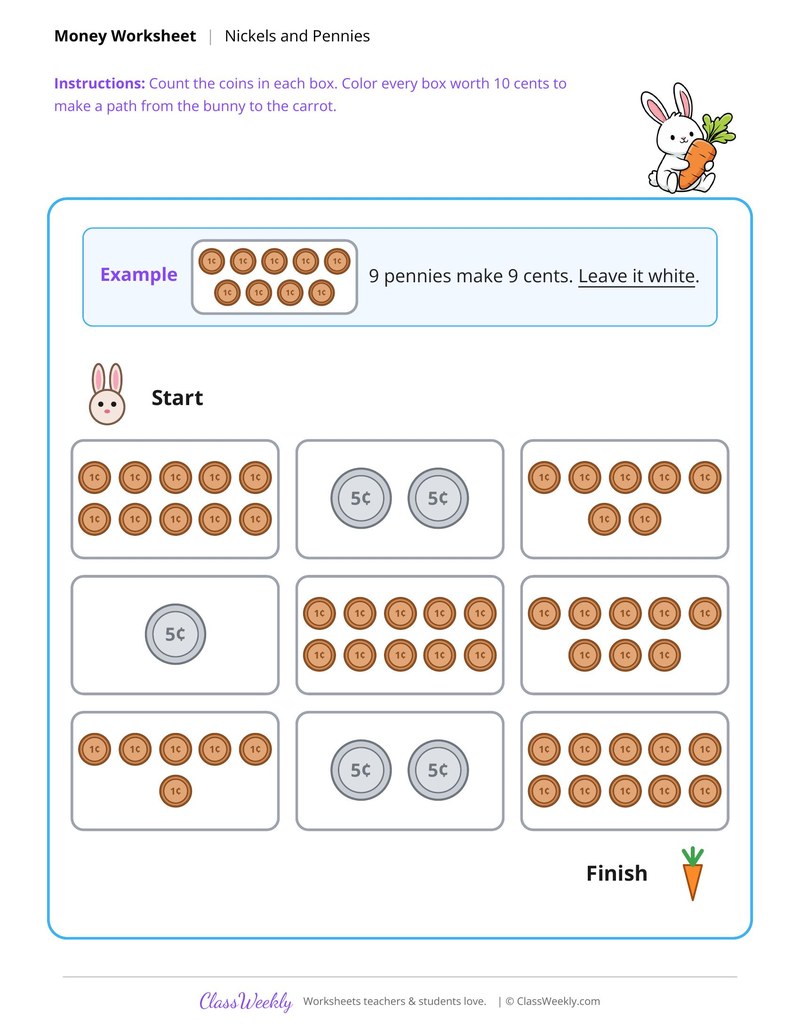
Start with pennies, counting 1 cent at a time. Then count nickels by 5 and count on the pennies, and later start with dimes by 10. The worksheets follow this order with piggy banks, prices and mazes.
What is each coin worth?
⌄
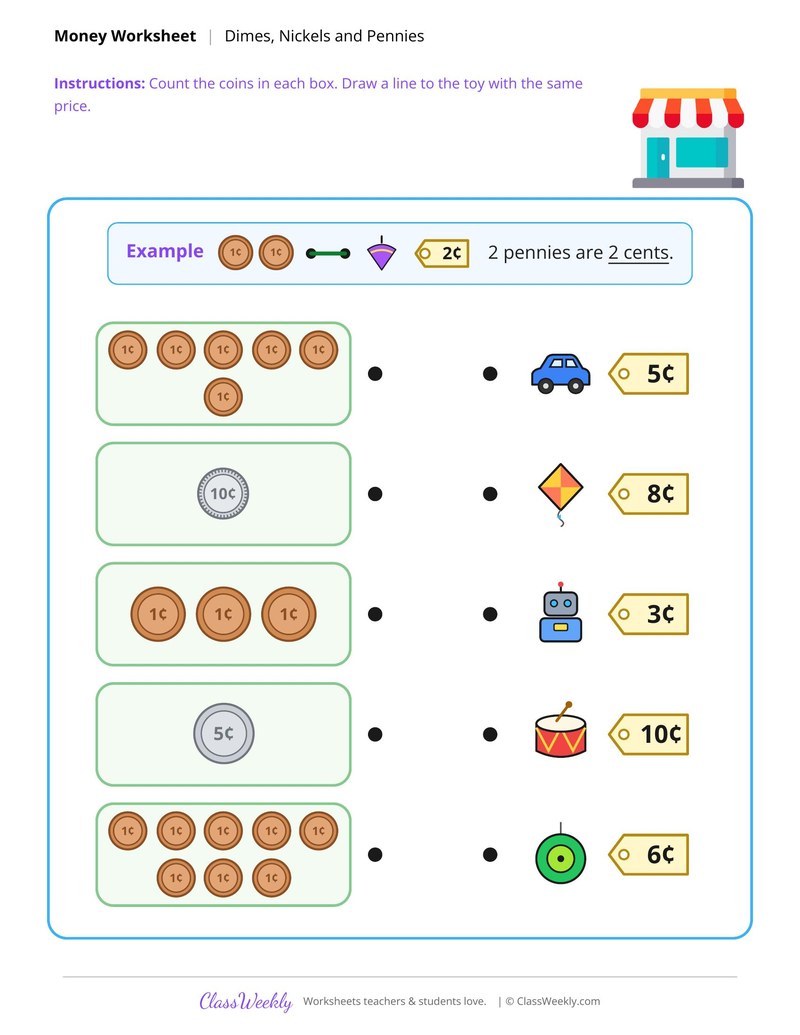
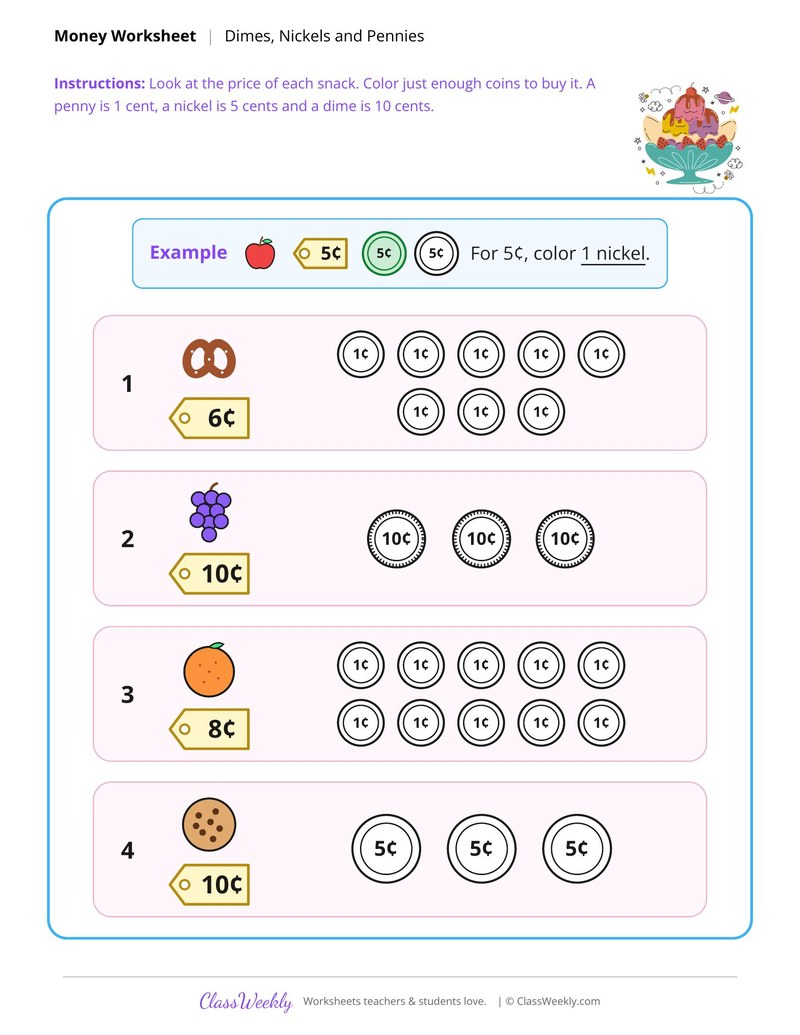
A penny is worth 1 cent, a nickel 5 cents, a dime 10 cents and a quarter 25 cents. One worksheet has children match each coin to its cents and another colors every dime.
How can kindergarteners compare groups of coins?
⌄
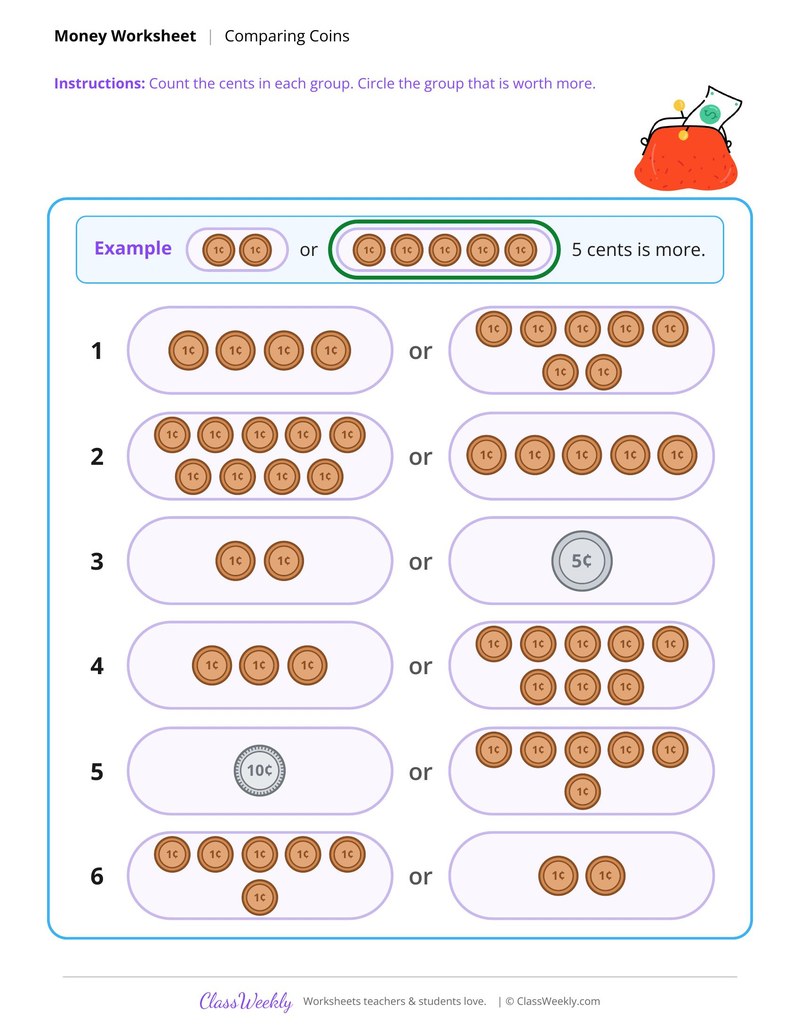
They count the cents in each group, then compare the totals. One dime is worth more than four pennies, so fewer coins can be worth more.
Ratings & Reviews
No reviews yet. Be the first to share what you think.
Reviews are for ClassWeekly members.
Make a Request
Spotted something to fix, or want a worksheet we don't have yet? Tell us and we'll make it.
Worksheet Details
| Grade | Kindergarten |
| Subject | Math |
| Topic | Money |
| Pages | 1 page |
| Difficulty | Medium |
Learn More
What is ClassWeekly?
ClassWeekly offers free worksheets and printable learning resources for kids, from preschool up. All worksheets are aligned to Common Core, NGSS, and C3 Framework standards and designed by educators. Become a member to access the full library and download unlimited PDFs.