Playground Solid Shape Hunt
Written by Adi Ackerman, Head Teacher
"Playground Solid Shape Hunt" is written for Kindergarten (Ages 5-6), and it covers Common Core K.G.A.1. If your little one is a year younger but already steady on shapes, the page still works. You may just need to read the instructions out loud. And if they are older and shapes real objects never quite stuck, this is a short review rather than busywork.
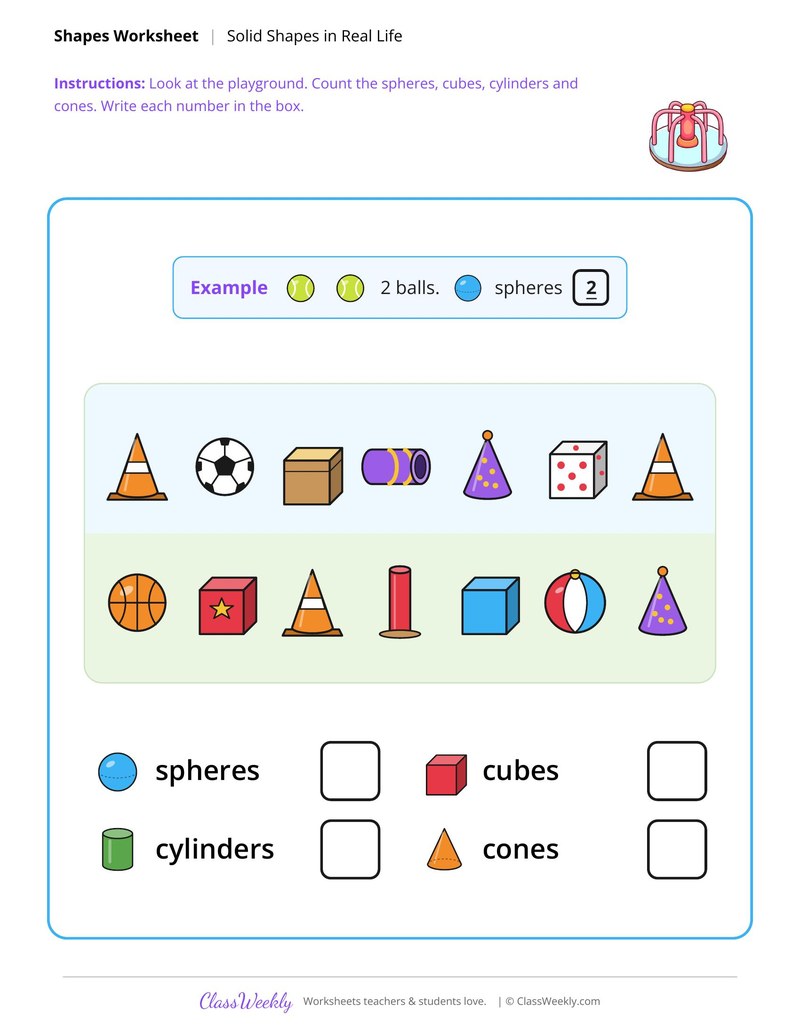
Kindergarten math worksheet: count the spheres, cubes, cylinders and cones in a playground picture and write each number. Answer key included. Part of our shapes real objects collection. Aligned to Common Core standards.
How do I use this worksheet?
Before handing out the worksheet, briefly introduce the concept with a short oral warm-up or a visual model on the board. Let students work through it with your modeling first (do the first item together on the board), then try the rest with a partner, encouraging them to talk through their thinking: "What strategy are you using? How do you know that is right?" After completing the worksheet, review any missed problems together and discuss the reasoning rather than just the answer. For extra support, let students use manipulatives or draw pictures alongside the written problems. These shapes real objects worksheets work well as daily practice, homework, or a focused review activity.
What students will practice
- Students will find solid shapes in a playground picture.
- Students will count the spheres, cubes, cylinders and cones.
- Students will write each number in its box.
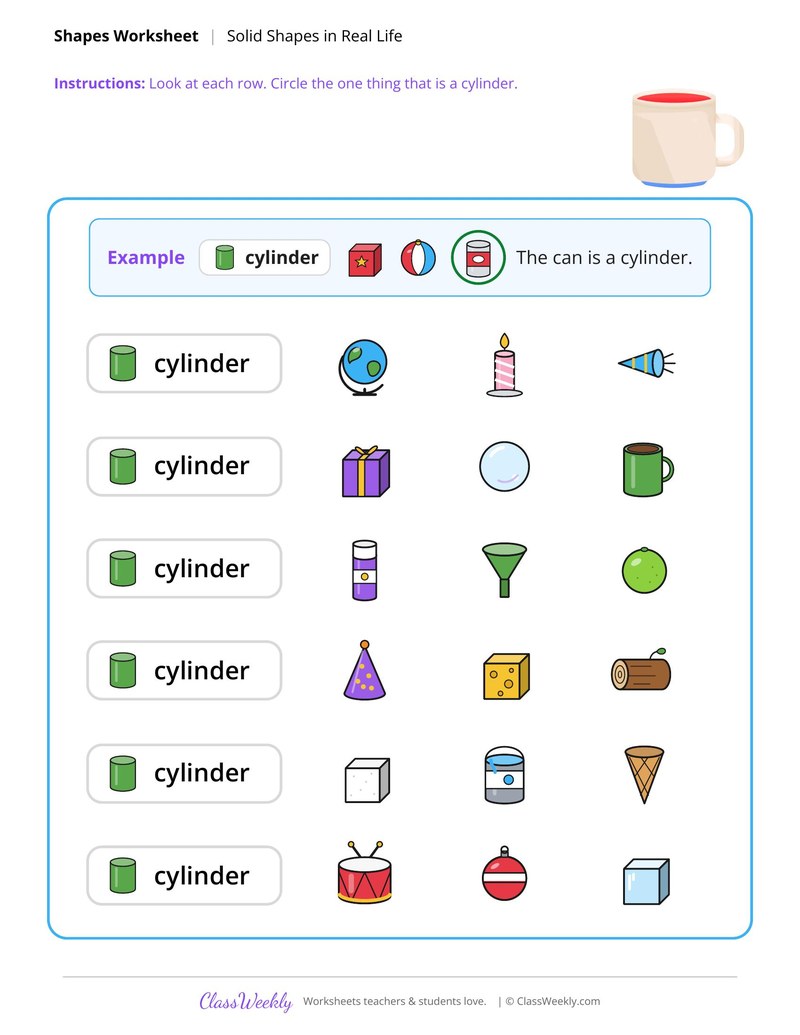
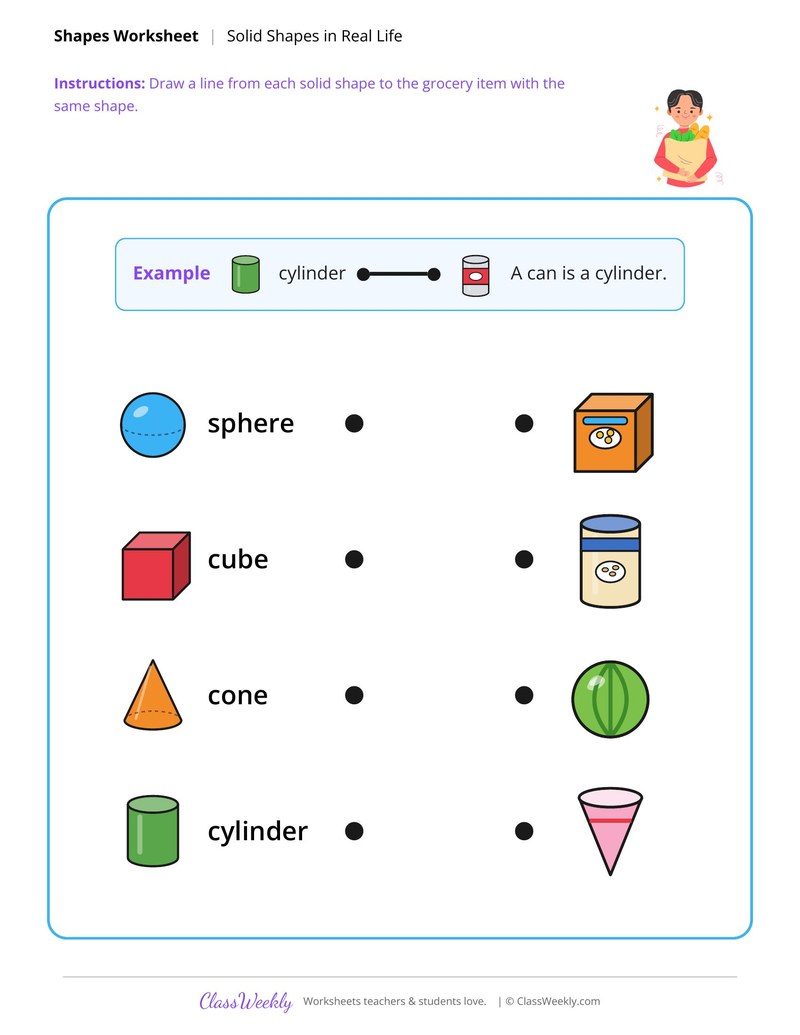
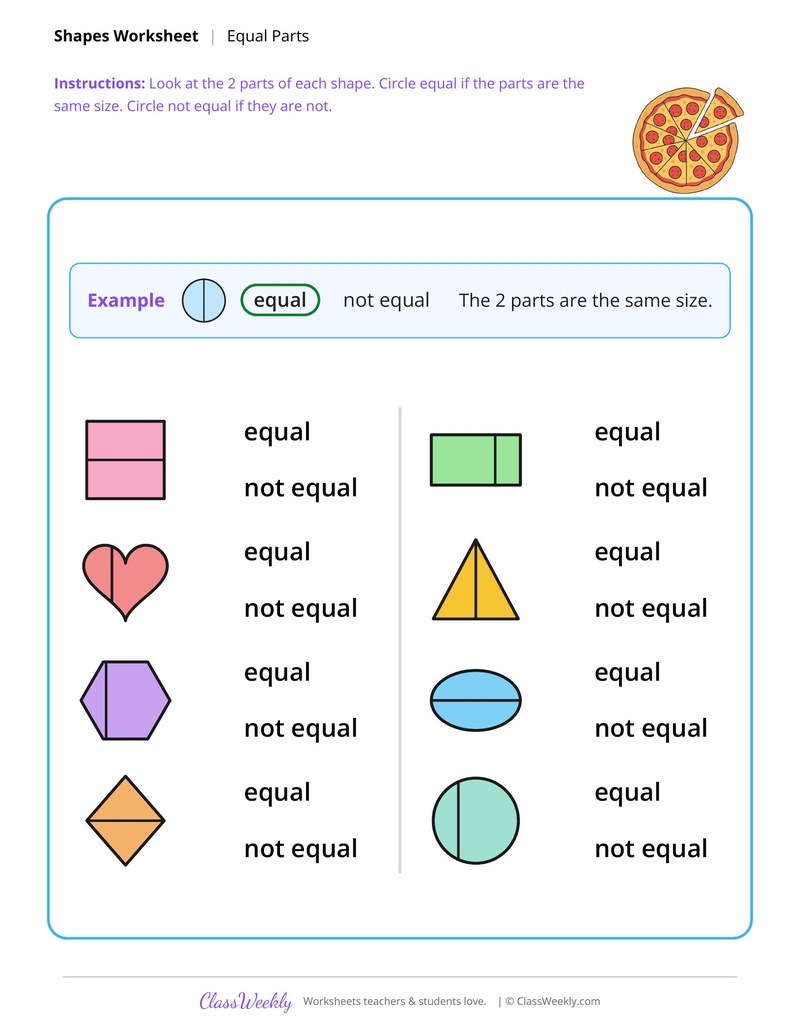
Curriculum Links
Common Core State Standards
Geometry · Kindergarten
Standard: Describe objects in the environment using names of shapes, and describe the relative positions of these objects using terms such as above, below, beside, in front of, behind, and next to.
View all K.G.A.1 worksheets →Find this in the curriculum
Browse the grade, subject, and topic this belongs to.
FAQ
How do I use this shapes real objects worksheet?
⌄
Before handing out the worksheet, briefly introduce the concept with a short oral warm-up or a visual model on the board. Let students work through it with your modeling first (do the first item together on the board), then try the rest with a partner, encouraging them to talk through their thinking: "What strategy are you using? How do you know that is right?" After completing the worksheet, review any missed problems together and discuss the reasoning rather than just the answer. For extra support, let students use manipulatives or draw pictures alongside the written problems. These shapes real objects worksheets work well as daily practice, homework, or a focused review activity.
What does this worksheet teach?
⌄
Count the spheres, cubes, cylinders and cones in a playground picture and write each number. The directions on the page read: Look at the playground. Count the spheres, cubes, cylinders and cones. Write each number in the box. The page opens with a worked example, and an answer key is included.
Can I use this shapes real objects worksheet for homeschool or classroom?
⌄
Yes, both. We made it for Kindergarten shapes, and the page works the same whether it lands on a kitchen table or a center rotation. At home, most families go through it together and talk the answers out loud, and that talking is where most of the learning happens with shapes real objects. In class it runs well as independent work while you pull a small group. Print one copy or thirty, whichever the day needs.
Why is connecting shapes to real objects important?
⌄
When children recognize that a stop sign is an octagon and a can is a cylinder, they understand that geometry describes the physical world rather than existing only on paper. This connection deepens comprehension, improves shape retention, and motivates learning by making math feel relevant and tangible.
When do kindergarteners start matching shapes to real objects?
⌄
Most kindergarten programs introduce real-world shape connections alongside or just after initial shape naming, typically in fall or early winter of the kindergarten year. Children ages 5-6 are naturally curious about their environment and usually take to this activity quickly.
How can I extend this learning at home?
⌄
Go on a 'shape hunt' around the house or neighborhood and take photos of objects that match target shapes. Print the photos and have your child sort them into shape groups. Following up with a worksheet reinforces vocabulary and gives the activity a clear, satisfying conclusion.
What shapes should a kindergartener know?
⌄
Kindergarteners name circles, squares, triangles, rectangles and hexagons, and the solid shapes cube, sphere, cone and cylinder, whatever their size and whichever way they are turned (CCSS K.G.A.2). They also tell flat shapes from solid ones (K.G.A.3). These pages show each shape big, small and turned so children learn the shape, not one picture of it.
How do kindergarteners count sides and corners?
⌄
Have your child trace one side at a time with a finger and count, then touch each corner. The sides and corners pages trace each side with a new color, put a dot on every corner, and match each shape to its number, and a circle gets 0. Other pages compare 2 shapes and circle the one with more sides or color the one with fewer corners (K.G.B.4).
Do kindergarteners learn halves?
⌄
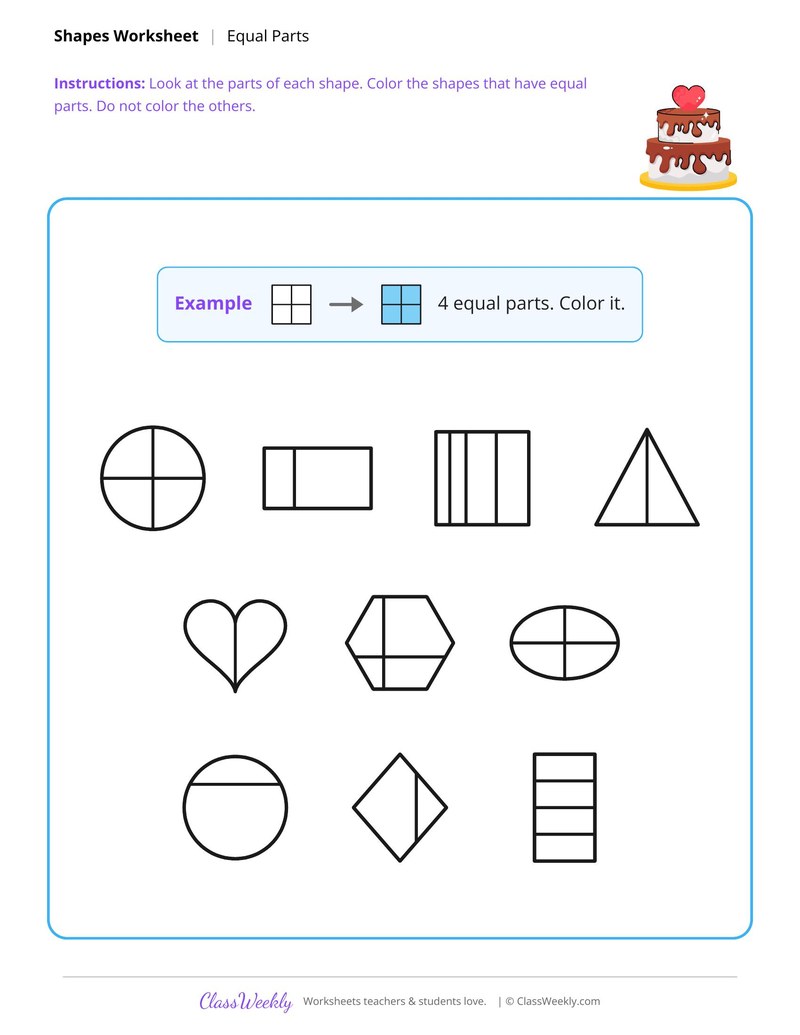
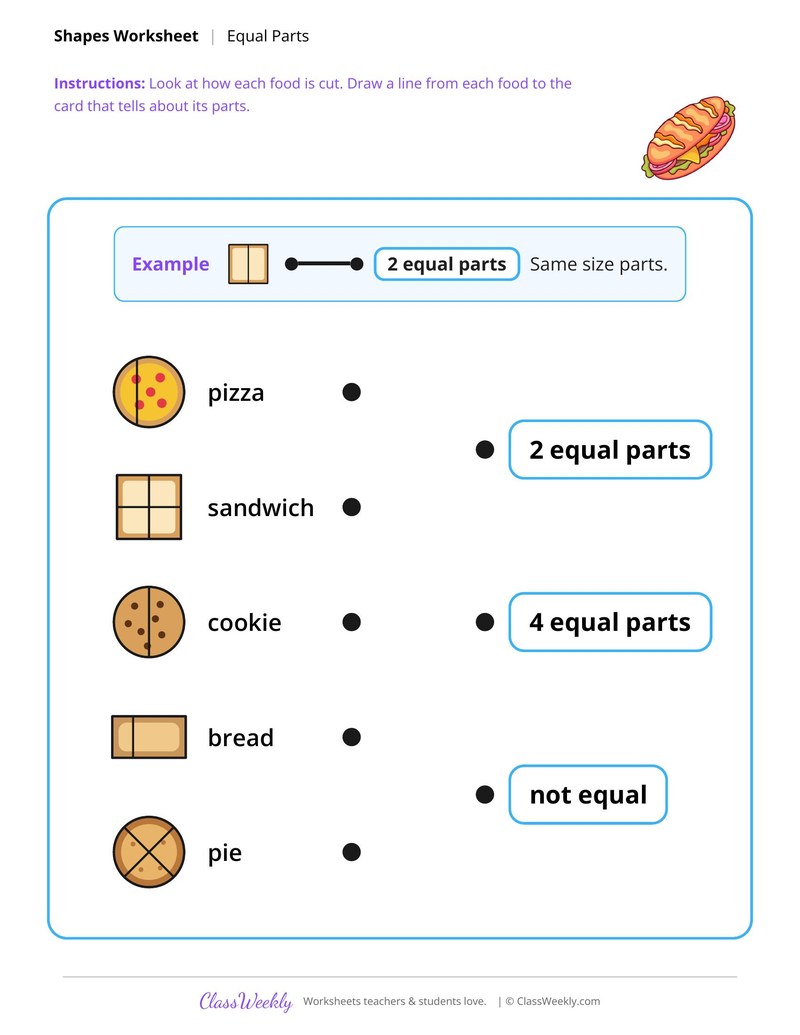
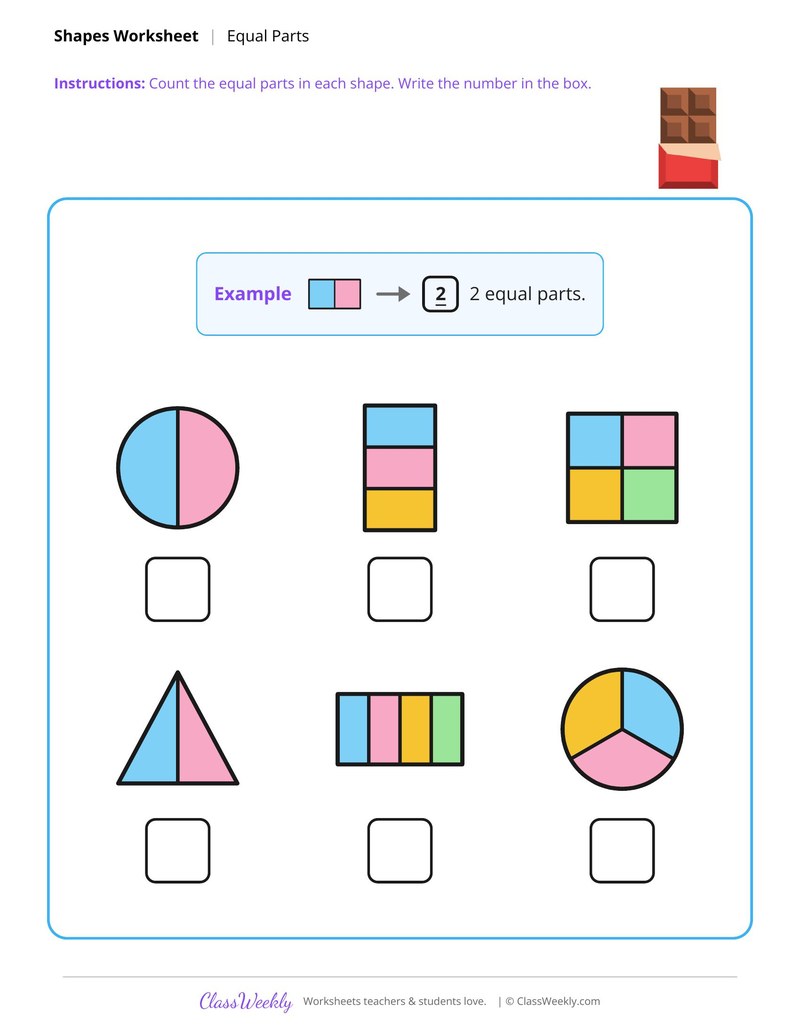
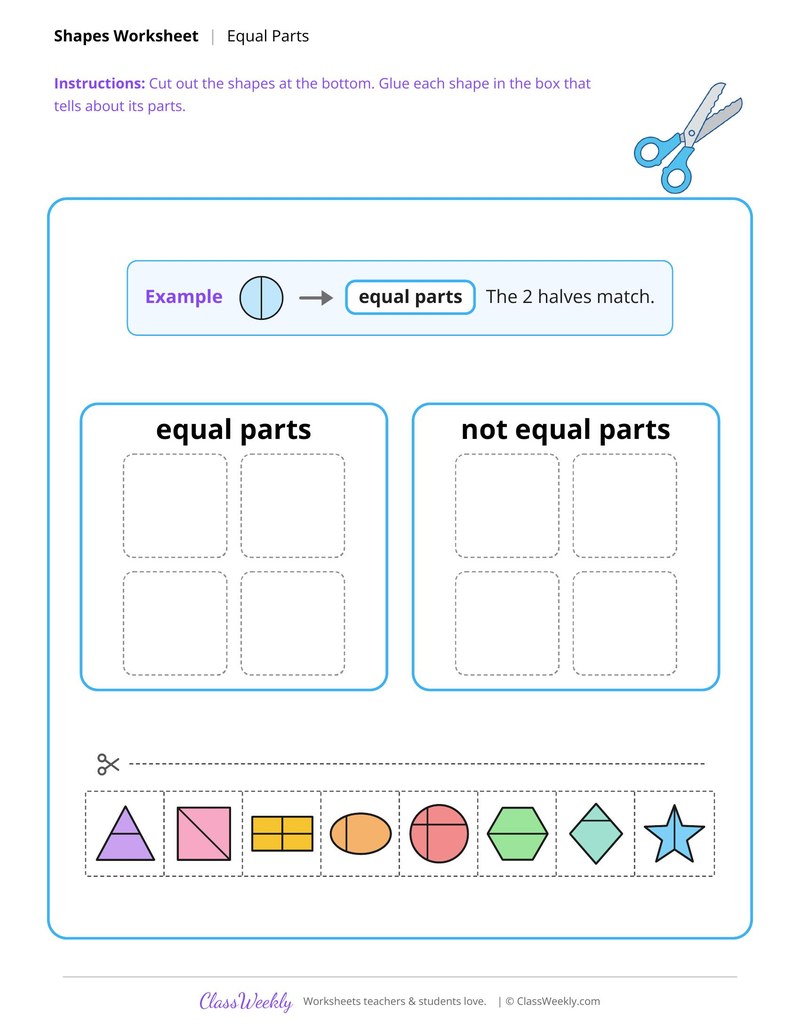
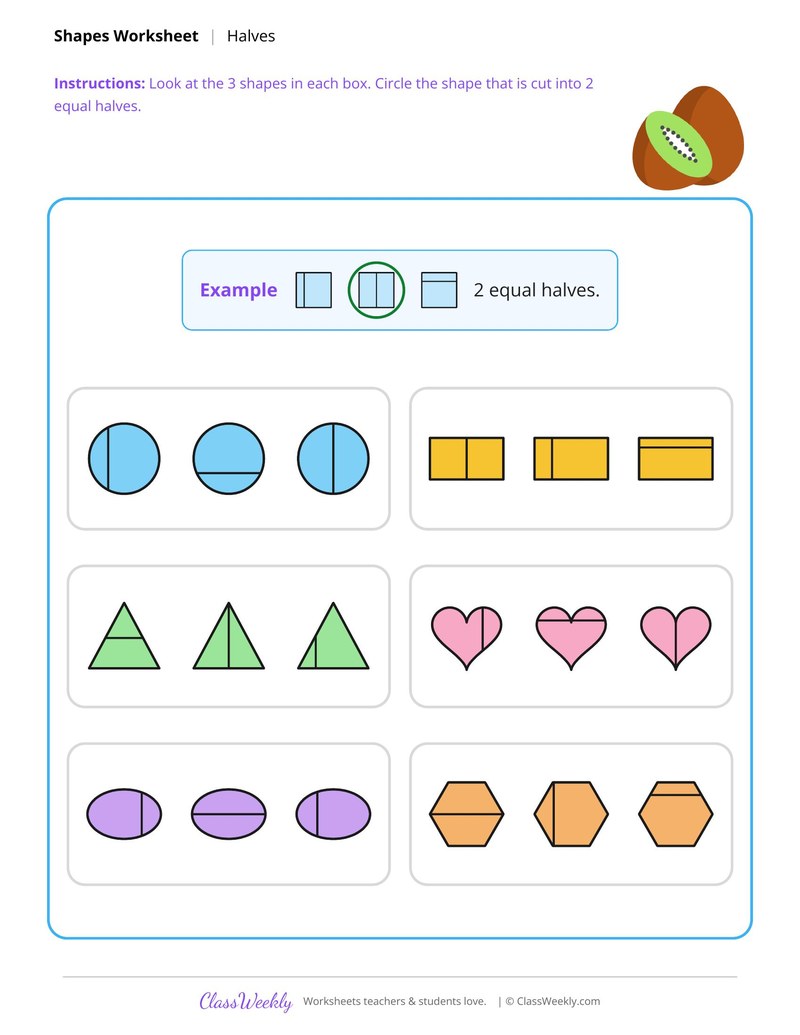
Kindergarten pages start with equal parts: children tell whether the 2 parts of a shape are the same size, count the equal parts in a shape, and color one half. The equal parts and halves sheets also draw a line from dot to dot to cut a shape into 2 halves and join the 2 halves of a heart, a house and a butterfly.
How do you teach 3D shapes in kindergarten?
⌄
Start with real things a child can hold: a ball is a sphere, a block is a cube, a can is a cylinder and a party hat is a cone. Then use the worksheets to circle yes or no for each solid, count the cylinders in a kitchen and match a snowman or a robot to the solids it is made of (K.G.A.1, K.G.B.5).
Do these kindergarten shapes worksheets have answer keys?
⌄
Most sheets come with an answer key, including the sides and corners, 3D shapes, real world shapes and equal parts pages. Most trace and color pages have none, since the answer is the traced or colored shape itself.
Ratings & Reviews
No reviews yet. Be the first to share what you think.
Reviews are for ClassWeekly members.
Make a Request
Spotted something to fix, or want a worksheet we don't have yet? Tell us and we'll make it.
Worksheet Details
| Grade | Kindergarten |
| Subject | Math |
| Topic | Shapes |
| Standard | K.G.A.1 |
| Pages | 1 page |
| Difficulty | Medium |
Learn More
What is ClassWeekly?
ClassWeekly offers free worksheets and printable learning resources for kids, from preschool up. All worksheets are aligned to Common Core, NGSS, and C3 Framework standards and designed by educators. Become a member to access the full library and download unlimited PDFs.