Solids, Liquids and Gases at the Party
Written by Adi Ackerman, Head Teacher
"Solids, Liquids and Gases at the Party" is written for 2nd Grade (Ages 7-8), and it covers NGSS 2-PS1-1. If your little one is a year younger but already steady on material properties, the page still works. You may just need to read the instructions out loud. And if they are older and states of matter never quite stuck, this is a short review rather than busywork.
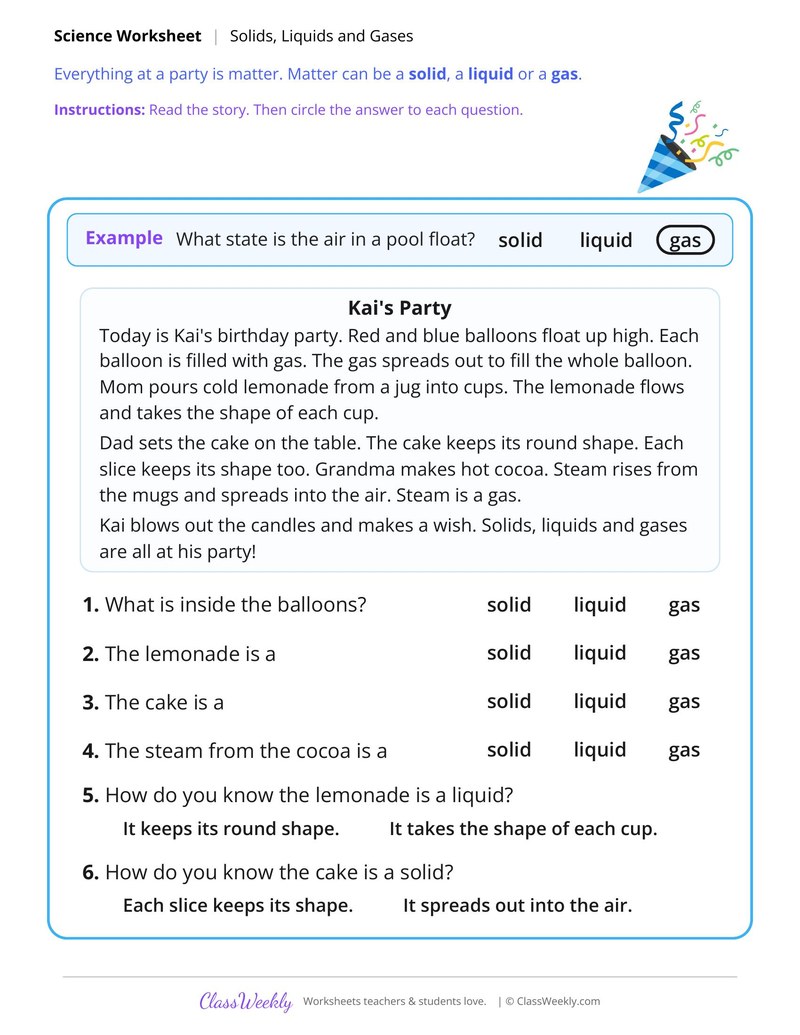
2nd grade science worksheet: read about Kai's party and circle whether the balloon air, lemonade and cake are solid, liquid or gas. Answer key included. Part of our states of matter material properties collection. Aligned to NGSS standards.
How do I use this worksheet?
Start with something students can look at or think about: a photo, a short video, a jar on the windowsill, or a question like "what do you already know about states of matter?" Then let them work through it independently after a quick group example, checking in with a partner if they get stuck, keeping a word bank or anchor chart in view so the vocabulary stays available. When you review, ask students how they knew, and let them point to the part of the diagram or reading that told them. These states of matter worksheets work well as a lead in before an investigation, as a way to capture what students noticed afterward, or as review before an assessment.
What students will practice
- Students will read a story about matter at Kai's birthday party.
- Students will name the gas in the balloons and the steam from the cocoa.
- Students will explain how they know the lemonade is a liquid and the cake is a solid.
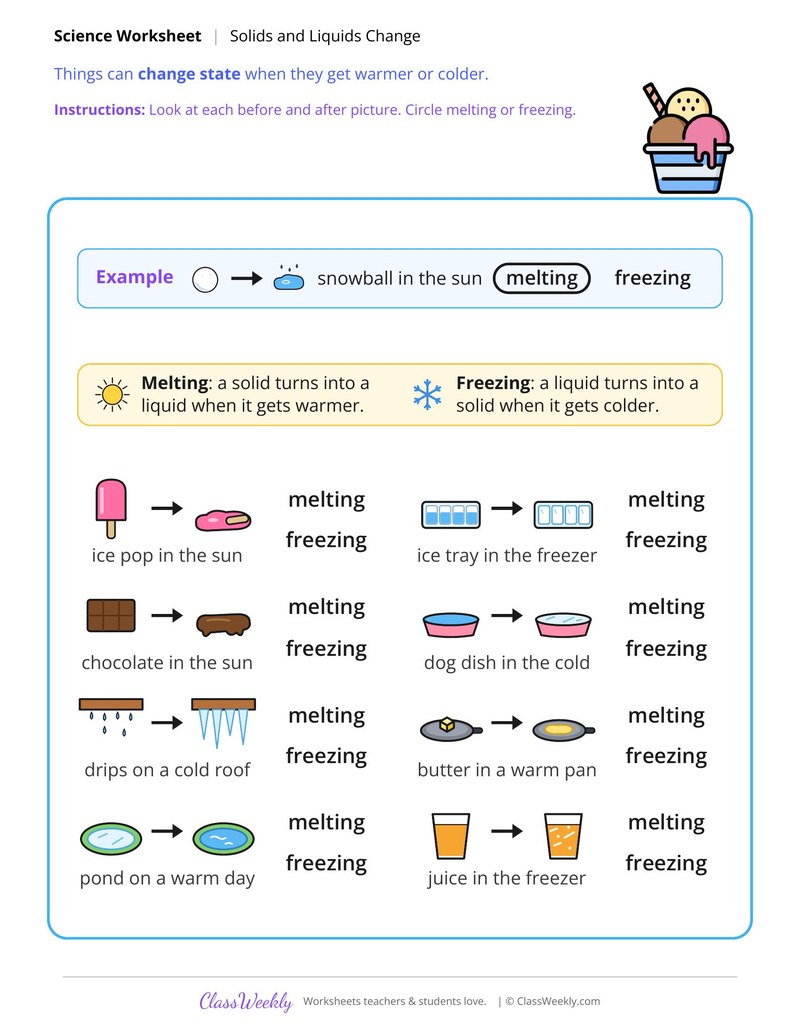
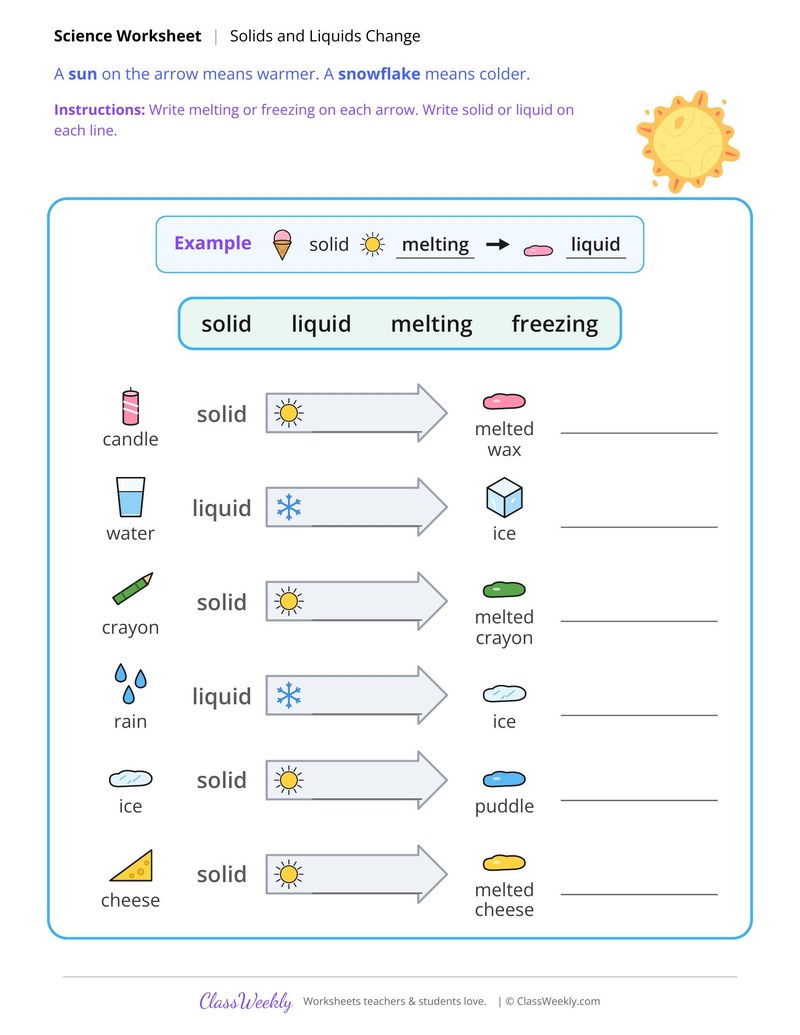
Curriculum Links
Next Generation Science Standards
Science · 2nd Grade
Find this in the curriculum
Browse the grade, subject, and topic this belongs to.
FAQ
How do I use this states of matter worksheet?
⌄
Start with something students can look at or think about: a photo, a short video, a jar on the windowsill, or a question like "what do you already know about states of matter?" Then let them work through it independently after a quick group example, checking in with a partner if they get stuck, keeping a word bank or anchor chart in view so the vocabulary stays available. When you review, ask students how they knew, and let them point to the part of the diagram or reading that told them. These states of matter worksheets work well as a lead in before an investigation, as a way to capture what students noticed afterward, or as review before an assessment.
What does this worksheet teach?
⌄
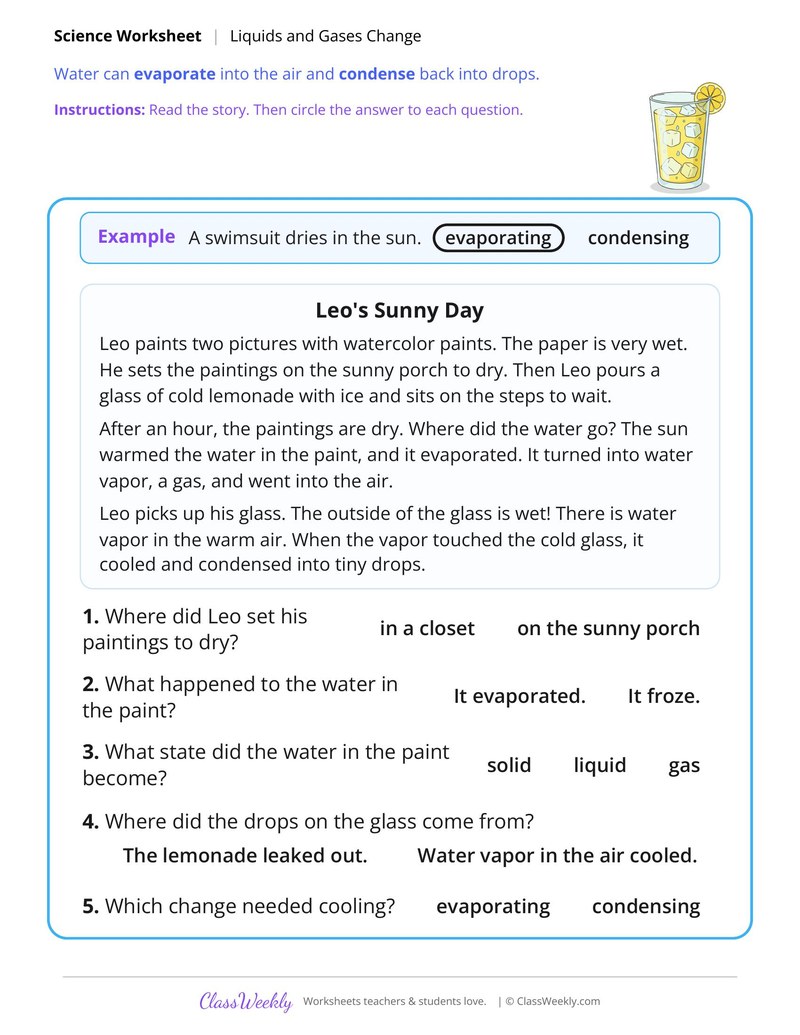
Read about Kai's party and circle whether the balloon air, lemonade and cake are solid, liquid or gas. The directions on the page read: Read the story. Then circle the answer to each question. The page opens with a worked example, and an answer key is included.
Can I use this states of matter worksheet for homeschool or classroom?
⌄
Yes, both. We made it for 2nd Grade material properties, and the page works the same whether it lands on a kitchen table or a center rotation. At home, most families go through it together and talk the answers out loud, and that talking is where most of the learning happens with states of matter. In class it runs well as independent work while you pull a small group. Print one copy or thirty, whichever the day needs.
What do states of matter worksheets teach second graders?
⌄
Students learn that all matter exists as a solid, liquid, or gas depending on temperature and pressure, and they identify the key properties of each state, fixed shape, flows, or spreads to fill a container. For 7-8 year olds, everyday examples like ice, water, and steam make the abstract concept of states immediately recognizable.
When do second graders learn about states of matter?
⌄
States of matter are introduced in Grade 2 physical science and appear in most state science standards at this level. The topic builds directly on Kindergarten and Grade 1 observations of materials and their properties, adding the conceptual framework of state changes.
How can I use these worksheets at home?
⌄
Demonstrate all three states of water in one kitchen session, start with an ice cube (solid), watch it melt to water (liquid), then boil water and observe steam (gas, with appropriate safety precautions). Use the worksheets to record observations at each stage and draw diagrams of what the particles might look like.
What are the properties of materials?
⌄
A property is something you can observe about a material, the stuff a thing is made of. 2nd graders describe whether a material is hard or soft, bendy or stiff, clear or not, and whether it floats, and they use clues like shiny or stretchy to name materials such as metal and rubber.
What is the difference between a solid, a liquid and a gas?
⌄
A solid keeps its own shape, like a block or a cake. A liquid flows and takes the shape of its container, like milk or lemonade. A gas spreads out to fill its space, like the air in a balloon or steam from hot cocoa.
What is the difference between evaporating and condensing?
⌄
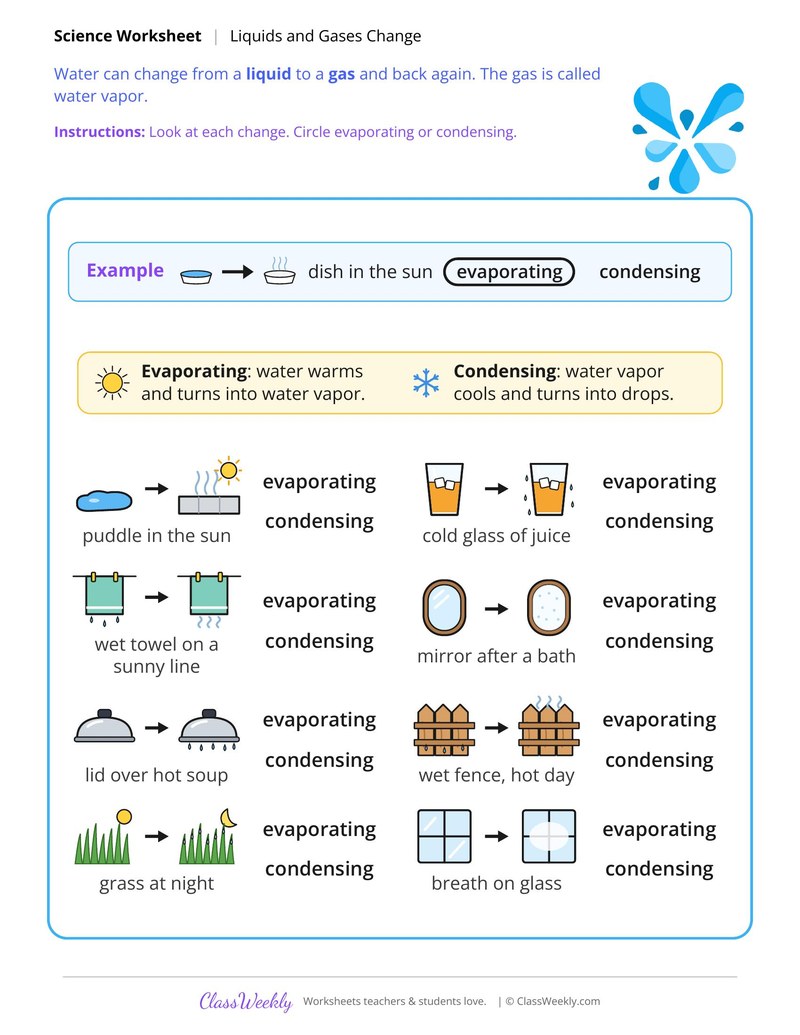
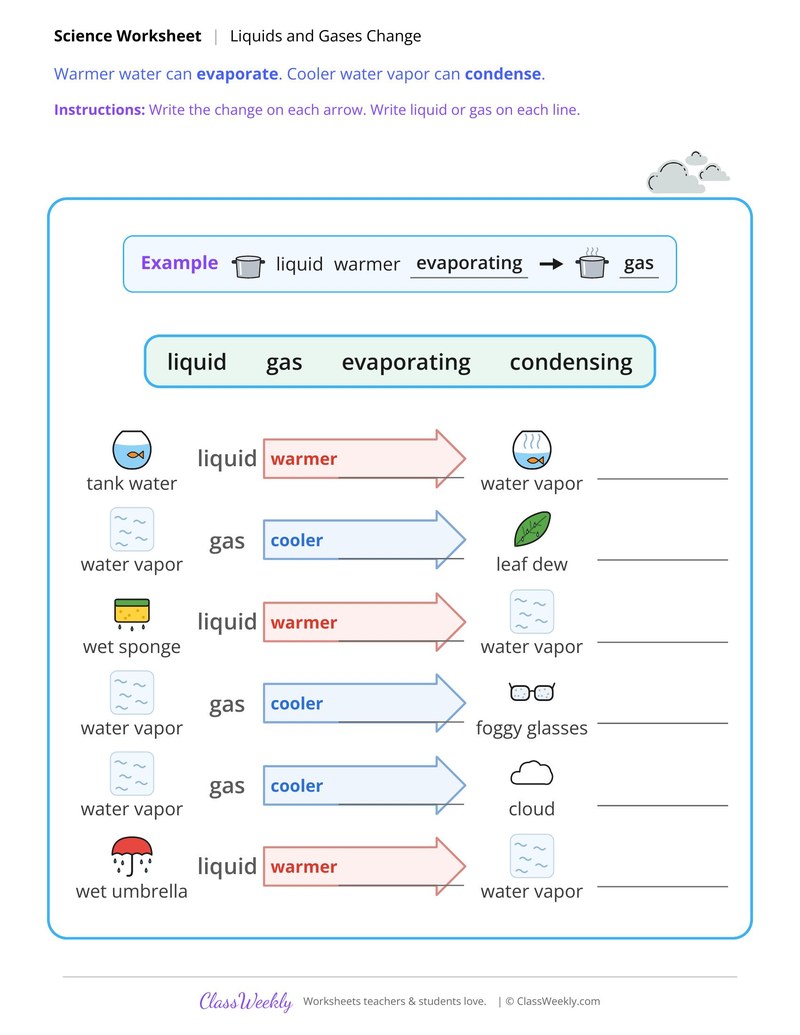
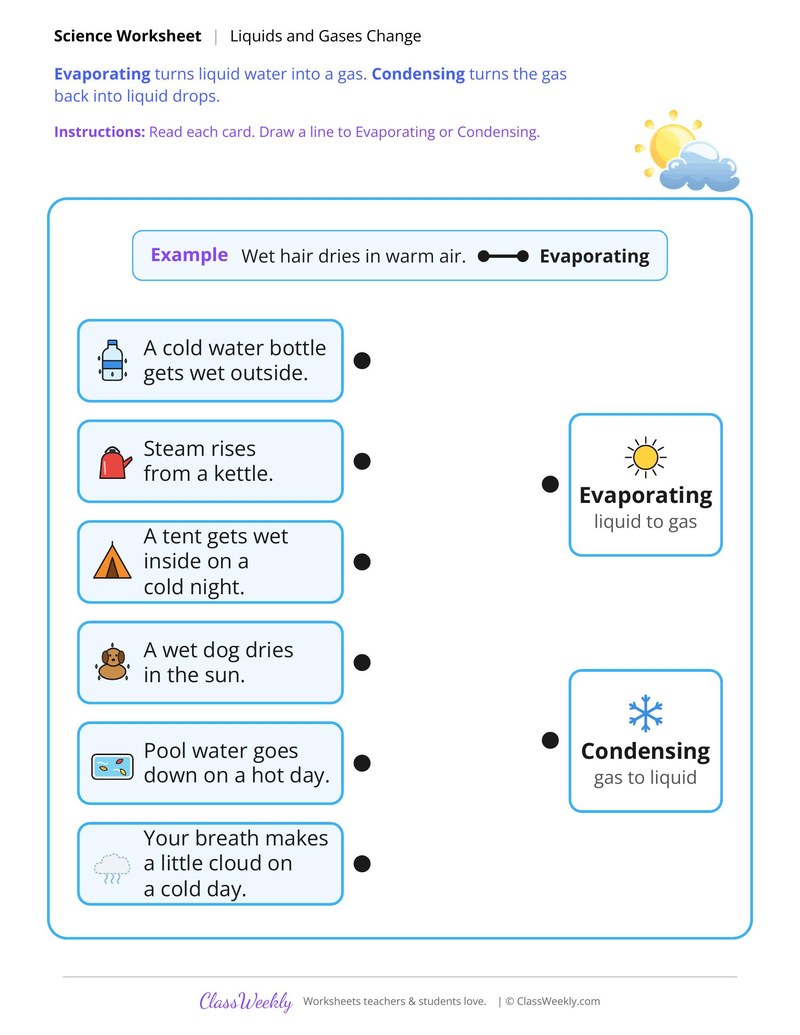
Evaporating is when warmed water turns into water vapor, a gas, like a puddle drying in the sun. Condensing is when water vapor cools and turns back into drops, like the water on the outside of a cold glass.
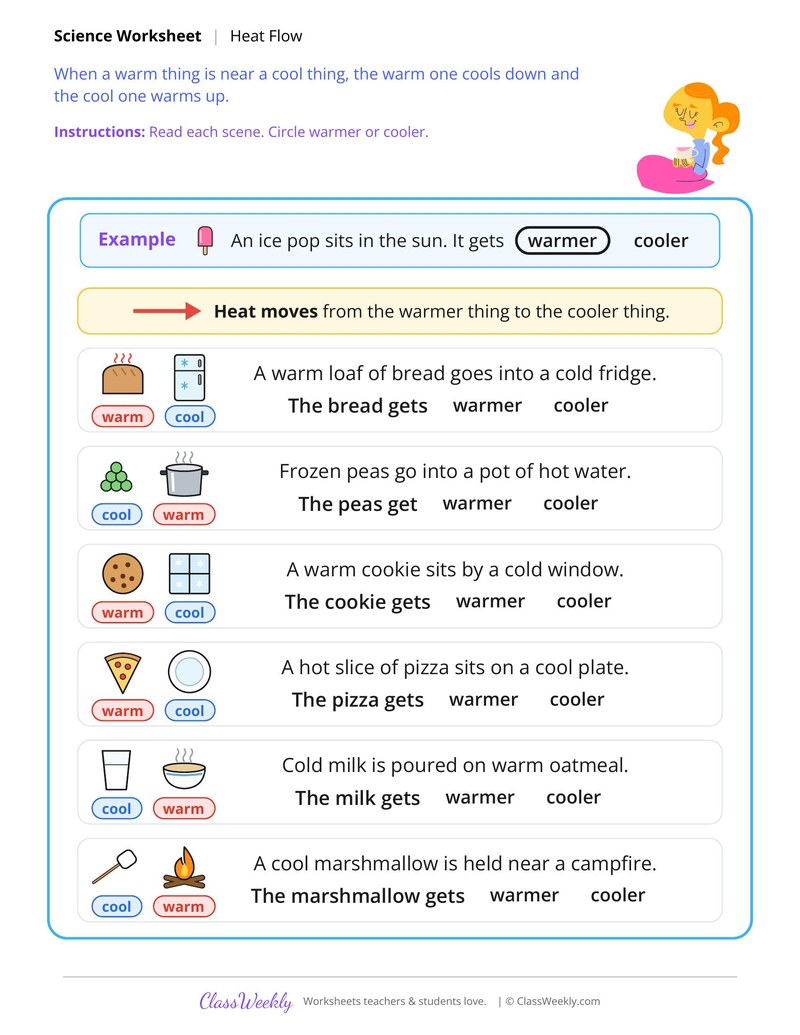
Which way does heat flow?
⌄
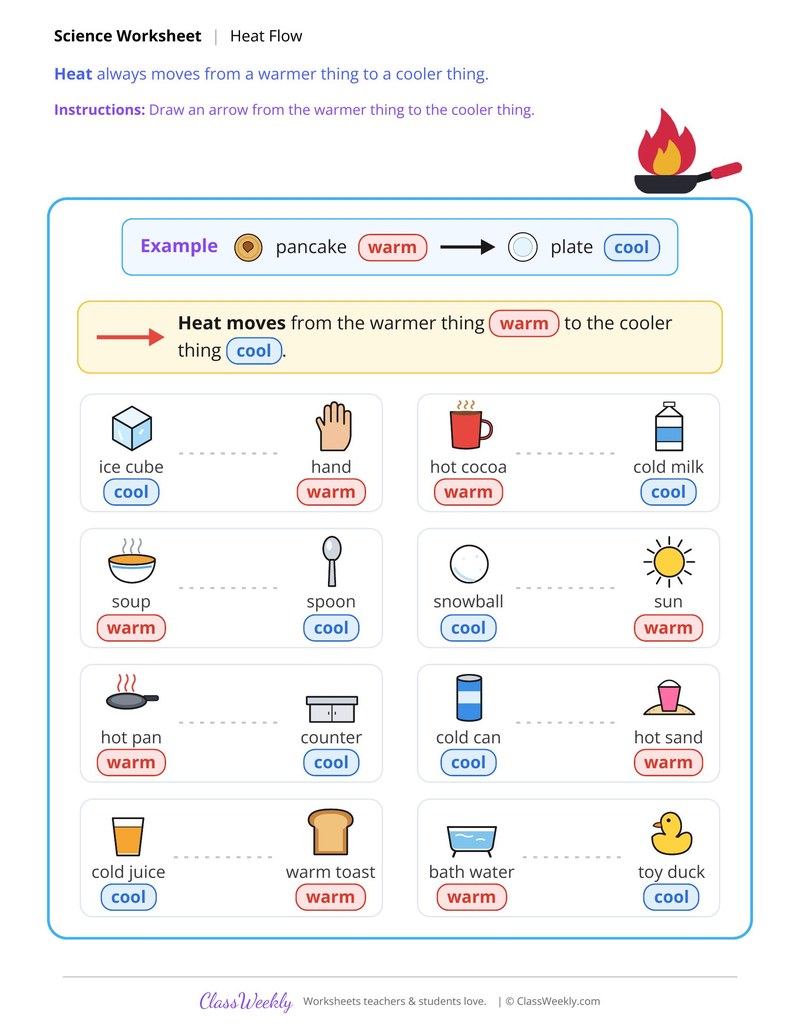
Heat always moves from a warmer thing to a cooler thing. When Nia holds a warm mug, heat moves from the mug into her cold hands, and when she holds snow, heat moves from her hand into the snow.
What is a mixture for 2nd grade?
⌄
A mixture is two or more things mixed together, like trail mix or a salad. Each part stays the same, so you can still see the parts and pick them apart by hand, with a strainer or even with a magnet.
Ratings & Reviews
No reviews yet. Be the first to share what you think.
Reviews are for ClassWeekly members.
Make a Request
Spotted something to fix, or want a worksheet we don't have yet? Tell us and we'll make it.
Worksheet Details
| Grade | 2nd Grade |
| Subject | Science |
| Topic | Material Properties |
| Standard | 2-PS1-1 |
| Pages | 1 page |
| Difficulty | Medium |
Learn More
What is ClassWeekly?
ClassWeekly offers free worksheets and printable learning resources for kids, from preschool up. All worksheets are aligned to Common Core, NGSS, and C3 Framework standards and designed by educators. Become a member to access the full library and download unlimited PDFs.